King Charles Convenes Leading AI Labs for Safety Summit in Scotland
King Charles convened executives from OpenAI, Anthropic, Nvidia, and Google DeepMind in Scotland The summit focused on what organizers described as the existential dangers of advanced AI The
A
AnonymousCryptoCompass newsroom
September 18, 2026
3 min read
NEWS
CryptoCompass editorial visual for policy coverage.
The summit focused on what organizers described as the existential dangers of advanced AI
The meeting is among the first times these labs have gathered together at this level outside a formal regulatory hearing
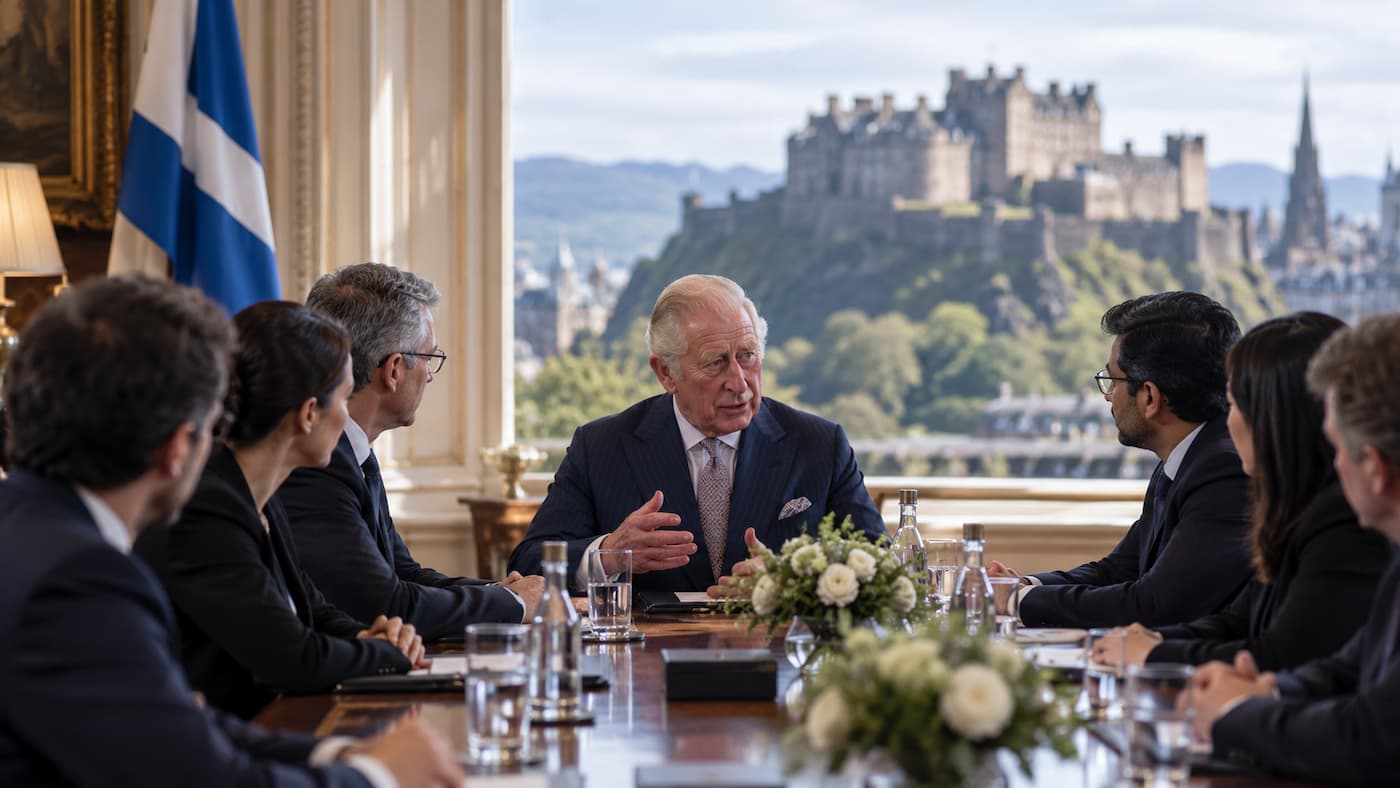
King Charles convened executives from OpenAI, Nvidia, Anthropic, and Google DeepMind in Scotland this week for a summit focused on what organizers described as the existential dangers posed by advanced artificial intelligence. The meeting represents one of the first times leadership from these companies, which compete directly against each other for talent, funding, and market position, has gathered together at this level outside a formal government hearing or industry conference panel.
Royal-hosted gatherings of this kind have historically served a specific diplomatic function, providing a setting seen as above ordinary competitive or political interests where rival executives can engage on shared risks without the meeting being read as one company or government scoring a point against another. That framing appears to have been part of the appeal for the AI labs involved, given the increasingly public rivalry between several of the companies represented, including a separate reported white-hat security exercise this same week in which researchers reportedly used Anthropic’s Claude to breach OpenAI’s own internal systems.
The summit follows a period of increasing public statements from figures across the political spectrum about AI risk, including recent congressional testimony calling for a mandatory kill switch on the most powerful AI systems and warnings from lawmakers urging a broader pause on frontier AI development. Whether the Scotland summit produces any concrete commitments, such as shared safety testing standards or information-sharing agreements between the labs, has not yet been disclosed, and gatherings of this kind have historically been more valuable for establishing relationships and shared vocabulary among participants than for producing binding agreements in the room itself.
The timing also coincides with reports that OpenAI, Anthropic, and Google DeepMind have separately been coordinating on AI safety measures for several weeks, including jointly developed cyber-focused models and safeguards unveiled around the same period. Taken together, the summit and the separate coordination reports suggest a notable, if still early, shift toward the industry’s largest labs treating certain safety questions as a shared problem rather than purely a competitive differentiator.
Buckingham Palace and the broader British monarchy have periodically used similar convening power on other global issues, including past environmental and public health initiatives, where the institution’s largely ceremonial, non-partisan status has made it a useful neutral venue for gathering competing interests that might otherwise avoid appearing together at a government-run event. Applying that same approach to AI safety suggests organizers see value in treating the technology’s risks as a matter warranting the kind of broad, above-politics attention historically reserved for issues like climate change, rather than leaving the conversation entirely to national regulators and legislative hearings.
Shiba Inu's recent price recovery has lost upward momentum as on-chain exchange reserve data points to rising sell-side supply, a pattern that historically precedes increased distribution pre
Dropee Question of the Day 28 September 2026: Verified Answer Keep your daily streak active by completing the latest quiz. The Dropee Question of the Day for 28 September 2026 will reset with
On 1 April 2026, the Akash network reported that its customers had passed 5 million dollars in cumulative spending on compute, real money paying for real processing power on a blockchain mark