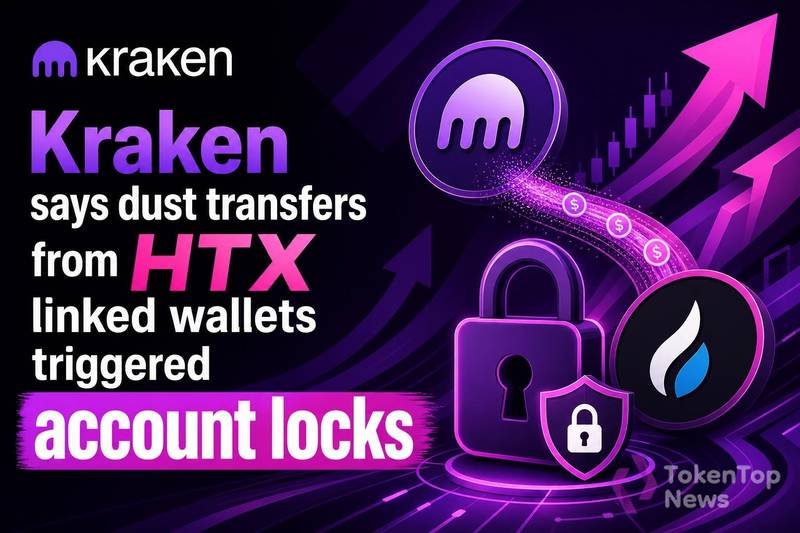
Kraken says dust transfers from HTX-linked wallets triggered customer account locks, with roughly 12,000 of the tiny inbound transactions tied to wallets connected to the HTX exchange landing
Kraken says dust transfers from HTX-linked wallets triggered customer account locks, with roughly 12,000 of the tiny inbound transactions tied to wallets connected to the HTX exchange landing in customer accounts and prompting the exchange to restrict access.
What Kraken says happened with the dust transfers
According to reporting from Unchained, Kraken attributed a wave of customer account locks to a batch of about 12,000 dust transfers originating from wallets linked to HTX. Dust transfers are extremely small crypto payments, often a fraction of a token, sent to a wallet without the recipient's request or consent. For related coverage, see Bitcoin Sovereign Accumulation Outlook: Kraken Co-CEO.
The key nuance is that Kraken described the sending wallets as HTX-linked rather than definitively owned by every affected customer. This article reports Kraken's stated explanation for the locks; it does not establish that recipients did anything wrong, since dust can be pushed to any address unilaterally. For related coverage, see Kraken Parent Payward Joins Anthropic Project Glasswing for AI Security.
The scale of the episode, as separately reported by crypto.news, is what turned an ordinarily trivial event into a customer-facing problem, with thousands of accounts caught in the same net. For related coverage, see What Is mNAV? Bitcoin Treasury Premium, Discount, and NAV Explained.
Why dusting activity can trigger exchange compliance reviews
Centralized exchanges routinely screen inbound transactions against wallets associated with known entities. When funds arrive from an address tied to another platform, automated monitoring can flag the receiving account for review regardless of how small the transfer is.
That is why a dust transfer worth almost nothing can still freeze an account. The trigger is the link between wallets, not the value moved, and the same logic that surfaces a genuine risk can also sweep up ordinary users who never initiated the transaction.
Screening logic is not a finding of intent. A flag routes an account into a review queue; it does not by itself determine that the customer sought out or benefited from the HTX-linked funds.
What the incident means for customers and exchange transparency
The direct consequence named in Kraken's explanation is customer account locks, which cut off access to funds and trading until a review clears. For users who received unsolicited dust, that restriction can arrive without any action on their part.
Episodes like this sharpen the case for timely explanations and clear review pathways, so customers understand why access was cut and how to restore it. Kraken, which has been expanding its footprint by adding U.S. stocks for European users and whose parent Payward recently acquired the Magic Labs wallet business, faces the same transparency expectations that follow any large retail platform.
For customers, the practical takeaway is awareness: unsolicited dust from a linked wallet can affect account access, and communication from the exchange becomes the deciding factor in how quickly that access returns.
Disclaimer: This article is for informational purposes only and does not constitute financial or investment advice. Cryptocurrency and digital asset markets carry significant risk. Always do your own research before making decisions.
Read original article on tokentopnews.com