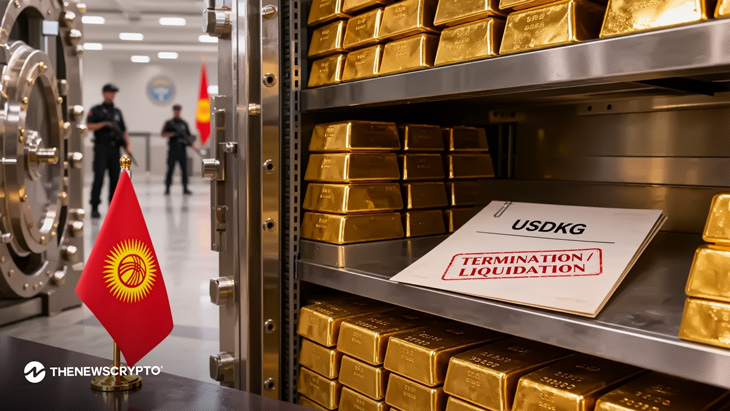
Kyrgyzstan is shutting down USDKG, with the government ordering the liquidation of EVA and Coin Nomad Exchange as part of efforts to optimise state participation. USDKG had a registered suppl
- Kyrgyzstan is shutting down USDKG, with the government ordering the liquidation of EVA and Coin Nomad Exchange as part of efforts to optimise state participation.
- USDKG had a registered supply of just over 50 million tokens on Tron and was positioned as a cross-border payment tool, with plans to operate through at least 2034.
The government of Kyrgyzstan has ordered the shutdown of USDKG, its state-backed gold stablecoin, and instructed the Ministry of Finance to liquidate EVA, the company that issued it, along with Coin Nomad Exchange, the country’s first state-owned crypto trading platform. The official explanation is optimising state participation and improving the efficiency of state asset management. The real story is more complicated.
What USDKG Actually Was?
Launched on November 20, 2025, with the personal participation of Kyrgyz President Sadyr Japarov, USDKG was presented as the world’s first government-issued stablecoin. It is backed by physical gold and pegged 1:1 to the U.S. dollar. The issuer was a state-owned company fully controlled by the Kyrgyz Finance Ministry, later renamed EVA. The registered supply was just over 50 million tokens, all running on the Tron blockchain.
Authorities positioned USDKG as a cross-border payment tool with plans to operate it through at least 2034. Also, in May 2026, it was listed on OSL, a Hong Kong-regulated platform, in a USDKG/USDT trading pair. For a brief window, it looked like a legitimate government-backed experiment in sovereign digital currency.
Where It Went Wrong?
In May 2026, the United Kingdom added Virtual Asset Issuer, the original name of EVA, to its sanctions list. Besides, British authorities accused the company of conducting business of economic significance to the Russian government.
Two days after the UK sanctions landed, the issuer was quietly re-registered under the abbreviated name EVA. Moreover, Kyrgyzstan was included in the same sanctions package alongside other crypto structures the UK linked to the Russian project A7 and its ruble-denominated stablecoin A7A5.
The U.S. Treasury Department had already designated A7 as a shadow banking entity used by Iran to evade sanctions in October 2025. In addition, OFAC simultaneously classified it as a significant transnational criminal organisation.
What Happens to USDKG Holders?
Stablecoin holders are being offered two options: exchange their tokens for fiat currency or convert to USDT. Kyrgyzstan has also initiated forced liquidation of approximately 35 legal entities whose activities were linked to elevated sanctions and compliance risks. USDKG and Coin Nomad are part of that broader cleanup.
From presidential launch to government-ordered liquidation in under a year, USDKG’s trajectory is one of the more significant examples of how quickly a state-backed crypto project can unravel when sanctions and geopolitical pressure arrive at the same time.
Crypto Market Highlights
Samsung Wallet’s Sui Push Brings USDC Closer to Everyday Galaxy Users