Altcoins2 min read
Trump Memecoin Sees Fresh Team Sales
Team Collects Millions as Token Rallies The team behind the Official Trump ($TRUMP) memecoin on Solana (contract: 6p6xgHyF7AeE6TZkSmFsko444wqoP15icUSqi2jfGiPN) sold tokens and collected 3.39
Four Groups Raise Alarm Over Section 604 Four law enforcement organizations have sent a letter to Acting Attorney General Todd Blanche and White House digital assets adviser Patrick Witt, war
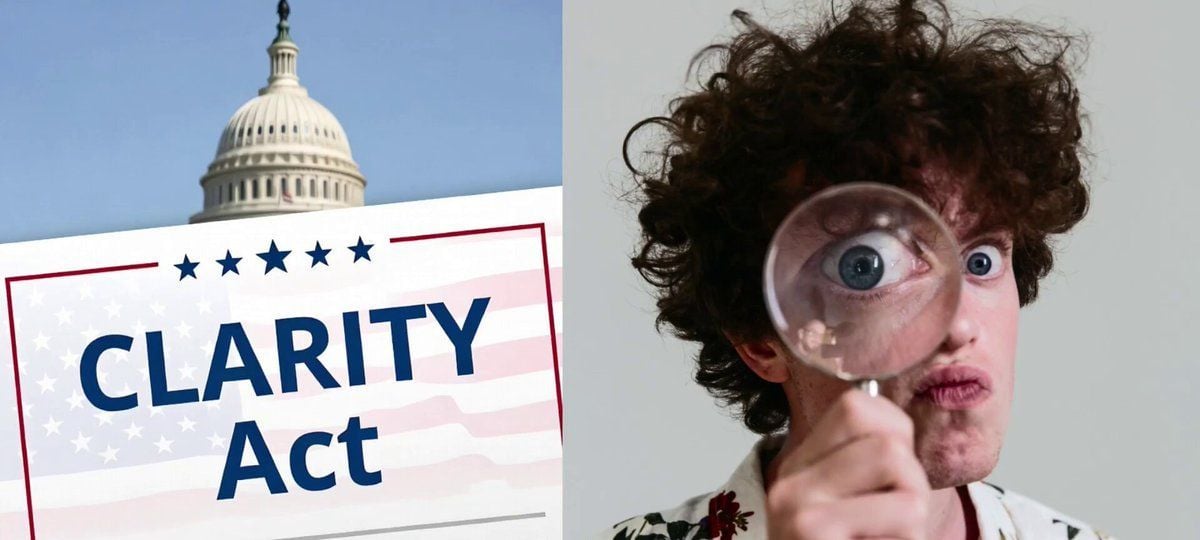
Four law enforcement organizations have sent a letter to Acting Attorney General Todd Blanche and White House digital assets adviser Patrick Witt, warning that a key provision of the CLARITY Act could weaken oversight of crypto-related crime. The letter, first reported by journalist Eleanor Terrett, centers on Section 604 of the legislation, formally known as the Blockchain Regulatory Certainty Act.
The signatories, which include the National District Attorneys Association, the National Association of Assistant United States Attorneys, the International Association of Chiefs of Police, and the National Sheriffs' Association, argue that the provision could create gaps in accountability and make financial crime investigations harder to pursue. Specifically, they warn that some crypto participants could be exempted from Know Your Customer (KYC) and Anti-Money Laundering (AML) reporting requirements that apply to traditional financial institutions.
Section 604 is designed to protect non-controlling blockchain developers and infrastructure providers from being classified as money transmitters simply for writing code, operating software, or supporting decentralized networks. Supporters of the bill argue the provision is narrowly focused and does not shield criminal conduct. The Blockchain Association described the letter as a misreading of the text, stating that the section only prevents non-custodial software developers from being misclassified when they do not custody assets or control transactions.
The letter carries particular weight given where the legislation currently stands. The CLARITY Act was advanced by the Senate Banking Committee in May 2026 on a 15-9 bipartisan vote and is now on the Senate Legislative Calendar, making it eligible for a full floor vote. However, the bill needs 60 votes to advance, and at least two key Democratic senators have tied their support to law enforcement's satisfaction with Section 604's final language.
The letter follows weeks of meetings between law enforcement groups, Congress, and the crypto industry, including a roughly 90-minute session hosted at the White House earlier this month. Despite those talks being described as substantive, the new letter signals the core disagreement has not been resolved. Notably, two law enforcement groups that participated in the White House meeting, the Fraternal Order of Police and the National Association of Police Organizations, did not sign the letter.
The industry has pushed back firmly. More than 200 crypto companies and organizations, including Coinbase, Kraken, Circle, and Andreessen Horowitz, have urged Senate leaders to advance the bill, arguing that clear rules are needed to keep digital asset development in the United States. A separate letter signed by 160 former national security, intelligence, and law enforcement officials also argued the bill would improve oversight through expanded sanctions tools and updated asset-seizure powers.
The path to passage still requires reconciliation with the Senate Agriculture Committee's version of the bill, a 60-vote Senate floor vote, a House-Senate conference, and a presidential signature before it becomes law.
Sources:CoinTelegraph: Law Enforcement, Catholics Warn Against CLARITY ActTRM Labs: What's Actually in CLARITY, AML and Law Enforcement ProvisionsLatham and Watkins: US Crypto Policy Tracker, Legislative Developments