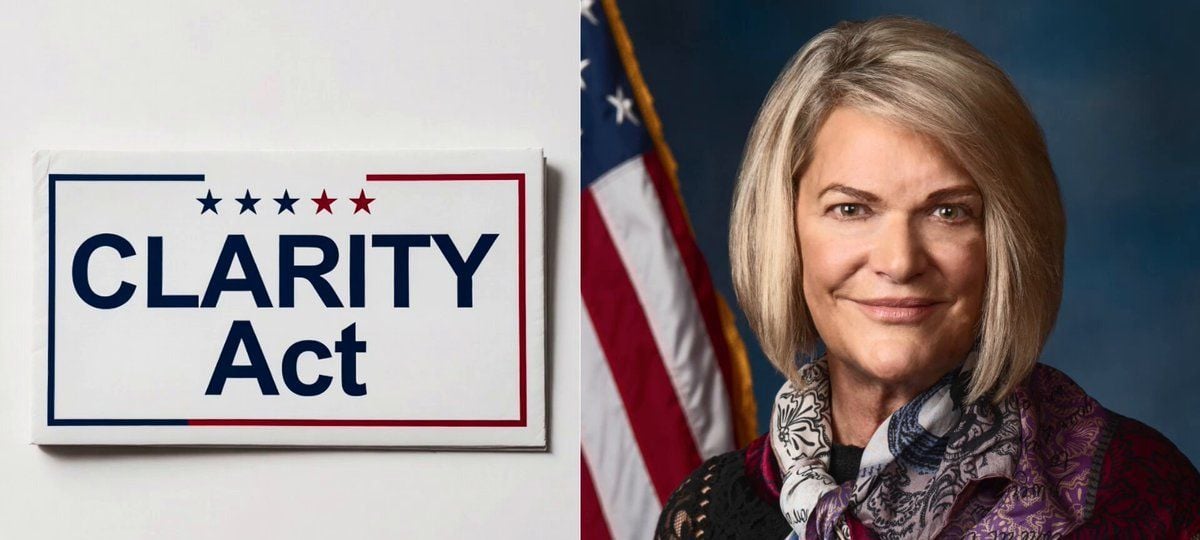
Senator Cynthia Lummis is accusing major banks of deliberately obstructing the CLARITY Act, the landmark legislation designed to bring a clear federal framework to US digital asset markets. S
Senator Cynthia Lummis is accusing major banks of deliberately obstructing the CLARITY Act, the landmark legislation designed to bring a clear federal framework to US digital asset markets. She claims banks are conditioning their support on changes to the bill, effectively holding it hostage.
The Digital Asset Market Clarity Act aims to resolve a central question in US crypto regulation: which assets fall under SEC jurisdiction, and which fall under the CFTC.
Banks Draw Battle Lines Over Stablecoin Yields
The banking sector has objected to language in the bill permitting crypto exchanges to offer yield on stablecoin balances, warning that such rewards would siphon customer deposits from conventional lenders. Several major banking organisations, including JPMorgan, the American Bankers Association, and the Community Bankers Association, have lobbied against the bill. JPMorgan CEO Jamie Dimon has opposed it, citing concerns over stablecoin yield treatment and insufficient legal protections. A coalition of thousands of community banks is also pushing to chip away support, and at least two lawmakers have warned they would vote against the measure without changes.
Crypto companies push back on the banking industry's position, arguing the CLARITY Act already prohibits passive rewards that are economically equivalent to interest-bearing deposits. Coinbase CEO Brian Armstrong has stated that most lobbying concerns have already been addressed by the bipartisan compromise reached in the bill.
Senate Vote Pushed to September
On August 8, 2026, Senate Majority Leader John Thune filed cloture on the motion to proceed just before the chamber left for its summer recess, setting up the first procedural vote for Tuesday, September 15.That procedural vote requires 60 votes, and a failed cloture vote could effectively kill the bill.
When lawmakers reconvene on September 14, the calendar offers only 14 working days before an October election recess. With the full House and about one-third of Senate seats on the ballot in November, election-season pressures are expected to consume lawmakers' attention and squeeze the floor time needed to iron out the bill's unresolved sticking points.
The bill has faced continued opposition from Democrats who say it lacks sufficient money laundering safeguards and strong enough ethics provisions. The central enforcement dispute is whether state attorneys general should have the power to act as a secondary enforcement mechanism for the bill's ban on government officials operating crypto businesses, a role Democrats want but Republicans and the White House oppose.
Sources:CoinDesk: Senate Won't Vote on Crypto Clarity Act Before Summer BreakBitcoin Foundation: Banking Lobbyists Fighting CLARITY ActDisruption Banking: CLARITY Act Vote Slips to September 15 Senate Showdown