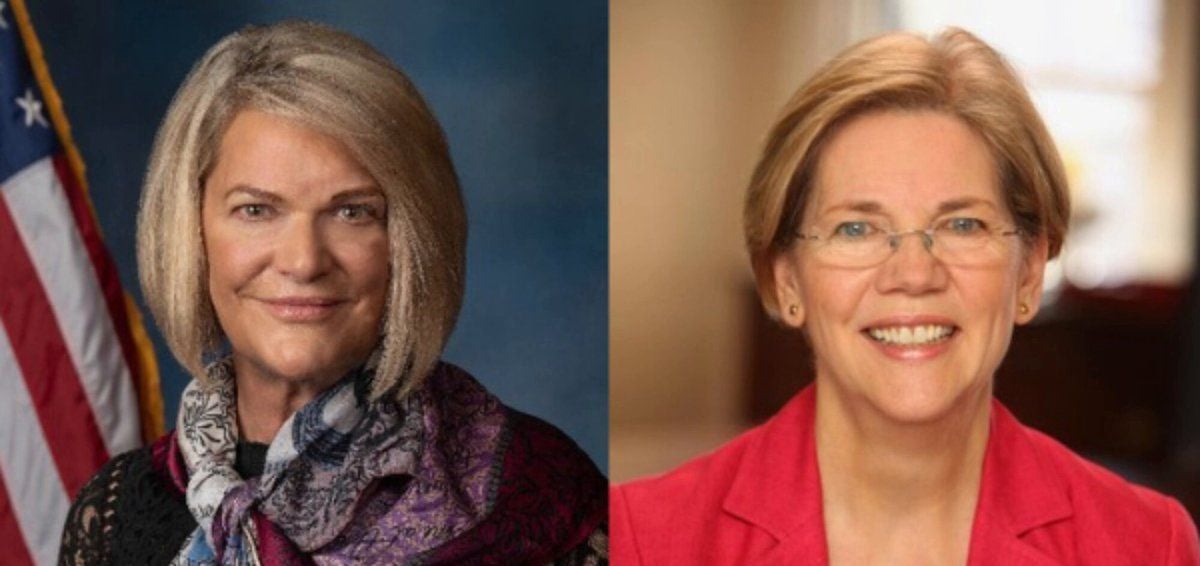
The battle over the Digital Asset Market CLARITY Act has taken a sharper personal turn, with Senator Cynthia Lummis (@SenLummis) branding her Democratic opponent Elizabeth Warren (@SenWarren)
The battle over the Digital Asset Market CLARITY Act has taken a sharper personal turn, with Senator Cynthia Lummis (@SenLummis) branding her Democratic opponent Elizabeth Warren (@SenWarren) as "Big Bank Beth" and accusing her of opposing the bill not on principle, but to deny President Trump a legislative win.
In a detailed point-by-point rebuttal of a Warren fact sheet, Lummis took aim at three specific claims. First, she argued that federal law bars trustees from disclosing blind trust holdings back to the official whose assets are held, countering Warren's suggestion that Trump retains improper visibility into his crypto positions. Second, she contended that the $TRUMP meme coin was launched while Trump was still a private citizen and cannot be retroactively prohibited by legislation. Third, she said ethics law has never extended financial disclosure requirements to adult children, only to spouses and minor dependents. She closed her post with the phrase "Don't fall for Liz's lies," attaching the ethics statute as supporting evidence.
The clash is the latest escalation in a weeks-long public dispute. The minority staff of the Senate Banking Committee, led by Ranking Member Warren, released an analysis arguing that the latest version of the CLARITY Act is "riddled with massive loopholes" and does nothing to prevent the president from making further crypto profits. Warren has argued that the policy as written would let Trump continue his crypto businesses largely untouched, and that any improper activity would be shielded from prosecution once he leaves office.
Lummis has rejected those claims, pointing to more than 16 safeguards she says are written into the legislation. She also disputed Warren's assertion that the bill creates opportunities for sanctions evasion, pointing to provisions she said expand the Treasury Department's authority to combat the misuse of digital assets.
The Bill Is Effectively Shelved Until September
Despite the heated rhetoric, the bill's immediate prospects have deteriorated sharply. Senate Majority Leader John Thune told reporters on July 23 that he does not expect the CLARITY Act to reach a floor vote before the Senate's summer recess begins around August 7. "I don't think we'll be able to get them done," Thune said, adding that he hopes to at least get the floor process started before the break. His office confirmed that the chamber is first working through federal nominations and a Russia sanctions bill, leaving no runway for crypto legislation before the recess deadline.
The vote math explains why. The bill needs 60 votes to advance. Of the 53 senators who have publicly declared support, 51 are Republicans. No Democrat has publicly backed the latest draft, leaving the bill roughly nine votes short with no clear path to close the gap before August 7. The ethics provision, specifically how much senior officials can profit from crypto while in office, remains the central sticking point.
Prediction market traders have taken note. Polymarket currently places the probability of the CLARITY Act being signed into law in 2026 at 28%, down from a peak of 82% in February. If the Senate rises for recess without a cloture filing, the September session becomes an all-or-nothing window, with midterm election politics adding further pressure on every vote.
Sources:CoinDesk: Clarity Act expected to miss its window before Congress' summer breakU.S. Senate Banking Committee: Senator Warren Statement on the CLARITY ActBeInCrypto: Senator Lummis Calls to Stop Baseless Attacks on the CLARITY Act