Five years after it won that significant deal, Mafab Communications is in talks to transfer its 5G spectrum assets to MTN Nigeria. It stems from how the Musbahu Muhammad Bashir-owned operator
Five years after it won that significant deal, Mafab Communications is in talks to transfer its 5G spectrum assets to MTN Nigeria. It stems from how the Musbahu Muhammad Bashir-owned operator paid $273.6 million for the licence during a 2021 auction held by the Nigerian Communications Commission (NCC).
The development stemmed from Mafab’s struggle to build a large subscriber base, roll out physical network infrastructure, and the NCC’s plan to withdraw unused spectrum and licences.
The proposed transfer of Mafab Communications’ 5G spectrum assets to MTN Nigeria, subject to scrutiny and regulatory approval by the NCC, means that MTN will absorb Mafab’s 100 MHz block in the 3.5 GHz band and its 2.1 GHz band licences.
Recall that Nigeria licensed three operators to launch 5G services, where Mafab and MTN each paid $273.6 million for 100MHz blocks in the 3.5GHz band.
Later, MTN paid an additional $15.9 million at the assignment stage to secure the 3500–3600MHz block. Mafab was assigned the 3700–3800MHz block without an additional payment.
The auction was meant to support the introduction of 5G and expand early access to the high-speed network for Nigeria. NCC also ensured that the number of operators with access to high-capacity spectrum was limited, an approach to only award operators ready to deploy the network.
As of today, only MTN and Airtel have rolled out the services. Mafab Communications has failed to roll out its service or deploy a single network mast despite hosting a public launch event in January 2023.
Mafab to MTN: Nigerian internet users are winning
MTN has the infrastructure Mafab lacks, which solves the latter’s greatest problem. Building a telecom network from scratch is expensive. While Mafab had the licence, it lacked the massive capital and physical infrastructure, such as towers and base stations, to roll it out nationwide. MTN already has the largest footprint in Nigeria.
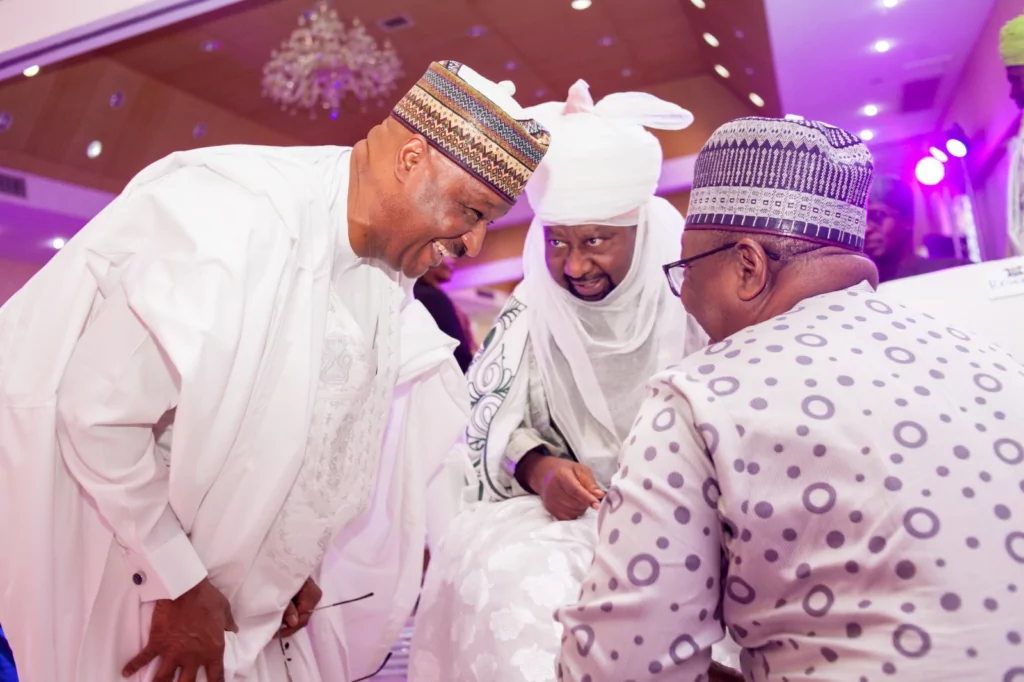
Mafab’s 5G launch in Lagos | 2023
This development is not a solution to stay in business. It’s a solution that will see Mafab crash out of the Nigerian telecommunications industry. The company has struggled to scale its independent network, having deployed only 15 sites since its 2023 rollout.
By moving Mafab’s spectrum to MTN, the leading operator, which already controls more than half (51.3%) of Nigeria’s mobile market, would potentially have more frequency resources to deploy alongside its existing network infrastructure.
Nigeria has a wide 5G coverage gap, and this deal is a progressive step towards finding a solution.
According to the joint Quality of Experience (QoE) report by the NCC and Ookla, covering the second quarter of 2026, active 5G usage among capable devices is approximately 46.0% in Lagos, while Abuja has just passed the halfway mark at 53.1%.
This shows that half of qualified 5G devices remain unconnected, highlighting a drastic gap and how Nigeria lags in reliable internet access when it matters most.

Sadly, the bulk of Nigeria’s quality internet sits in 3 of 36 states plus the FCT, showing how difficult it has been to spread the 5G network nationwide. While the coverage is significantly lagging in the top three cities, the fate of the other 34 states hangs in the air.
Also, 5G network share per industry data is nothing to write home about. It’s practically crawling.
As of July 2026, 157.7 million Nigerians are connected to the internet, showing that 81% of phone users can access the internet. However, only 4.74% are connected to the 5G network, with others scattered across 2G, 3G and 4G, showing how the NCC-Ookla analysis corroborates industry data.
Also read: Nigeria’s 5G coverage gap leaves millions of capable devices unconnected, even in its top three cities.
Will the story change with the Mafab spectrum transfer? Yes. But it might not have a large impact.
Spectrum is like the highway for digital data. While MTN users experience slow speeds or dropped connections when a tower is congested, acquiring Mafab’s 100 MHz block allows the operator to essentially double its 5G highway capacity.
For subscribers (including T2mobile’s), this means significantly faster download and upload speeds, more seamless video streaming, and improved, stable connections.

And it’s not just about 5G; there are benefits for 4G users.
The transfer also includes Mafab’s 2.1 GHz spectrum block. This specific frequency band is highly efficient for broadening the existing 4G LTE network capacity. Since about 54% of Nigerians still rely heavily on 4G and older networks, this acquisition will boost internet stability, not just for those with 5G-enabled smartphones.
MTN Nigeria is getting stronger
MTN already controls 51.3% of Nigerian telecom users, leads with a 53.5% share of internet users and controls Fibre to the X (FTTX) at 176,468 out of 319,735.
The leading operator, with its proposed acquisition of IHS Towers, is set to own the infrastructure that powers the connectivity that competitors such as Airtel and T2mobile (9mobile) depend on. In fact, the latter’s revival and brand transition are all thanks to its spectrum share with MTN.
MTN is gradually monopolising the Nigerian telecoms industry, and this development will reduce market competition.
For Nigerians and the industry, it calls for concern.
While this is a win for network performance, there is a potential downside for subscribers. Mafab was expected to act as a direct and lower-cost competitor to keep big telcos like MTN and Airtel on their toes. With Mafab exiting the 5G race, MTN solidifies its dominance.
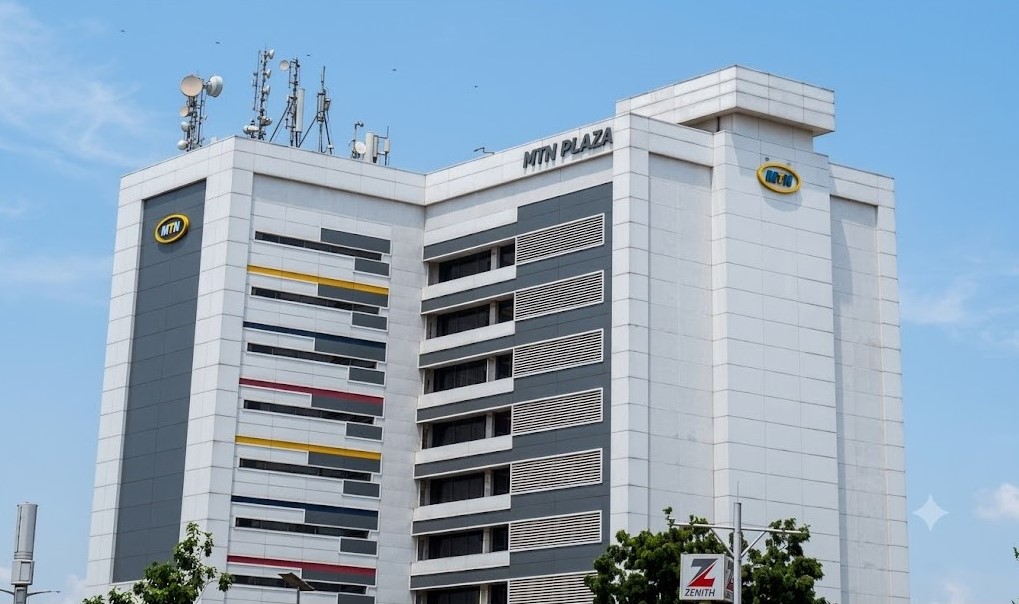
MTN Nigeria building, Ikoyi, Lagos. Image taken on July 6, 2026 and filtered with AI
In addition, less competition in the market could eventually give major telcos more power over data pricing, making it harder for tariff rates to drop significantly in the near future or for subscribers to have alternatives.
NCC is expected to review the spectrum transfer and assess the potential implications it might have on the industry. It will also measure how this benefits Nigeria’s 195 million subscribers.
Also read: FCCPC, NCC okays MTN-IHS deal, 30% stake to be sold to Nigerian investors.