MEXC has shut down the Global Card it launched less than three months ago, and cards stopped processing transactions at 10:30 a.m. ET on Wednesday. New applications are suspended. The Seychel
MEXC has shut down the Global Card it launched less than three months ago, and cards stopped processing transactions at 10:30 a.m. ET on Wednesday. New applications are suspended.
The Seychelles-based exchange announced the move Wednesday, blaming it on "service adjustments" by its third-party card issuer.
It did not name the issuer, and it did not say whether the decision is tied to a U.S. government order that will cut MEXC off from the American financial system next month.
Read more: What is Crypto? Cryptocurrency explained
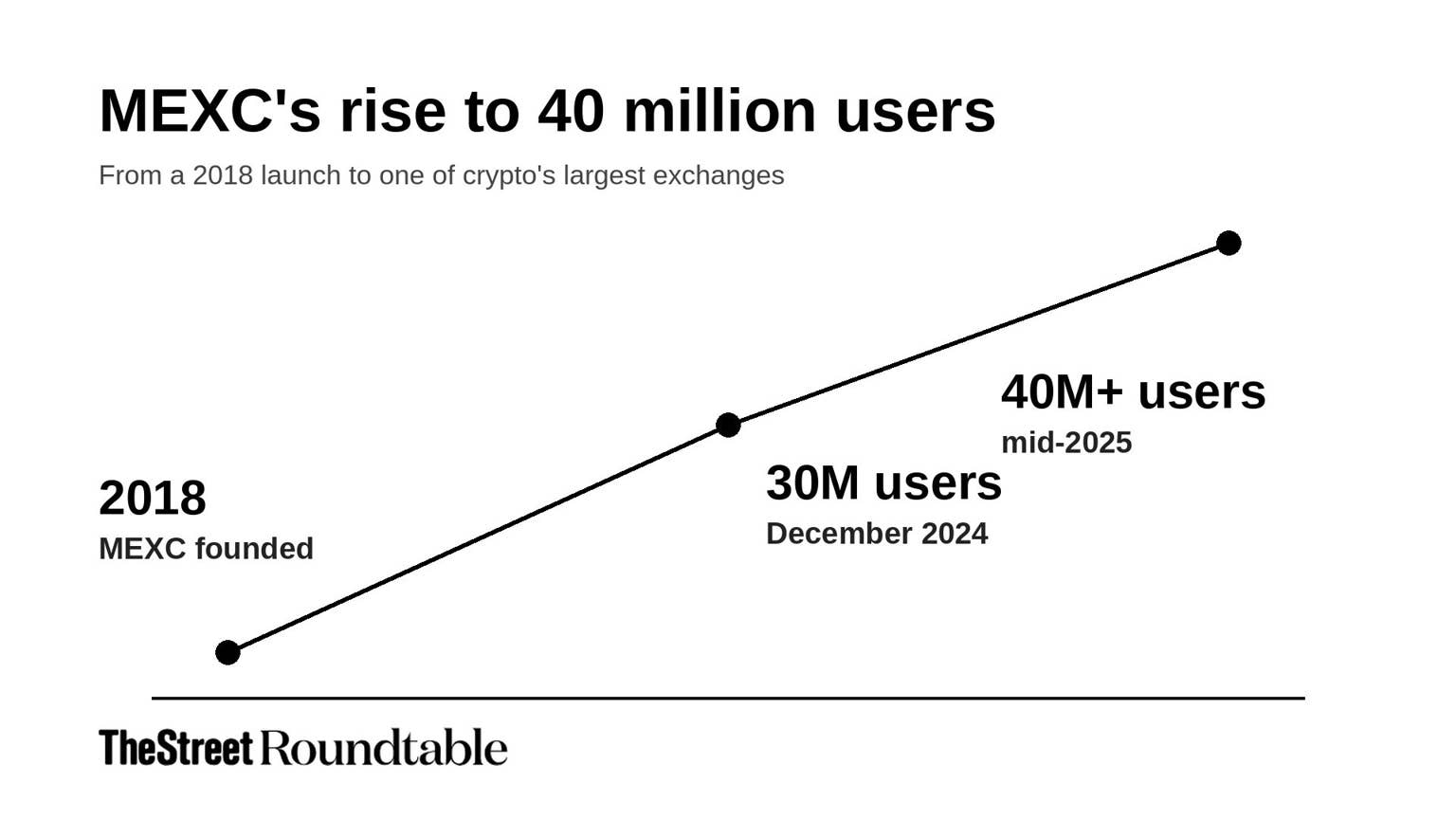
Founded in 2018, the exchange says it serves more than 40 million users across 170-plus countries. It reported 30 million users at the end of 2024.
That order landed Nov. 6, when the U.S. Treasury Department accused MEXC of moving at least $16.7 billion in illicit funds and labeled the exchange a primary money laundering concern in connection with Russian illicit finance.
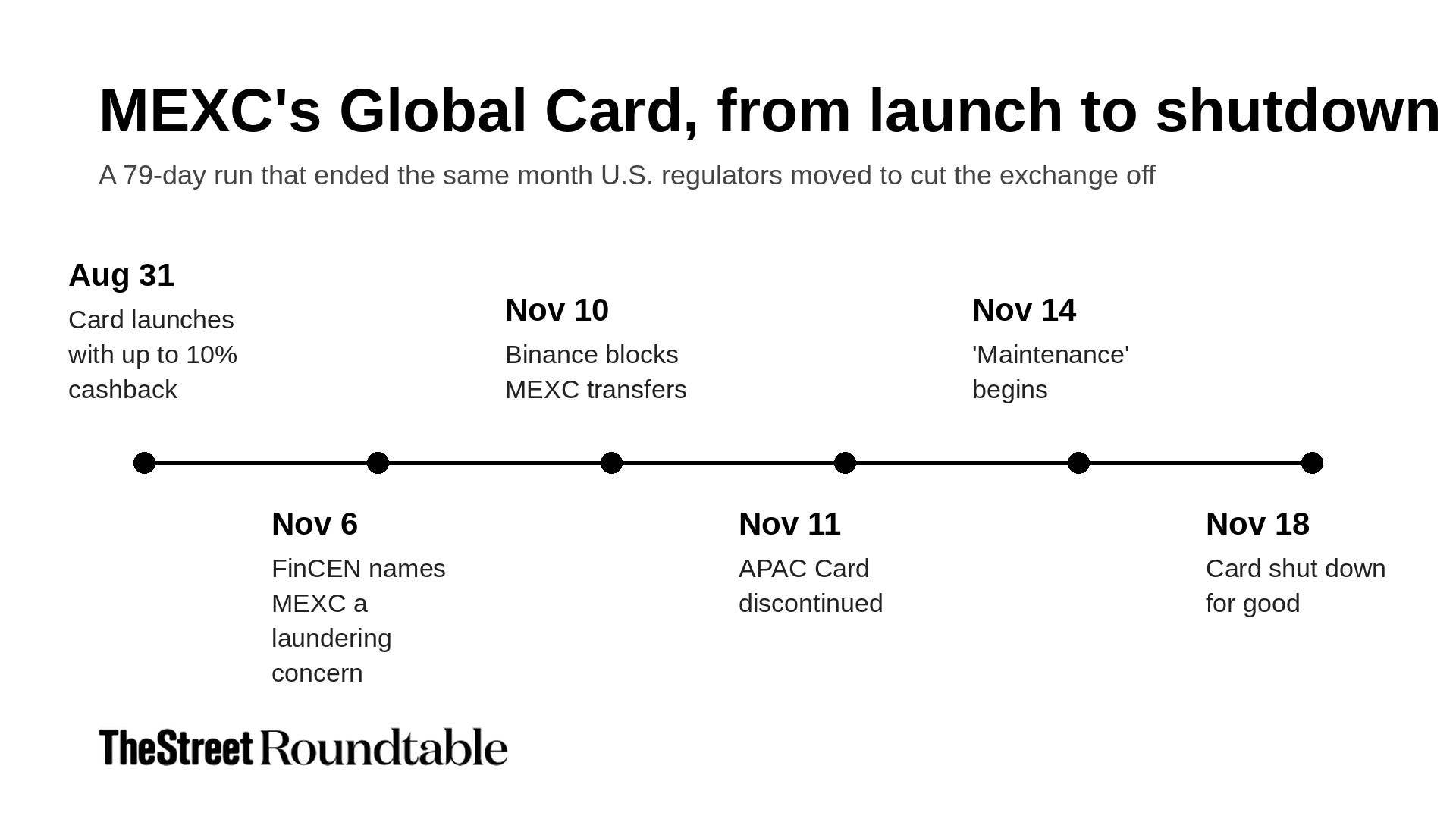
MEXC launched the Global Card on Aug. 31 and shut it down on Nov. 18, twelve days after the U.S. Treasury's FinCEN named the exchange a primary money laundering concern. Source: MEXC announcements
What happens to the money left on cards
Anyone with a balance left on a card does not need to file a claim.
MEXC will take a snapshot of remaining balances at 10:30 a.m. ET on Saturday, Nov. 21, once pending transactions have had three days to settle, and will credit the amounts to users' Spot accounts within three business days.
"No action is required for this transfer," the exchange said.
Key dates for cardholders.
- Nov. 21 snapshot
- Three-day credit
- Dec. 15 rebates
- Three-month records
Refunds for earlier card purchases will land in users' Fiat accounts once MEXC receives them. Pending cashback will still be paid out as scheduled, and Elite VVIP members owed fee rebates will see the money returned to their Spot accounts before Dec. 15.
Two chores still sit with users.
- Move subscriptions
- Save card records
Related: Visa reports surprising earnings, eyes stablecoins
A card built around cashback
MEXC introduced the Global Card on Aug. 31 as its push into everyday spending.
The virtual card ran on Visa's acceptance network, worked with Apple Pay and Google Pay, and paid 4% to 10% cashback in USDT, the dollar-pegged stablecoin issued by Tether. Rewards were capped at 800 USDT a month.
The exchange charged no issuance, annual or top-up fees and let cardholders spend up to 80,000 USDT in a single transaction and 1 million USDT in a day. Users could also earn up to 7% annualized returns on USDT through a card-exclusive savings product.
New gold-backed Visa card has big rewards for user (1:36)
At launch, MEXC argued the timing was right. Citing Paymentscan data, it said real-world crypto card spending reached about $759 million in July 2026, roughly 2.5 times the level of a year earlier.
"The MEXC Global Card is more than a payment product," CEO Vugar Usi said at the time. "It is a step toward closing the full user lifecycle on-chain."
What the U.S. government found
The Treasury Department's Financial Crimes Enforcement Network, known as FinCEN, issued its order against MEXC on Nov. 6 under an operation it calls Economic Outcast. The order, published in a Federal Register filing on Nov. 10, takes effect Dec. 10 and bars U.S. financial institutions from moving funds to or from the exchange.
"Financial institutions cannot have it both ways: Either you support the Iranian regime, or you have access to the U.S. financial system," Treasury Secretary Scott Bessent said when the order was announced.
According to the government filing, MEXC facilitated $16.7 billion in transactions tied to illicit activity between May 2021 and May 2026.
That includes $232 million in direct transactions with entities sanctioned by the U.S., the EU or the U.K., more than $1 billion in direct dealings with over 40 Iranian crypto exchangers, and roughly $22 million linked to the Central Bank of Iran and the Islamic Revolutionary Guard Corps.
FinCEN also said the exchange processed $37.9 million in suspected ransomware payments across more than 125 ransomware variants between January 2022 and July 2024. It also helped a U.S.-sanctioned North Korean money launderer receive about $350,000 last year.
As of June, MEXC processed more than $1 billion in daily transactions, held about $5 billion in reserves and controlled roughly 9% of the global centralized exchange market, the filing said. FinCEN said any legitimate business on the platform is outweighed by the illicit activity it facilitates.
MEXC says it has grown from a 2018 launch to more than 40 million users across 170-plus countries. (Source: MEXC)
MEXC says it is operating normally
In a statement published the day after the order, MEXC said it was reviewing the decision with its legal and compliance teams and had started an independent review of its anti-money laundering and sanctions controls.
"MEXC is operating normally, and user assets remain secure," the exchange said, adding that it intends to engage constructively with FinCEN and other regulators.
The retreat goes beyond one card
The Global Card is the latest in a string of MEXC pullbacks this month.
The exchange discontinued its APAC Card on Nov. 11, citing the same third-party issuer adjustments, and it is winding down services in France.
Binance, the world's largest crypto exchange, told users on Nov. 10 it would no longer process transactions involving MEXC entities.
It said deposits arriving from MEXC would be temporarily withheld for compliance review, and that users who route funds through MEXC could face restrictions or offboarding under its terms.
The Global Card itself showed strain last week. MEXC put the card into what it called maintenance on Nov. 14, declining all card transactions and deposits and telling users the work was expected to last until Nov. 18. Instead of coming back on schedule, the card was discontinued for good.
Related: Trump's gold card was supposed to raise $1 trillion, so far it only has 1 approval
Disclaimer: This article is for informational purposes only and does not constitute financial advice. Cryptocurrency investments are highly volatile and risky. Always conduct your own research before making any investment decisions.