The premium on Tether's USDT stablecoin jumped above 8.5% in India after local authorities cracked down on crypto remittance firms, The Economic Times reported on June 29. Unlike volatile cry
The premium on Tether's USDT stablecoin jumped above 8.5% in India after local authorities cracked down on crypto remittance firms, The Economic Times reported on June 29.
Unlike volatile cryptocurrencies like Bitcoin (BTC), a stablecoin attempts to keep its value stable by being pegged to a "stable" asset like a fiat currency or a commodity.
Related: Stablecoins spark transformative shift for cross-border businesses
Tether's USDT, for instance, is pegged 1:1 to the U.S. dollar. One USDT holds the same value as one dollar. This is why it is also called a kind of "digital dollar."
With a market cap of $184.88 billion, USDT is the world's largest stablecoin that accounts for 59% of the total segment as per DeFiLlama.
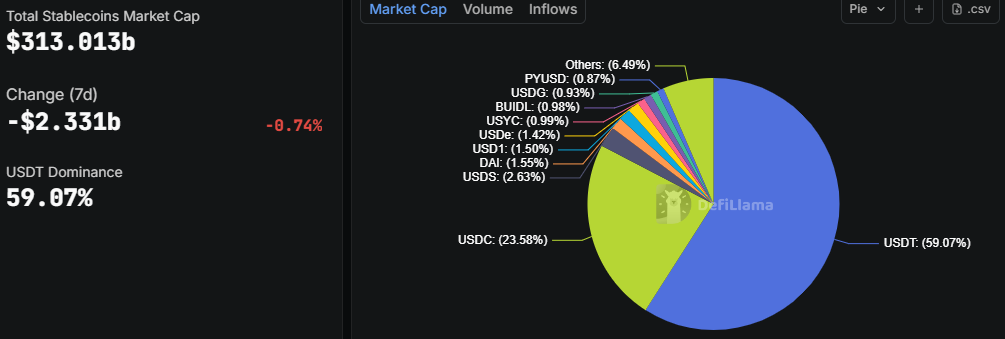
Total Stablecoins Market Cap, Source: DeFiLlama
More on India:
USDT premium climbs above 8.5% in India
India's law enforcement and economic intelligence agency, the Enforcement Directorate (ED), early this month cracked down on five crypto payment firms based in Bengaluru under the Foreign Exchange Management Act, as per the report by The Economic Times.
The ED claimed that these firms facilitated unauthorized cross-border transfers worth more than $265 million via virtual digital assets.
Non-resident Indians (NRIs) have been using USDT as a replacement for bank wire transfers to families for roughly two years now, the agency claimed.
USDT is cheaper, faster, and converts into more rupees (Indian currency) than wired USD remittances, but the process bypasses the documentation and authorization norms governing official remittance channels under the Foreign Exchange Management Act (FEMA) and the Prevention of Money Laundering Act (PMLA), the ED further claimed.
In simple terms, the USDT premium is the difference between the market price of USDT on an exchange and its supposed peg of $1. It is the extra amount Indian users pay for 1 USDT above what $1 costs through banks. The premium surges when local demand outstrips the supply.
Following the ED's crackdown, market makers and liquidity providers, which supply the USDT tokens from abroad to Indian crypto platforms, quickly retreated from the USDT purchases abroad.
As supply tightened, the USDT premium surged more than 8.5% above its dollar value on Indian crypto platforms. As a result, USDT traded around INR 102.88 on June 26 against the USD-INR pair closing at 94.65 in the Indian forex market a day earlier, the ET report said.
Prior to the crackdown, the USDT premium used to remain within the 3-4% range.
At press time, 1 USD could be exchanged for INR 94.54.
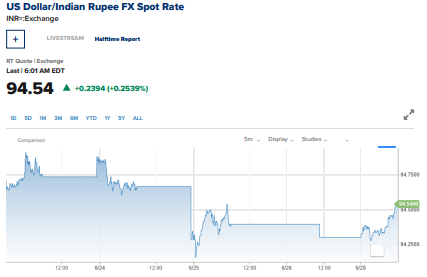
US Dollar/Indian Rupee FX Spot Rate, Source: CNBC
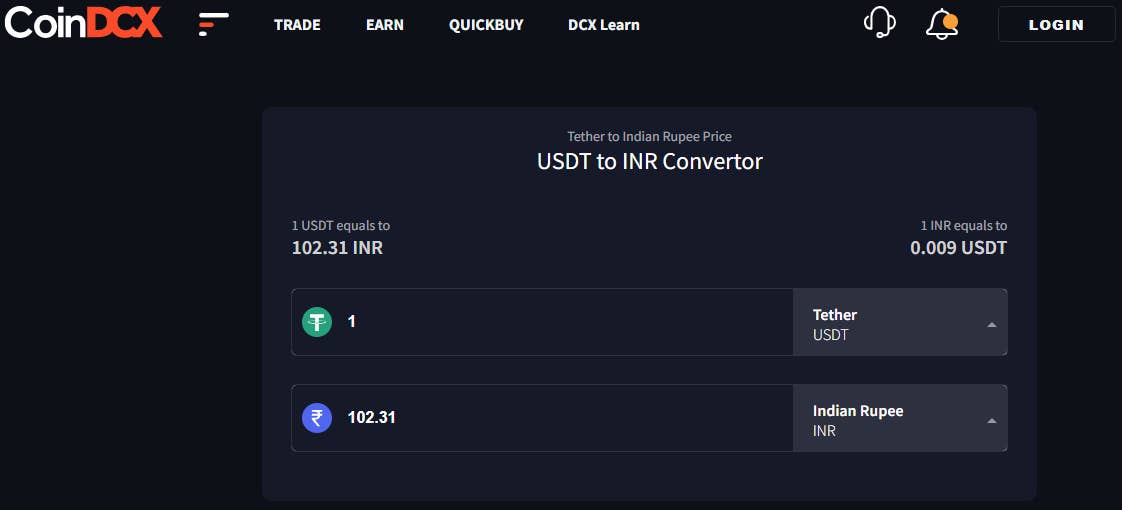
At the same moment, 1 USDT could be exchanged for INR 102.31 on the popular Indian crypto exchange, CoinDCX.
USDT to INR Convertor, Source: CoinDCX
It means the USDT premium still stood above 8% in India at the time of writing.
Related: Explained: What is a stablecoin?