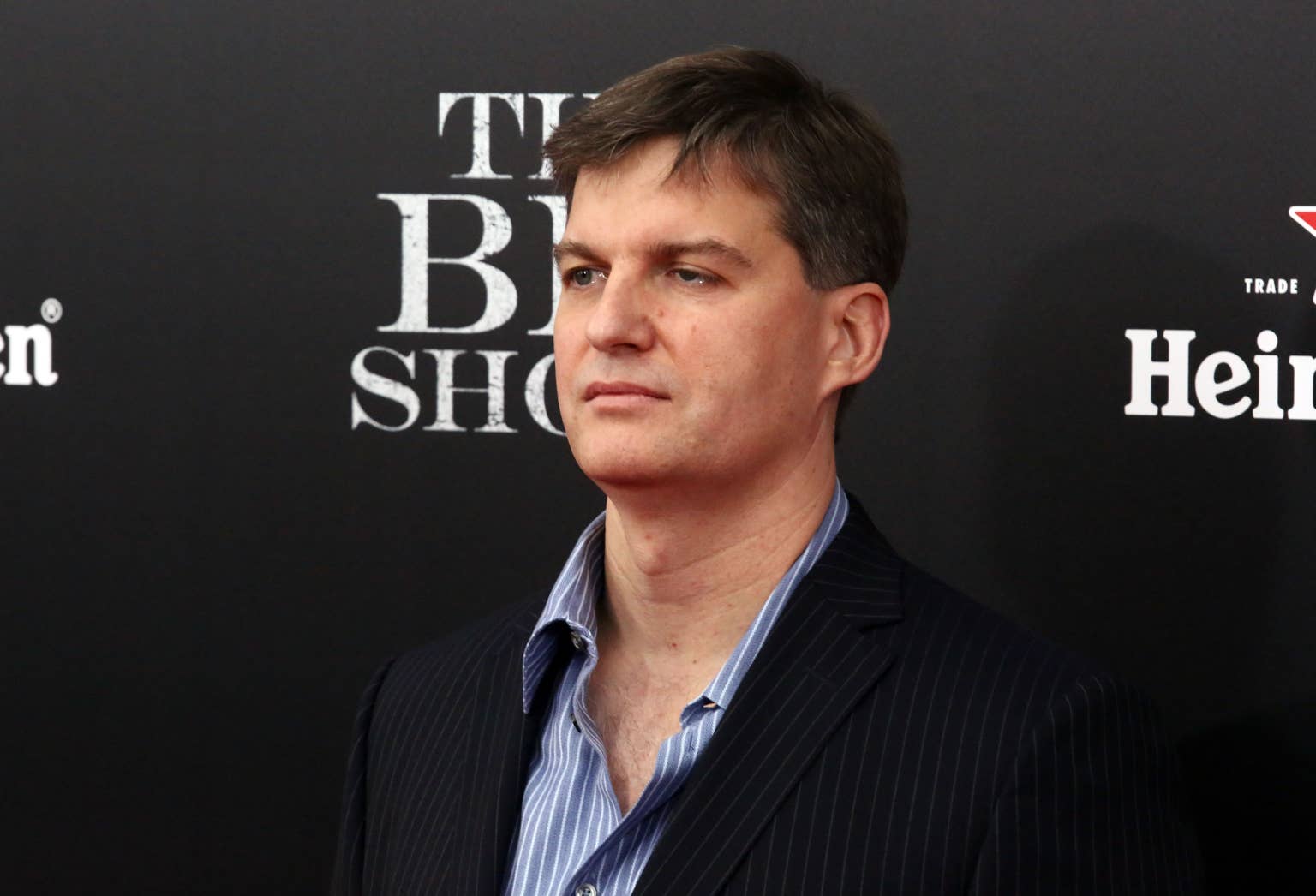
Michael Burry, the investor who had bet against the U.S. housing market ahead of the 2008 financial crisis, has warned that investors could be ignoring signs of a market bubble yet again. “Th
Michael Burry, the investor who had bet against the U.S. housing market ahead of the 2008 financial crisis, has warned that investors could be ignoring signs of a market bubble yet again.
“The stock market is quite obviously in its first stage of grief, denial,” Burry wrote on Oct. 5. “Per 2000 and 2008, this stage lasts 6-9 months.”
Burry became a Hollywood character after he made nearly $800 million from his housing-market bet during the 2008 crisis. His story was later told in the book and film "The Big Short," with Christian Bale playing him on screen.
The 2008 financial crisis began when risky U.S. mortgage loans went bad, which sank banks that had bet heavily on them and pushed the world into the worst recession since the Great Depression.
Burry saw it coming. Between 2005-2006, Burry had already shared predictions that the mortgage market would eventually collapse and leave investors in long-term distress.
Ondo’s John Hoffman says BlackRock built portfolio tokens are the SPY moment for on-chain finance (3:26)
His latest warning, now, comes as U.S. stocks continue moving in the opposite direction.
Indexes including the S&P 500 and Nasdaq hit record highs on Oct. 6, fuelled by enthusiasm around artificial intelligence and expectations for strong corporate earnings. Nvidia’s market capitalization, meanwhile, came close to a whopping $6 trillion during the session amid the ongoing market volatility.
Related: Billionaire Ray Dalio reveals deadline for U.S. debt crisis
Burry takes aim at AI valuations
Burry has become increasingly skeptical of the AI boom in recent months, arguing that valuations and spending assumptions are beginning to resemble earlier technology bubbles.
In a separate Substack post on Oct. 6, he singled out Anthropic, asking how many profitable S&P 500 companies could be purchased at the cost of the the AI startup’s private-market valuation.
Popular on TheStreet Roundtable
His answer was 78 companies. These included Domino’s, FedEx Freight, lululemon, MGM Resorts and Norwegian Cruise Line among others. Ahead of a targeted $2 trillion IPO, Anthropic’s 2026 revenue surged past a $65 billion annualized run rate by late July.
The warning builds on a bearish AI thesis Burry has been developing for months. In September, he shifted several short positions into put options, saying, “Fundamentally, I am moving timelines up,” and adding that he believed “the bubble in AI may burst sooner than later.”
Burry has compared the current AI capital-spending cycle with the telecom overbuild of the late 1990s. He has also questioned whether companies are overstating the economic life of AI hardware at the niche experimental stages.
While Burry has had historic success in market predictions, not all of his calls have been timely. After telling investors to “Sell” in January 2023, Burry had later confessed that he was “wrong to say sell”.
Related: Cathie Wood has more riding on OpenAI than any fund manager in America