Strategy (Nasdaq: MSTR) has launched a public tool that shows investors exactly how well its Bitcoin holdings cover the money it owes, a move toward greater transparency about the risks on it
Strategy (Nasdaq: MSTR) has launched a public tool that shows investors exactly how well its Bitcoin holdings cover the money it owes, a move toward greater transparency about the risks on its balance sheet.
Executive chairman Michael Saylor announced the Bitcoin Credit Model on Aug. 12. Strategy is the software-turned-Bitcoin-treasury company that holds the largest corporate Bitcoin stash in the world.
The model measures how its Bitcoin reserve stacks up against its debt and preferred stock, shares that carry fixed obligations ahead of common stockholders.
Related: Cathie Wood has a new demand for OpenAI, Anthropic and Google
What the model shows
The dashboard breaks Strategy's obligations down instrument by instrument. Borrowing the language of traditional bond ratings, it color-codes each one as Investment Grade, High Yield, or Distressed, giving investors a quick read on which parts of the balance sheet carry the most risk.
It runs on what Saylor calls a "10% BTC ARR reference case", a baseline assumption that Bitcoin returns 10% a year, against which the rest of the math is measured.
Most Popular on TheStreet Roundtable:
For each obligation, the model also displays a "BTC Floor price", the Bitcoin price below which that instrument would become undercollateralized, meaning the Bitcoin backing it would no longer cover what is owed.
Alongside that, it tracks credit spreads, the extra return investors demand for the risk, and coverage ratios showing how much Bitcoin backs each liability.
A cushion, for now
At a Bitcoin price of around $64,000, Strategy's model values its reserve at $53.85 billion. While the company assumes Bitcoin will return 10% a year, it calculates that only a 3.22% annual return would be needed to meet its obligations, a gap that suggests a safety cushion.
That cushion could narrow, however, if Bitcoin falls, volatility climbs, or Strategy adds more debt or preferred stock.
The disclosure lands during a difficult period. Strategy sold 1,690 Bitcoin between Aug. 3-9 at an average of $64,262, using the roughly $108.6 million in proceeds to buy back preferred stock, according to a securities filing.
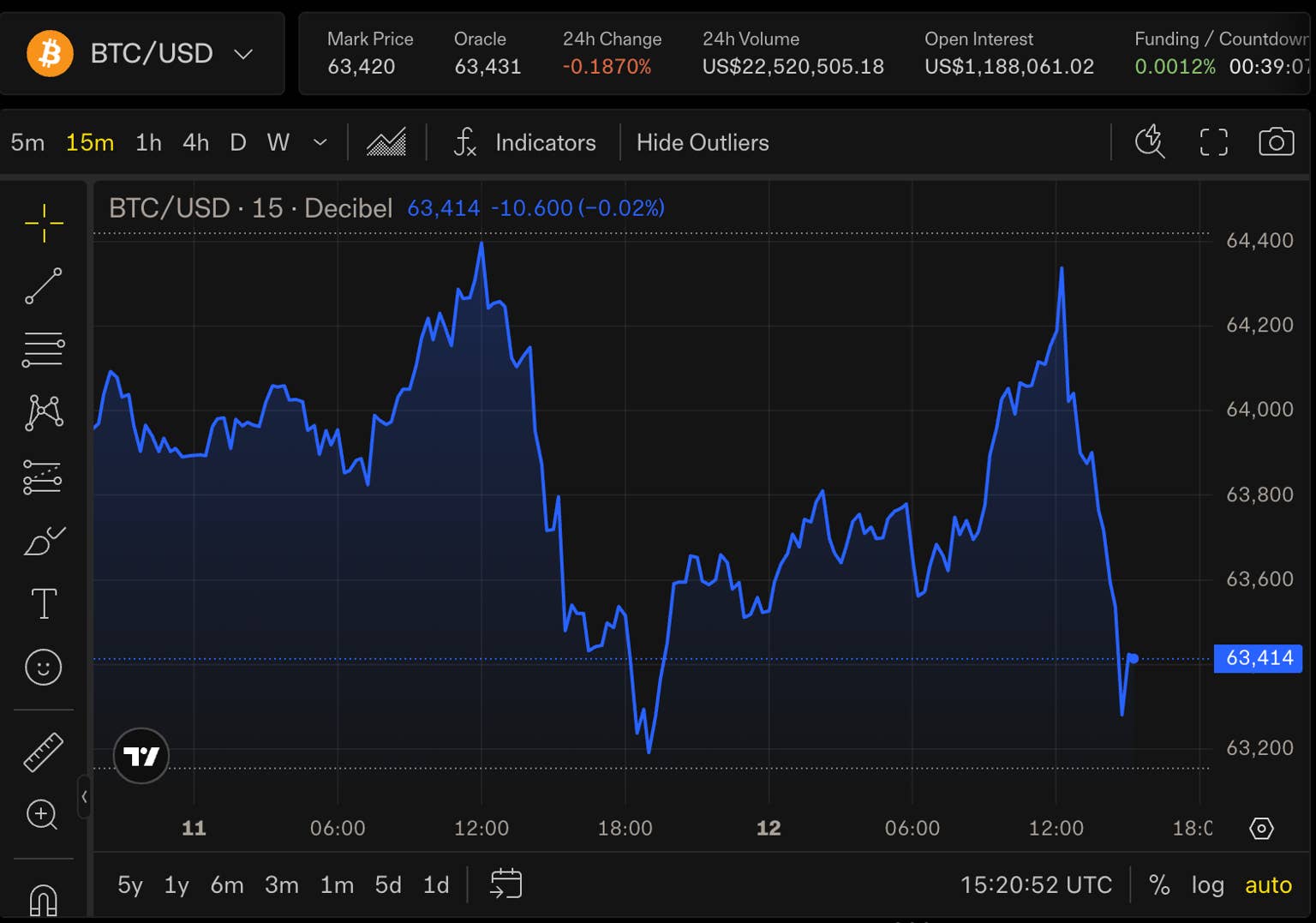
Bitcoin price at press time. Source:
DecibelThe move followed a second quarter in which the company reported an $8.22 billion net loss, driven largely by an unrealized loss on its Bitcoin.
With Bitcoin trading around $63,414, well below its October 2025 high of $126,198, Strategy has increasingly shifted from steady accumulation toward active management of its balance sheet.
Related: What happens to your money if dollar collapses? Michael Saylor has an answer