Quick Summary Moderna shares climbed more than 14% following positive Phase 3 trial results for intismeran autogene, its personalized mRNA cancer vaccine Clinical data demonstrated that intis
Quick Summary
- Moderna shares climbed more than 14% following positive Phase 3 trial results for intismeran autogene, its personalized mRNA cancer vaccine
- Clinical data demonstrated that intismeran paired with Merck’s Keytruda extended recurrence-free survival in melanoma patients versus Keytruda monotherapy
- Barclays significantly increased its price target from $48 to $125; Wolfe Research lifted its rating from Underperform to Peer Perform
- Analysts at Wolfe estimate potential peak revenue of $9.2 billion across four cancer types prior to revenue sharing with MerckYear-to-date, Moderna shares have climbed 392%, raising questions about whether future upside is already factored into the current valuation
Shares of Moderna were changing hands near $154.94 during Tuesday’s trading session, advancing approximately 12% and claiming the position as the S&P 500’s strongest performer for the day. This latest rally follows a pattern where the stock initially spiked after the Phase 3 announcement last week, experienced a pullback as investors took profits, and has now resumed its upward trajectory.
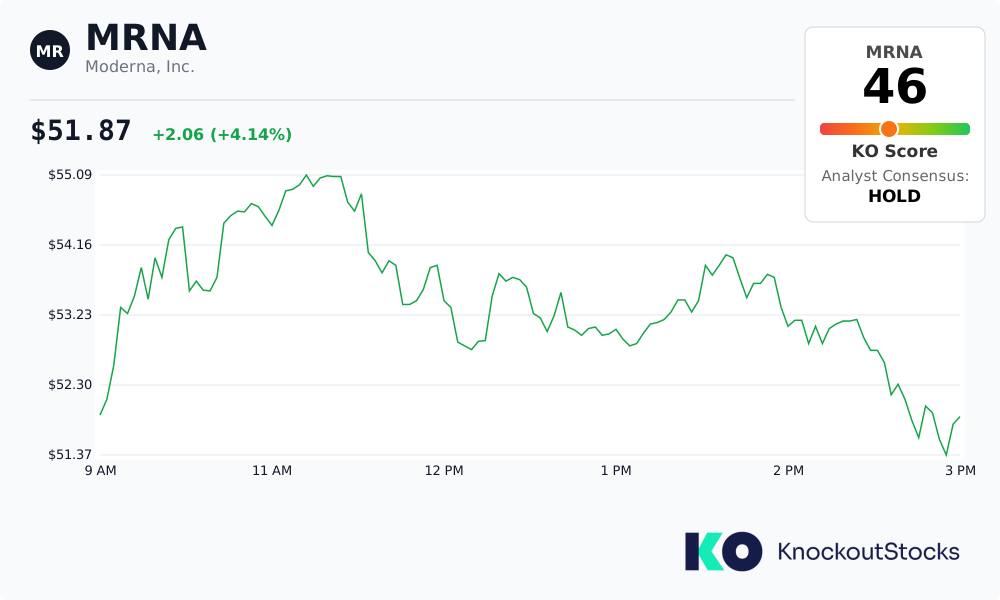 Moderna, Inc., MRNA
The driving force behind this momentum is the successful Phase 3 clinical trial outcome for intismeran autogene, Moderna’s customized mRNA-based cancer therapy created through collaboration with Merck. Trial data revealed that combining intismeran with Merck’s immunotherapy drug Keytruda extended the period melanoma patients remained disease-free compared to treatment with Keytruda as a standalone therapy. This represents the first successful late-stage trial for an mRNA-based cancer vaccine.
The clinical study enrolled 1,100 participants who received the investigational treatment following surgical removal of their melanoma tumors. Intismeran works by targeting as many as 34 neoantigens specific to each patient—abnormal proteins present on cancer cells that enable the immune system to recognize and destroy malignant tissue. Every dose is customized through genetic sequencing of the patient’s excised tumor to identify its distinct mutational profile.
The manufacturing timeline spans approximately six weeks from initial cell sample collection to final vaccine delivery. Patients can initiate Keytruda treatment during this production window while awaiting their personalized therapy.
Wall Street Responds with Upgrades and Higher Targets
Barclays analyst Eliana Merle substantially lifted the firm’s price objective on Moderna from $48 to $125 while maintaining an Equal Weight stance. Merle expressed confidence that intismeran has favorable odds of successfully navigating the regulatory approval pathway.
Wolfe Research upgraded Moderna from Underperform to Peer Perform on Tuesday. Analyst Alexandria Hammond suggested that confusion among investors regarding what constitutes a cancer vaccine may have amplified last week’s dramatic stock movement.
Both BofA Securities and William Blair issued upgrades following the trial data release. Wolfe’s financial models anticipate unadjusted peak revenues reaching $9.2 billion spanning four indications—adjuvant melanoma, renal cell carcinoma (RCC), muscle-invasive bladder cancer (MIBC), and non-small cell lung cancer (NSCLC)—prior to profit division with Merck.
Leerink Partners forecasts intismeran could deliver annual revenues in the low single-digit billions by 2032. Merck’s own projections estimate approximately $6 billion in sales by 2035.
Valuation Concerns Persist Despite Optimism
Last Wednesday saw both Moderna and Merck add more than $40 billion each to their respective market capitalizations in a single trading session. Considering a projected $10 billion sales peak supporting approximately $40 billion in combined market cap expansion, several analysts warn that considerable future gains may already be embedded in current stock prices.
Intismeran’s effectiveness across other cancer types remains unproven. Nine additional trials are currently underway examining solid tumors, including lung, kidney, and pancreatic cancers. While analysts generally interpret the melanoma findings as encouraging for these ongoing studies, positive outcomes cannot be assumed.
Analysts project 2027 as a realistic commercialization timeline assuming interim data remains supportive. Moderna’s 52-week peak stands at $176.66.
On Tuesday, both Wolfe Research and Argus increased their price objectives on Merck as well, highlighting the company’s robust pipeline. Merck has been actively pursuing its next major revenue driver in anticipation of Keytruda’s eventual patent expiration.
The post Moderna (MRNA) Stock Soars 14% on Personalized Cancer Vaccine Success: Is It Time to Buy? appeared first on Blockonomi.