MoneyGram has become an active validator on the Solana network, deepening its commitment to blockchain infrastructure as part of a broader stablecoin strategy. The move, announced on June 22,
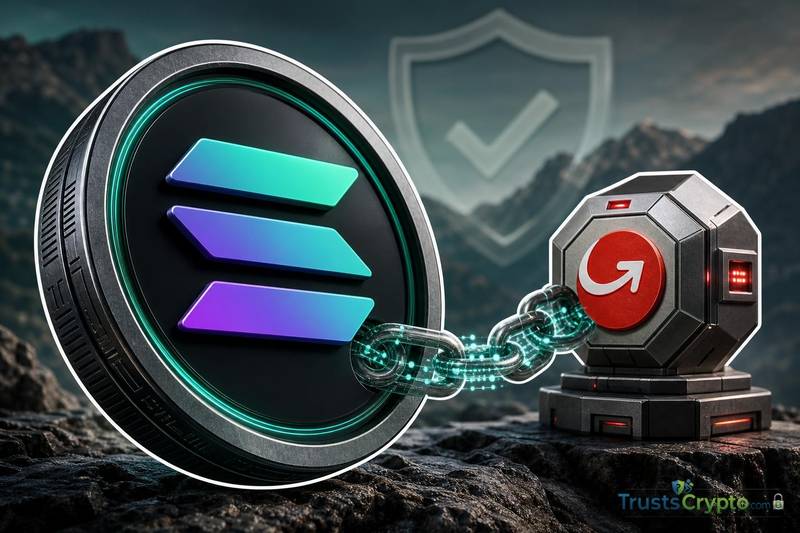
MoneyGram has become an active validator on the Solana network, deepening its commitment to blockchain infrastructure as part of a broader stablecoin strategy. The move, announced on June 22, 2026, positions the global payments giant at the protocol-security layer of one of crypto's fastest-growing ecosystems.
MoneyGram now validates transactions on Solana
MoneyGram confirmed it is now running a validator node on Solana, making it one of the institutions directly securing and processing transactions on the network. The company also joined the Solana Developer Platform as an early institutional adopter, alongside firms including Mastercard, Worldpay, and Western Union.
A validator on Solana participates in the network's proof-of-stake consensus mechanism, confirming transactions and producing blocks. For a company like MoneyGram, operating a validator signals a deeper infrastructure commitment than simply building applications on top of the chain.
Solana is the third blockchain where MoneyGram operates an official validator, according to CEO Anthony Soohoo. The company already runs validators on the Tempo and Midnight networks, as reported by The Block.
MoneyGram serves more than 60 million active customers through nearly half a million retail locations and billions of digital endpoints. That distribution network is what makes the validator move notable: a remittance incumbent is not just issuing a stablecoin or adding an off-ramp, it is participating at the protocol level.
Why the stablecoin push matters
The validator announcement is directly tied to MoneyGram's stablecoin ambitions. The company launched MGUSD on June 2, 2026, a native U.S. dollar stablecoin designed to power its own global payments network.
"We believe the future of global money movement will be built on open, interoperable stablecoin rails that anyone, anywhere can access."
Anthony Soohoo, CEO, MoneyGram — via Solana Foundation
The framing is significant. MoneyGram is positioning stablecoins as payments infrastructure rather than a standalone trading product, a distinction that aligns with how regulators in the U.S. have been approaching stablecoin legislation. Running a validator reinforces that framing by embedding the company directly into the network's security model.
This approach mirrors the broader trend of traditional financial institutions testing stablecoin rails. The recent Toss Bank and Solana Foundation remittance pilot is another example of legacy payments firms exploring blockchain-based settlement.
What MoneyGram's move signals for Solana
For Solana, adding MoneyGram as a validator strengthens the network's institutional credibility. The chain already hosts validators from payment processors and fintech firms, but MoneyGram's global remittance footprint adds a different kind of scale.
SOL traded at $71.67 at the time of the announcement, down 1.5% over the prior 24 hours, with a market cap near $41.62 billion. The muted price reaction came amid broader market caution, with the crypto Fear & Greed Index sitting at 23, deep in "Extreme Fear" territory.
SOL Spot Price $71.67 CoinGecko showed SOL down 1.5% over 24 hours, with market cap near $41.62 billion.
Validator participation can be read as a stronger level of network involvement than simply deploying applications. Validators stake capital, run infrastructure, and bear operational responsibility for uptime, creating alignment between the institution and the chain's long-term health.
Solana's ecosystem has roughly $10.55 billion in total value locked, underscoring the scale of the network MoneyGram is building deeper into. That TVL figure places Solana among the largest smart contract platforms by locked capital.
Solana Total Value Locked $10.55B DeFiLlama listed Solana TVL at roughly $10.55 billion.
The move also reinforces Solana's stablecoin narrative at a time when multiple chains are competing for institutional stablecoin issuance. MoneyGram choosing Solana for both its stablecoin and validator operations consolidates the network's position as a preferred payments rail, though measurable adoption outcomes from this partnership remain to be demonstrated.
What to watch next
The immediate question is how MoneyGram's validator operations will integrate with MGUSD distribution. The company has not disclosed specific timelines for connecting validator infrastructure to stablecoin settlement flows.
Investors and ecosystem participants should watch for details on MoneyGram's staking commitment, validator performance metrics, and any formal integration between MGUSD and Solana-native DeFi protocols. The security landscape also matters; with Q2 2026 crypto hacks hitting record levels, institutional validators face heightened scrutiny around operational security.
No new regulatory filing or approval accompanied the validator announcement. MoneyGram's public statements frame the move around compliance and regulatory clarity, suggesting the company is positioning ahead of expected U.S. stablecoin legislation rather than reacting to it.
FAQ
What is a Solana validator?
A Solana validator is a node operator that participates in the network's proof-of-stake consensus by confirming transactions and producing blocks. Validators stake SOL tokens and run dedicated infrastructure to help secure the network.
Why is MoneyGram joining Solana as a validator?
MoneyGram has framed the move as part of its strategy to build open, interoperable stablecoin rails. The company launched its MGUSD stablecoin earlier in June 2026 and is deepening its blockchain infrastructure commitments across multiple networks.
How does the validator move relate to stablecoins?
Operating a validator gives MoneyGram a direct role in securing the network where its stablecoin could eventually settle transactions. It signals infrastructure-level commitment rather than surface-level integration.
Does this confirm a broader product expansion?
The announcement confirms MoneyGram's expanding blockchain footprint, with Solana joining Tempo and Midnight as networks where the company runs validators. Specific product rollout details tied to this infrastructure have not been disclosed.
Disclaimer: This article is for informational purposes only and does not constitute financial or investment advice. Cryptocurrency and digital asset markets carry significant risk. Always do your own research before making any investment decisions.
Read original article on trustscrypto.com