Mooniswap: The AMM That Gives Slippage Back to LPs
Mooniswap isn’t just another Uniswap fork. It’s a calculated response to a systemic flaw in automated market making: the silent leakage of slippage revenue. Launched in August 2020 by the 1in
A
AnonymousCryptoCompass newsroom
June 13, 2026
3 min read
NEWS
CryptoCompass editorial visual for markets coverage.
Mooniswap isn’t just another Uniswap fork. It’s a calculated response to a systemic flaw in automated market making: the silent leakage of slippage revenue.Launched in August 2020 by the 1inch team, Mooniswap redefines how liquidity providers (LPs) earn. Traditional AMMs like Uniswap let arbitrageurs capture the entire slippage spread. Mooniswap’s innovation? A virtual balances mechanism that keeps most of that value inside the pool.The Problem: LPs Were Leaving Money on the TableThe 1inch team observed a critical inefficiency. On standard AMMs, the swap fee goes to LPs, but the slippage—often 300–500% of potential LP income—gets siphoned by arbitrage traders and miners. This isn’t just a minor leak; it’s a structural drain on pool profitability.Mooniswap’s solution is elegant. Instead of instantly updating the price after a trade, the protocol slows the price adjustment over roughly five minutes. Arbitrageurs still profit, but only partially. The remaining slippage stays in the pool, redistributed to LPs.How Virtual Balances WorkThe concept borrows from Vitalik Buterin’s discussion on market makers, but Mooniswap applies it differently. By maintaining separate virtual balances for each swap direction, the AMM creates a temporary price buffer. This buffer reduces the arbitrageur’s edge while increasing LP earnings from volatility.The result? LPs capture a meaningful share of slippage revenue—something Uniswap’s model simply doesn’t offer.Native ETH Support and Lower Gas CostsMooniswap also simplifies user experience. It natively supports ETH without requiring WETH wrapping. This abstraction layer cuts gas costs and reduces friction. For LPs and traders, this means fewer steps and lower overhead per transaction.Price Oracles and Manipulation ResistanceMooniswap launched on-chain volume-weighted average price (VWAP) oracles. These oracles update after every trade, storing cumulative trade data. By allowing users to choose different time periods, the protocol balances price recency with manipulation resistance. The team argues that virtual balances make these oracles inherently harder to manipulate.Fee Structure and the Referral ModelMooniswap charges a 0.3% swap fee, which can be reduced to 0% in the future. More interesting is the referral fee: 5% of LP income goes to external integrators (wallets, DApps) that drive volume. This fee doesn’t increase the user’s cost; it simply redirects a portion of the LP earnings to partners. The split is fixed: 0.015% to referral, 0.285% to LPs from the swap fee, plus 5% of virtual balance profits.Governance and Liquidity MiningMooniswap operates under the 1inch DAO, governed by 1INCH token holders. Early LPs received vouchers representing a pro-rata claim on 2% of the total 1INCH supply, vesting over one year. Six initial pools—1INCH-ETH, 1INCH-DAI, 1INCH-WBTC, 1INCH-USDC, 1INCH-USDT, and 1INCH-YFI—were eligible for these rewards.Security and PartnershipsMooniswap underwent three security audits: two by dapp.org and Scott Bigelow, and a third by PepperSec. In September 2020, the team partnered with TRON to integrate JustSwap, expanding cross-chain liquidity.Crynet’s Executive TakeMooniswap’s virtual balance model is a quiet revolution in DeFi. By reclaiming slippage revenue for LPs, it directly challenges the Uniswap paradigm. For projects building liquidity strategies, this means higher capital efficiency and lower impermanent loss risk. The referral fee structure also opens new revenue streams for wallets and DApps—an often overlooked strategic lever.So, is Mooniswap the blueprint for the next generation of AMMs? Or will Uniswap’s network effects keep it dominant? We’d love to hear your take.Disclaimer: This content is for informational purposes only and does not constitute financial advice. Always conduct your own research before participating in any DeFi protocol.
Analysts say a large direct payment to Americans could send fresh capital rushing into digital asset markets. President Donald Trump's pledge to send a $5,000 payout to Americans has become a
The Nasdaq closed at a record Monday as Nvidia reached a $5.76 trillion market value, Microsoft rose 1.5% and bets on an October Federal Reserve rate hike faded. Key Points: The Nasdaq Compos
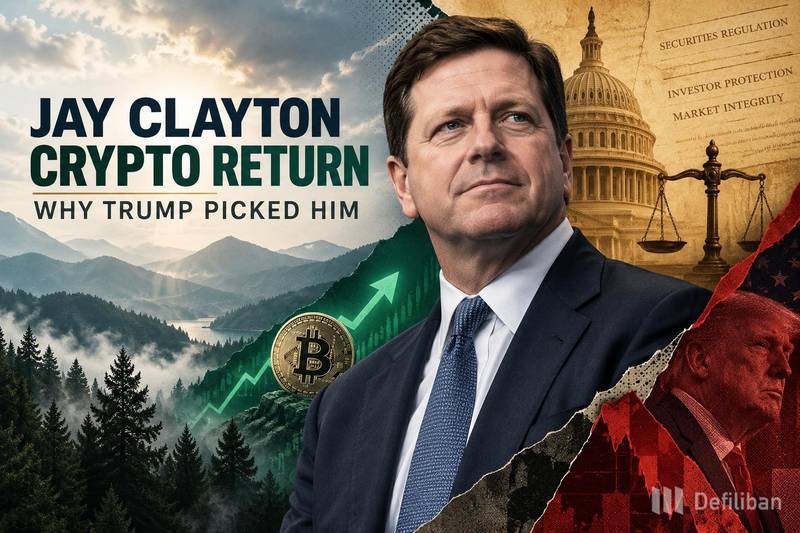
Trump has tapped former SEC Chair Jay Clayton to lead what is being reported as a "Super Intelligence" initiative, placing the official most associated with the SEC's lawsuit against Ripple b