MTN Nigeria’s half-year 2026 numbers read like a company finally exhaling after years of currency and cost pressure, but the details Chief Financial Officer Modupe Kadri offered in a recent i
MTN Nigeria’s half-year 2026 numbers read like a company finally exhaling after years of currency and cost pressure, but the details Chief Financial Officer Modupe Kadri offered in a recent interview complicate the headline figures more than they confirm them.
Service revenue climbed 25.9% to ₦3 trillion, profit after tax surged 70.6% to ₦707.5 billion, and the board declared a ₦26 interim dividend. Yet Kadri spent most of the conversation arguing against reading too much into the topline number, insisting that revenue is not profit and that the real story sits in what the company has done with the money once it comes in.
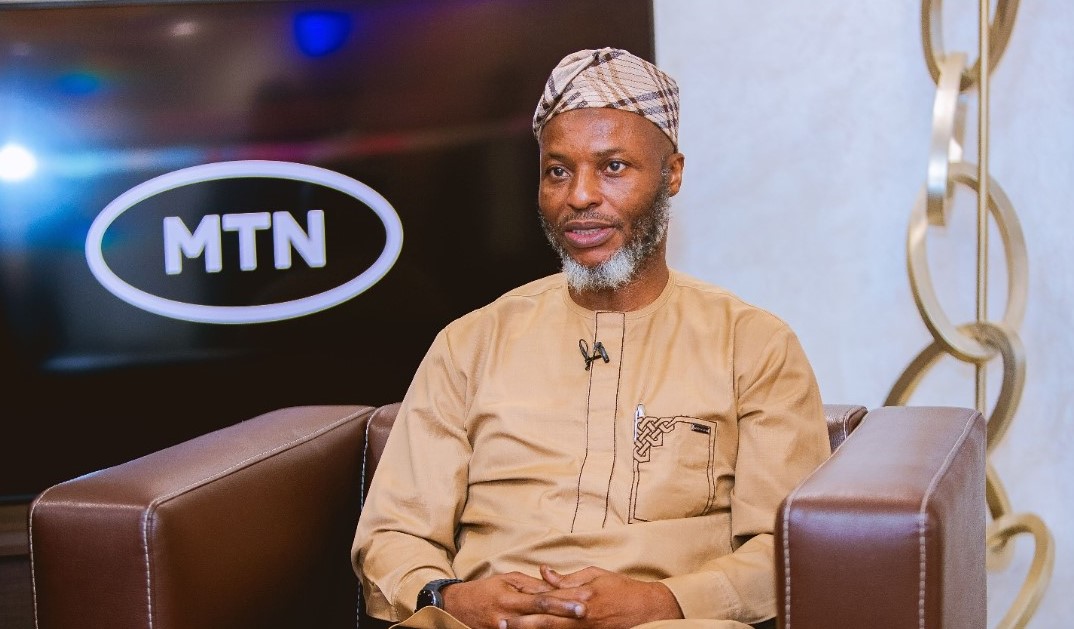
Modupe Kadri, MTN Chief Financial Officer
What MTN’s data surge is actually built on
Data carried the growth. At ₦1.7 trillion, data revenue rose 38.4% year-on-year and now accounts for well over half of service revenue, while voice grew a comparatively modest 12% and digital services, the smaller video, music, gaming and e-commerce category, grew 20.9%.
Kadri’s explanation leaned on demographics and habit rather than pricing power: a youthful, increasingly smartphone-equipped subscriber base of 92.2 million, smartphone penetration up to 66% from under 55% the previous year, and a population that never fully returned to pre-pandemic data habits. He put the average subscriber’s usage at roughly 15 gigabytes a month for about ₦170 a day, translating to around ₦5,000 for that monthly allowance, a framing designed to make a ₦3 trillion headline number feel less abstract and, implicitly, to pre-empt criticism that MTN is overcharging a population already squeezed by inflation.
Fintech told a different story within the same results. Revenue from that segment fell 7% during the half, and Kadri attributed the dip directly to the suspension of MTN’s NCC-regulated lending services for most of the period under review, with service only restored partway through. That single line complicates any narrative of fintech as MTN’s next growth engine, at least for now, even as the underlying mobile money business kept expanding: MoMo revenue rose roughly 132% and active wallets grew by 1.3 million to 5 million in the half, according to the company’s own disclosures.
The gap between a shrinking regulated lending line and a fast-growing wallet base suggests MTN’s fintech ambitions are less a single business than several moving at different speeds, which matters for anyone trying to value the unit MTN plans to spin off.
Read also: Is MTN MoMo growing?
That spin-off remains the more consequential fintech story than the quarterly swings. Kadri confirmed that MTN Nigeria intends to dilute its stake in the mobile money entity to 40%, handing 60% ownership to MTN Group Fintech, a decision he framed as capital allocation rather than retreat. So, the telecom business stays focused on connectivity while the group’s fintech arm invests more aggressively in the wallet product.
He was careful to distinguish this from an eventual listing, which he said remains undecided. The structural separation, still pending regulatory approval after shareholder sign-off, positions MTN’s financial services business to be judged on its own terms for the first time, separate from the network economics that currently absorb most of its capital.

MTN MoMo Where MTN’s cost discipline is real and where it’s borrowed time
Costs rose in step with an economy where nearly everything got more expensive. Kadri cited energy costs up 50% to 80% year-on-year, diesel up close to 80%, and intra-city transport fares up roughly 24% by NBS data, arguing that MTN’s own cost growth actually trailed the broader inflation the industry is absorbing.
Total expenses climbed 12% to ₦1.3 trillion, with cost of sales up 14% and operating expenses up 11%, both running below the 26% top-line growth that funded them.
The company’s response included renegotiating tower contracts after flagging the plan at its EGM, savings that show up in the improved expense ratios. Net finance costs fell 20%, which Kadri tied to a more specific and verifiable decision: MTN Nigeria fully repaid its foreign currency loans, eliminating forex-denominated debt, while its remaining naira bonds carry sub-14% average rates taken out when conditions allowed it. A more stable naira, which closed the half at roughly ₦1,380 to the dollar against ₦1,530 a year earlier, then compounded those savings by reducing lease-related finance charges, turning what was a ₦5.2 billion foreign exchange loss in H1 2025 into a ₦36.4 billion gain this half.
Capital expenditure is where Kadri pushed hardest against the idea that MTN is extracting value without reinvesting it. He put spending since January 2025 at over ₦1.6 trillion, financed from operating cash flow rather than debt, split roughly between ₦1 trillion last year and ₦600 billion in this half alone. Reported capex excluding leases came in at ₦620.5 billion for the half, up modestly even as total capex including leases fell 19%, a distinction Kadri used to argue that headline capex declines mask continued network investment.
He was equally direct about what that spending can’t fix: fibre vandalism, landlords locking network sites over disputes with tower companies, and other disruptions he described as largely outside MTN’s control, which he offered as the explanation for service quality complaints that persist despite the spending.
The tariff question, which Kadri clearly anticipated, produced his most calculated answer. He avoided a direct call for higher prices and instead pointed to the ongoing NCC cost study as the appropriate mechanism for determining what a fair, cost-reflective tariff would look like, while invoking the Minister of Power’s recent comments on ending electricity subsidies as an analogy for why current pricing isn’t sustainable.
On competition, he welcomed it in principle but qualified the welcome around obligations, noting that MVNOs and national roaming operators now licensed by the NCC still ride on MTN’s own infrastructure, a detail that undercuts the idea of competition as a genuine structural check on MTN’s market position in the near term. Read against the independently filed results, Kadri’s framing holds up on the numbers but is more selective on causation.
MTN’s own filings confirm the 25.9% service revenue growth, the ₦707.5 billion profit after tax, the 92.2 million subscriber base, and the EBITDA margin expansion to 55.9%, alongside a detail Kadri didn’t mention in the interview: underlying service revenue growth, stripping out the suspended lending product, was actually stronger at 27.3%, meaning the fintech suspension flattered rather than dragged the headline telecom number even as it hurt the fintech segment specifically.

Kadri put a specific figure on his revenue-versus-profit argument himself, noting that for every naira of revenue, only about 24 kobo makes it through to shareholders as distributable profit, a ratio that roughly matches the period’s actual margin. The interim dividend also carries a tax dimension he raised unprompted, pointing out that 10% of shareholder payouts return to government as tax, on top of over ₦600 billion the company already pays in taxes and NCC levies, a framing aimed at reinforcing his broader argument that MTN’s revenue circulates back into the economy rather than simply accumulating as profit.
What the interview leaves unresolved is timing. Kadri offered no date for the fintech spin-off’s regulatory approval, no commitment on when tariff adjustments might follow the NCC’s cost study, and no specifics on how MTN plans to address the site lockouts and fibre vandalism that continue to undercut its capex story regardless of how much it spends. For a company reporting its strongest half in years, the more interesting numbers may be the ones still pending.