When the Advertising Regulatory Council of Nigeria (ARCON) sent Facebook Nigeria a letter in October 2024 demanding N60 billion for alleged advertising violations, it did what many Nigerian r
When the Advertising Regulatory Council of Nigeria (ARCON) sent Facebook Nigeria a letter in October 2024 demanding N60 billion for alleged advertising violations, it did what many Nigerian regulatory agencies have quietly been doing for years. It decided a company was guilty, calculated a penalty, and presented the bill, all in a single document, without ever asking the company to explain itself.
A Federal High Court in Lagos has now said that cannot stand.
In a judgment delivered in Suit No. FHC/L/CS/2205/2024, Justice Yellim Bogoro declared ARCON’s Notice of Violation unconstitutional, unlawful, and void, permanently restraining the regulator from enforcing it. The ruling voided one of the largest regulatory sanctions ever issued against a technology company in Nigeria, but its implications stretch well beyond advertising law or Facebook.
It raises a question that sits at the heart of how Nigeria regulates its corporate sector: can a government agency decide that a company has committed a criminal offence, impose a massive financial penalty, and do all of this through a letter, without giving the accused company any opportunity to respond?
The court’s answer was no. And a legal expert who reviewed the judgment told Technext the ruling reflects a pattern of regulatory overreach that goes far beyond ARCON.

What ARCON did and where it went wrong with Facebook
The dispute began after ARCON accused Facebook Nigeria of exposing advertisements on Facebook and Instagram to Nigerian audiences without obtaining prior approval from the Advertising Standards Panel, in violation of the ARCON Act 2022 and the Nigerian Code of Advertising. The regulator issued a notice directing the company to stop and demanding N60 billion for what it described as repeated violations.
Facebook Nigeria challenged the notice in court, represented by Senior Advocate Mofesomo Tayo-Oyetibo. The company argued that ARCON had no legal authority to determine criminal liability or impose punitive sanctions through an administrative letter without first affording it a fair hearing. It also argued that it was a separate legal entity from Meta Platforms Inc., which actually owns and operates Facebook and Instagram.
The court agreed on both counts.
On the corporate identity question, Justice Bogoro held that Facebook Nigeria and Meta Platforms Inc. are distinct legal entities, and that ARCON had not produced sufficient evidence to establish that Facebook Nigeria owned, controlled, or operated the platforms in question. Mere assertions that the Nigerian company represented Meta’s interests in Nigeria were not enough to impose liability.
On the more fundamental process question, the court identified two connected problems, both grounded in Nigerian law and the constitution.
The first is the nature of the alleged offence. Sections 34 and 54 of the ARCON Act expressly state that exposing advertisements in contravention of the Act “constitutes an offence.” These are not civil compliance requirements dressed in regulatory language, they are criminal provisions. Under Section 36(4) of the 1999 Constitution, a person charged with a criminal offence is entitled to a fair hearing before a court or tribunal.
Only judicial bodies can make findings of criminal guilt and impose criminal penalties. An administrative agency cannot, through a letter, effectively convict a company of a criminal offence and impose what is in substance a criminal fine.
The second problem is that ARCON violated its own law. Section 57(4) of the ARCON Act explicitly requires the Council to accord any alleged violator a fair hearing before imposing any penalty. ARCON did not do this. It made the allegation and imposed the N60 billion sanction in the same document, on the same day.
Similar read: Court dismisses ARCON’s ₦30bn lawsuit against Meta and AT3 Resources
Consider a simple analogy. Imagine a landlord slides a note under your door saying you violated your tenancy agreement and must pay N5 million by the end of the week, without telling you precisely what you did wrong, without inviting you to explain yourself, and without any form of hearing. That is functionally what ARCON did to Facebook Nigeria. And the court said it cannot work that way.
What a legal expert says this means for every Nigerian regulator
Radiyah Sekoni-Dairo, a lawyer specializing in technology, policy, and compliance, reviewed the ARCON judgement on Facebook judgment for Technext and said the ruling speaks to a much broader pattern that has emerged across Nigeria’s regulatory landscape, one that this case has now brought into sharp focus.
“The issue is that this particular body, although there are some other bodies too that are like that, they generally just like to think that once they issue a legal notice or demand letter, they can easily just issue demand letter and give people fines, and it does not work that way,” she explained.
She pointed to the constitutional framework as the foundation of the court’s reasoning. The alleged advertising violations ARCON relied upon are classified as offences under the ARCON Act itself. And under Nigerian law, once something is classified as an offence, constitutional protections kick in immediately.
“The constitution has said that any criminal offence shall not be judged upon without hearing from the other party,” she said. “So you can’t just say that people have been fined a particular amount without hearing from the other side.”
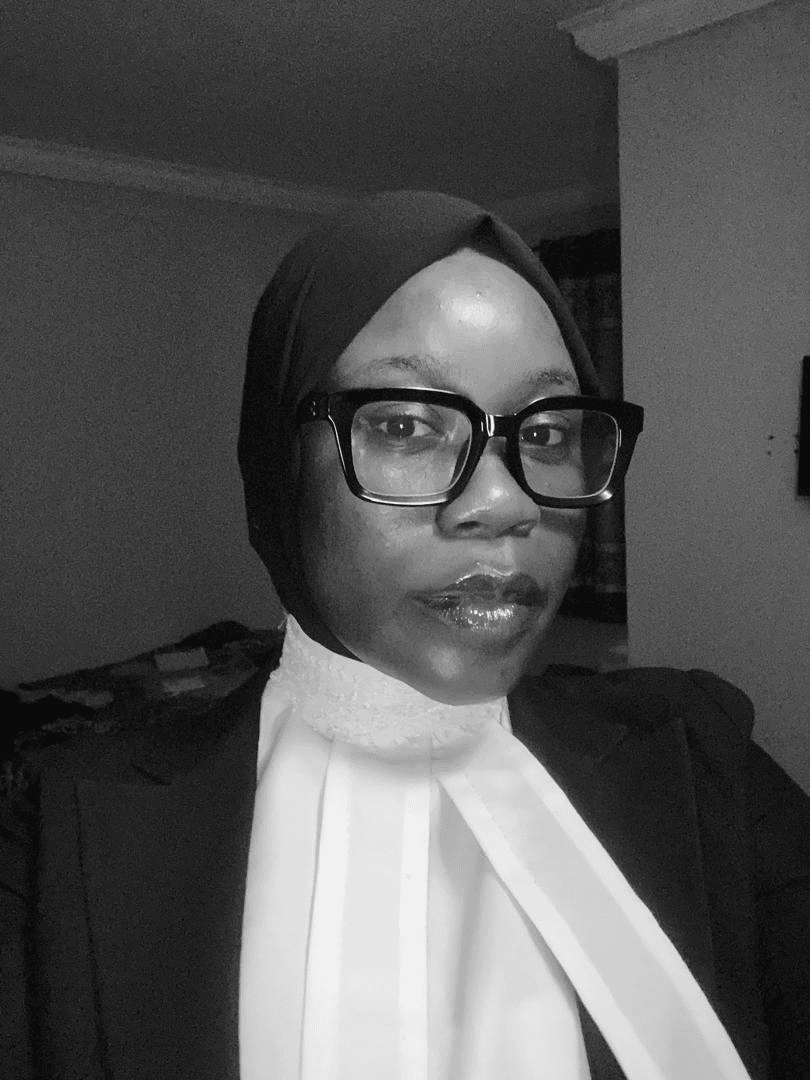
Radiyah Sekoni-Dairo
Critically, Sekoni-Dairo said this does not mean regulatory agencies must always go to court before acting. Nigerian law recognises what are called quasi-judicial proceedings, structured administrative processes conducted by regulatory bodies that carry legal weight.
“These are proceedings conducted by bodies like ARCON and others. They have their own body, and they are supposed to take the case there, hear from the other party, okay, this is why we were doing this particular advertisement, and then see whether they actually committed what they said they committed.”
The problem in this case, she said, was that ARCON did not even use its own internal processes. “Not that you just send them a letter and say because you have not told us about this thing that you are doing, you have committed this offence and you are supposed to pay us this amount.”
What makes the ruling particularly pointed is that ARCON actually has the institutional machinery to handle enforcement correctly. The ARCON Act establishes an Advertising Offences Tribunal, an Investigating Panel, a Disciplinary Committee, and an Advertising Standards Panel, a layered enforcement structure with defined roles at each stage. ARCON bypassed all of them. It went straight from allegation to N60 billion demand with nothing in between.
Nigerian courts have drawn a consistent distinction in this area. A regulator may impose a civil fine or compliance measure administratively, provided its enabling law creates a genuine opportunity for the regulated party to make representations before the decision is made. But where the conduct is defined by statute as a criminal offence, and the sanction is punitive in nature, the matter must go through the judicial or quasi-judicial process the law prescribes.
This principle has been affirmed across sectors: financial services, broadcasting, telecommunications, and oil and gas, wherever agencies have tried to shortcut enforcement through administrative fiat.

Mark Zuckerberg (IMG: Facebook)
It is also important to be clear about what the ruling does not mean. It does not say platforms can advertise in Nigeria without ARCON’s approval. The regulatory obligation remains fully intact. The court made no finding that Facebook Nigeria did not violate the ARCON Act, it simply held that the process ARCON used to impose the sanction was constitutionally and statutorily defective.
Also read: Facebook doubles down on original creators, removed 20 million impersonator accounts in 2025
ARCON retains full authority to enforce its mandate. What it must do is use the right tools, investigate properly, refer credible cases to its Investigating Panel.
Only after a proper hearing and a finding of guilt can a penalty lawfully be imposed.
As Sekoni-Dairo put it: “It is not that they necessarily have to go to court. It is that even by their own act, they have already said that before you can fine someone, that person must have been heard.”
Nigerian regulators would do well to take note.
