Guides2 min read
The Robot news gave PI a boost
Pi Network's $PI token received a short-term price boost this week after Fabric Foundation (@FabricFND) announced that @PiCoreTeam had joined RoboPay as a payment partner. The news landed on
NEAR has given back the entire May-to-June rally and trades below its first Fibonacci level at $1.927. Buyers need a daily close above $1.927 before the current bounce carries any weight. A p
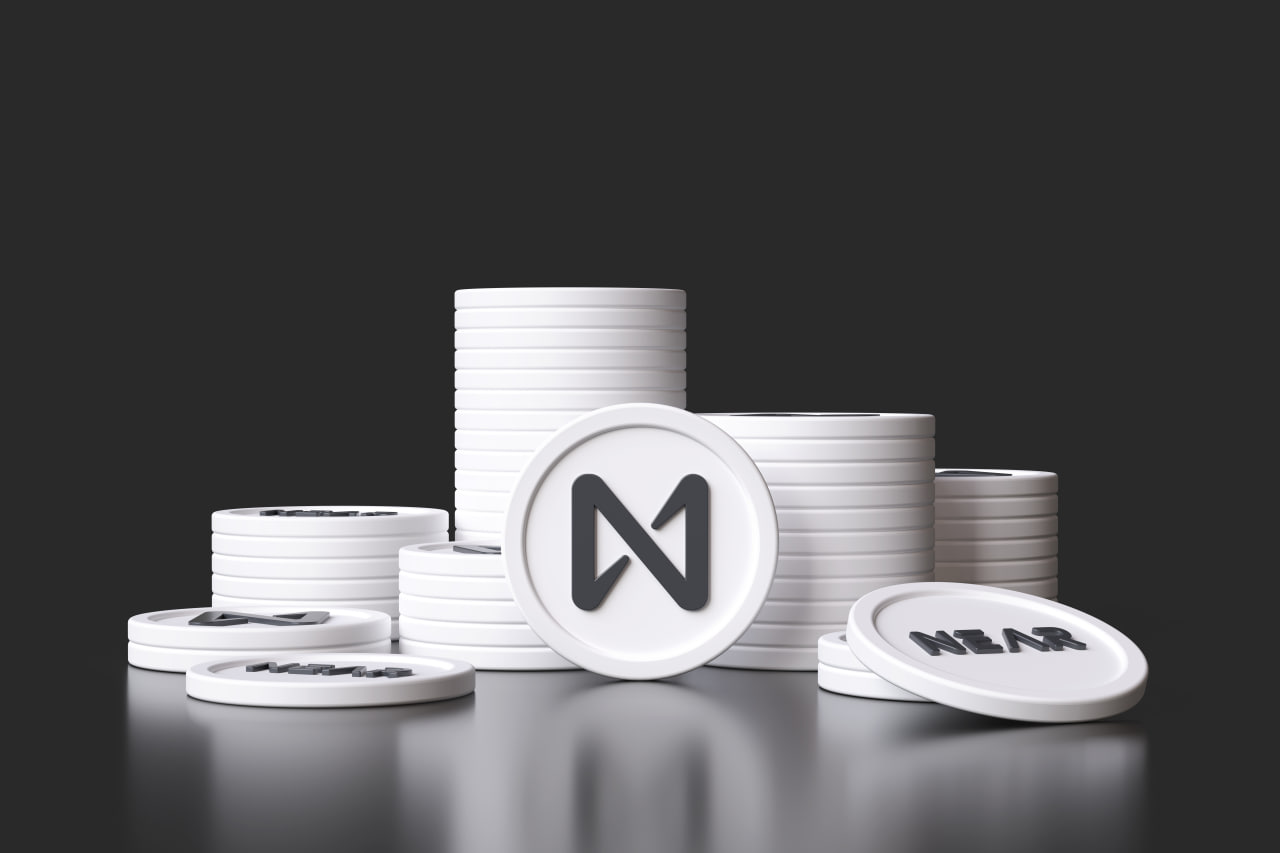
NEAR Protocol trades at $1.735 on the daily chart, up more than 5% over the past week but still sitting far below where it stood in early June. The recent bid has a clear source. On August 3, NEAR co-founder Illia Polosukhin posted a governance proposal for a protocol sovereign fund, and in the same window Bitwise disclosed the ticker for its pending spot NEAR ETF. Both landed while the chart was pressed against the base of a move it had fully unwound, which is why the two stories now sit awkwardly next to each other: constructive fundamentals against a price structure that has already broken down.
Polosukhin’s proposal, filed on the NEAR governance forum, asks the network to build a treasury seeded with roughly 30 million NEAR, worth around $52 million at the current price. Instead of leaving those tokens idle, the fund would stake and deploy them to generate yield, and a share of that yield would pay for validator support, multiparty computation providers, and other public goods. He framed it as a discussion starter rather than a settled plan. Stakeholders have a two-week comment window before supporters weigh any formal governance steps.
I just posted a proposal on the NEAR Governance Forum. I'm proposing a new type of protocol fund to pay for public goods and make token economics more sustainable for the long-term. @NEARProtocol@NEARGovernance community members, please check it out and engage with the idea!…
— Illia (root.near) (
, ⋈) (@ilblackdragon) August 3, 2026
The ETF piece is separate but overlapping. Bitwise filed its third S-1 amendment on July 31 and revealed the ticker NRR, with shares set to list on NYSE Arca if the SEC signs off, Coinbase Custody holding the tokens, and the trust permitted to stake up to 100% of its NEAR. CoinGecko attributed the week’s move to both threads at once. The bounce visible off the lows lines up with that timing.
The mechanism matters more than the headline number. NEAR currently mints new tokens to pay validators, and it has historically burned part of its transaction fees to offset that inflation. Polosukhin’s argument is that burning is a short-term fix that leaves nothing behind. Redirecting revenue into a fund that buys NEAR and compounds yield, by contrast, builds a permanent funding base that could eventually let the network cap supply and retire emissions entirely. He called the buy-and-yield route a much more long-term-aligned approach than destroying tokens outright.
The proposal does not stand on its own; it extends a sequence the network has been running for close to a year.
LATE 2025 Inflation cut Issuance lowered from about 5% to roughly 2.5%. FEB 2026 Intents fee switch Routed protocol revenue toward NEAR purchases. AUG 3, 2026 Sovereign fund proposal 30M NEAR treasury to fund security through yield.Most of the friction on the governance forum comes down to control. Handing a 30 million token treasury to the House of Stake, the network’s governance body, and then deploying that capital across yield protocols exposes a large slice of the ecosystem to smart contract risk and revives an old debate about how centralized NEAR’s decision-making really is. That debate has history: a governance proposal last October called for Polosukhin to step back from one of his leadership roles over exactly these tokenomics concerns.
Pulling a Fibonacci retracement from the May swing low at $1.570 up to the June peak at $3.083 frames the technical picture cleanly. Price has given back the whole of that leg. It traded down through every retracement level and now rests below the shallowest one, the 0.236 at $1.927. A pullback that erases more than three quarters of an impulse leaves little of the original bullish case standing, and NEAR has gone the full distance. The move round-tripped.
 NEAR trades at $1.735, below the 0.236 Fib level. Chart by Alexander Stefanov.
 The value in the Fib is not the drawing but how price reacted at each level on the way down. Through June and July, NEAR repeatedly stalled beneath the 0.382 at $2.148 and failed again under the 0.236 at $1.927. Those lined up with genuine reaction points, which confirms the swing high and low were the right ones to anchor the tool.
FIBONACCI MAP · $1.570 LOW TO $3.083 HIGH 1.0June peak, origin of the decline $3.083 0.786Distant resistance, untested since the drop $2.759 0.618Golden pocket, out of reach for now $2.505 0.5Midpoint, capped the July recovery attempts $2.326 0.382Rejected price repeatedly, key overhead supply $2.148 0.236Nearest ceiling, bulls must reclaim this first $1.927 PRICE NOW $1.735 0May low, invalidation for the whole move $1.570
 The immediate job for buyers is straightforward: reclaim $1.927 on a daily close. Until that happens, the bounce off the lows carries no real weight, because price still trades beneath the first line of the retracement and inside a structure that has already broken. A close back above $1.927 would be the first evidence that the sellers who have run this chart since June are starting to lose their grip.
Clearing that opens the harder test at $2.148. Price bounced off that level more than once over the summer and turned lower each time, so it now defines whether NEAR is merely bouncing or actually reversing. On the downside, the $1.570 low anchors everything. A daily close beneath it would confirm the rally has fully failed, and there is little visible support underneath, which raises the risk of a faster leg lower if it breaks.
The RSI sits at 43.18 with its signal line at 39.66, both under the 50 midline that usually separates bullish momentum from bearish. In plain terms, that reading says sellers still hold the edge, but the pressure has eased. The fast line has crept back above the slow one after tagging oversold in late July, which is the kind of shift that produces a bounce rather than a trend change. It would take a push above 50 to argue for anything more.
Volume tells the same story from a different angle. The heavy activity clustered around the June high, where the selling was aggressive, and has thinned out through the recovery. Rallies on light volume into overhead resistance tend to fade, and that is exactly the setup here even with two fundamental catalysts in the mix.
The bullish path starts with a daily close above $1.927, followed by an attempt on $2.148. If both give way with participation behind them, the case for a recovery toward the $2.326 midpoint opens up. Each level is a real hurdle, not a formality, and the sequence has to build one step at a time. The bearish path is closer to the current trajectory: a rejection at or below $1.927 keeps price pinned inside the broken structure, and a loss of $1.570 confirms the retracement has fully unwound with room to run beneath it.
The next hard date is the close of the two-week comment window on the sovereign fund, which puts the House of Stake and its critics on the clock in mid-August. Whether that proposal advances toward a formal vote, and whether the SEC moves on the Bitwise filing, will decide if the fundamental bid has anything left once the chart reaches $1.927. At $1.735, the token is caught between a story that is improving and a structure that has not yet turned.
The post NEAR Price Analysis: One Level Stands Between Bounce and Failure appeared first on ETHNews.