Network participants approved lowering the issuance ceiling from 2.5%, reshaping NEAR's long-term token supply policy. NEAR Protocol has confirmed the outcome of a governance vote that lowers
Network participants approved lowering the issuance ceiling from 2.5%, reshaping NEAR's long-term token supply policy.
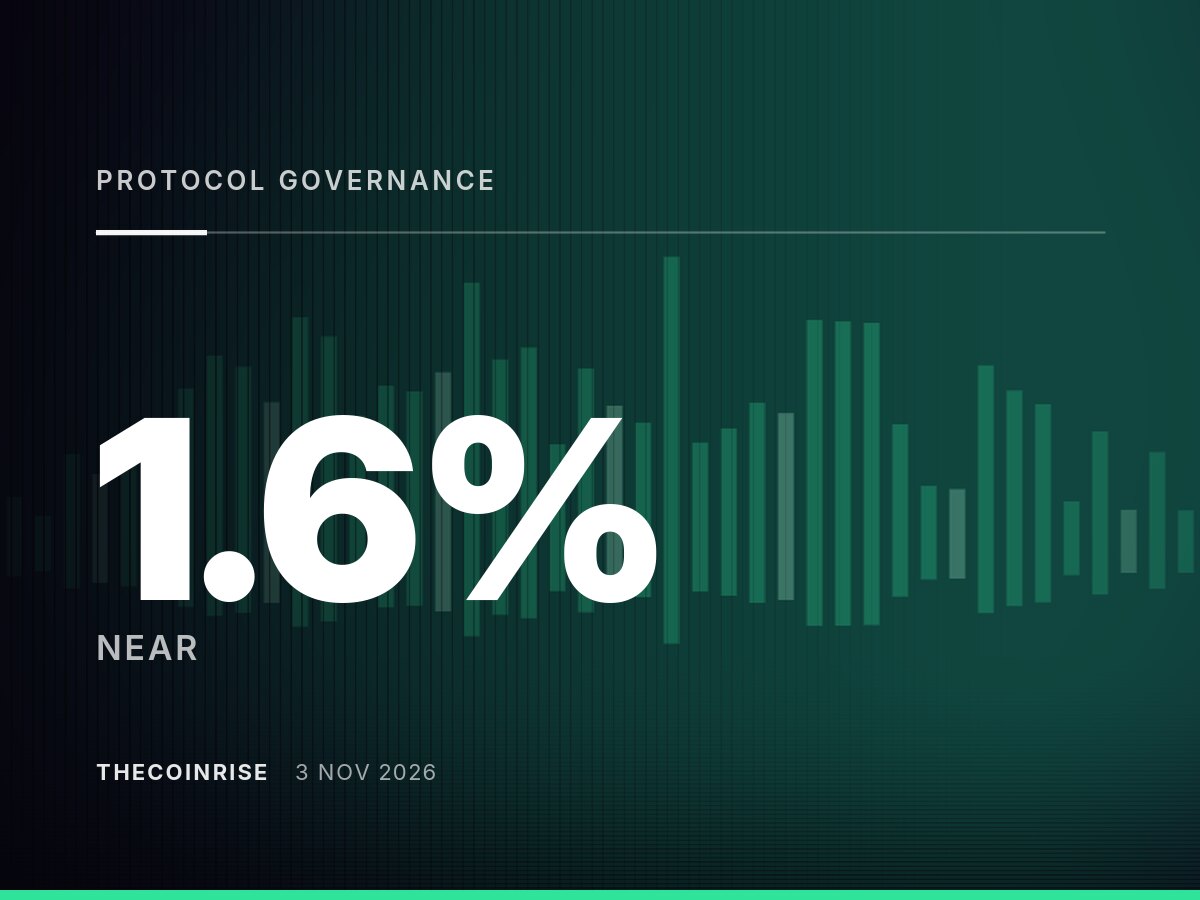
NEAR Protocol has confirmed the outcome of a governance vote that lowers the network's maximum annual token issuance rate. The ceiling drops from 2.5% to 1.6%, according to the announcement. The result came through the project's formal governance process, which allows token holders and validators to weigh in on protocol-level parameters.
Issuance ceilings determine how many new tokens a blockchain can mint each year to fund validator rewards and network security. A lower ceiling means fewer new tokens entering circulation over time, all else being equal. Networks often adjust these parameters as they mature and look to balance security incentives against inflationary pressure on existing holders.
The vote reflects a wider trend across proof-of-stake networks. Many layer-1 blockchains built their original issuance schedules during earlier growth phases, when higher emissions helped bootstrap validator participation. As ecosystems stabilize, governance communities frequently revisit those schedules to reduce dilution for long-term holders.
NEAR's governance structure allows changes like this to move through community and validator input before implementation. The approval of the reduced ceiling suggests sufficient consensus existed among those participating in the vote. Details on the exact mechanics of the rollout, including any phased implementation, were not specified in the available reporting.
Issuance changes of this kind typically require coordination across validators, node operators, and any downstream protocols that reference staking rewards or supply schedules. Because NEAR's economic model ties issuance to staking participation and transaction fee burns, a lower ceiling could alter the net inflation rate depending on how much of the allowed issuance is actually used in practice.
The announcement arrives amid continued industry-wide attention to tokenomics as a differentiator for layer-1 platforms. Projects competing for developer activity and liquidity often point to supply discipline as a selling point to investors and builders alike. Governance-driven changes, rather than unilateral decisions by a foundation or core team, are also increasingly presented as evidence of decentralized decision-making in action.
While the headline figure, a cut from 2.5% to 1.6%, is the central fact confirmed across reporting, the practical effects will depend on adoption of staking, validator behavior, and how the protocol's burn mechanisms interact with the new ceiling going forward.
Market Impact
A reduced issuance ceiling is generally viewed as a supply-side adjustment that can influence long-term token inflation expectations. Lower maximum issuance does not guarantee lower actual inflation, since realized issuance depends on staking participation and network activity, but it does cap the theoretical upper bound on new supply.
For NEAR holders and validators, the change may factor into staking reward calculations and long-term supply modeling. Broader market reaction, if any, will likely depend on how the change interacts with existing demand for the token and overall activity on the network, factors not addressed in the available reporting.
NEAR Protocol's governance-approved cut to its issuance ceiling marks a notable adjustment to the network's monetary policy. Further details on implementation timing and downstream effects are likely to emerge as the network applies the new cap.
Frequently Asked Questions
What did NEAR Protocol's governance vote decide?
The vote approved lowering NEAR's maximum annual token issuance ceiling from 2.5% to 1.6%, according to the announcement.
Why would a blockchain lower its issuance ceiling?
Lower issuance ceilings reduce the maximum rate at which new tokens can be minted, which can limit long-term dilution for existing holders while still funding validator rewards.
Does this mean NEAR's actual inflation rate will drop to 1.6%?
Not necessarily. The 1.6% figure is a ceiling, or maximum allowed rate. Actual issuance depends on factors like staking participation and the protocol's fee-burn mechanisms.
Who decided on this change?
The change went through NEAR's governance process, which involves token holders and validators voting on protocol parameters rather than a unilateral decision by a single entity.
Originally reported by AltcoinGordon, written by Daniel Foster. Republished with permission.
View the original on AltcoinGordon →
The post NEAR Protocol Governance Vote Cuts Maximum Annual Token Issuance to 1.6% appeared first on TheCoinrise.com.