Nesa has had one of the more carefully orchestrated token launches in the AI-crypto space this month. On June 24, 2026, Binance Alpha featured Nesa as its first-ever highlighted project, runn
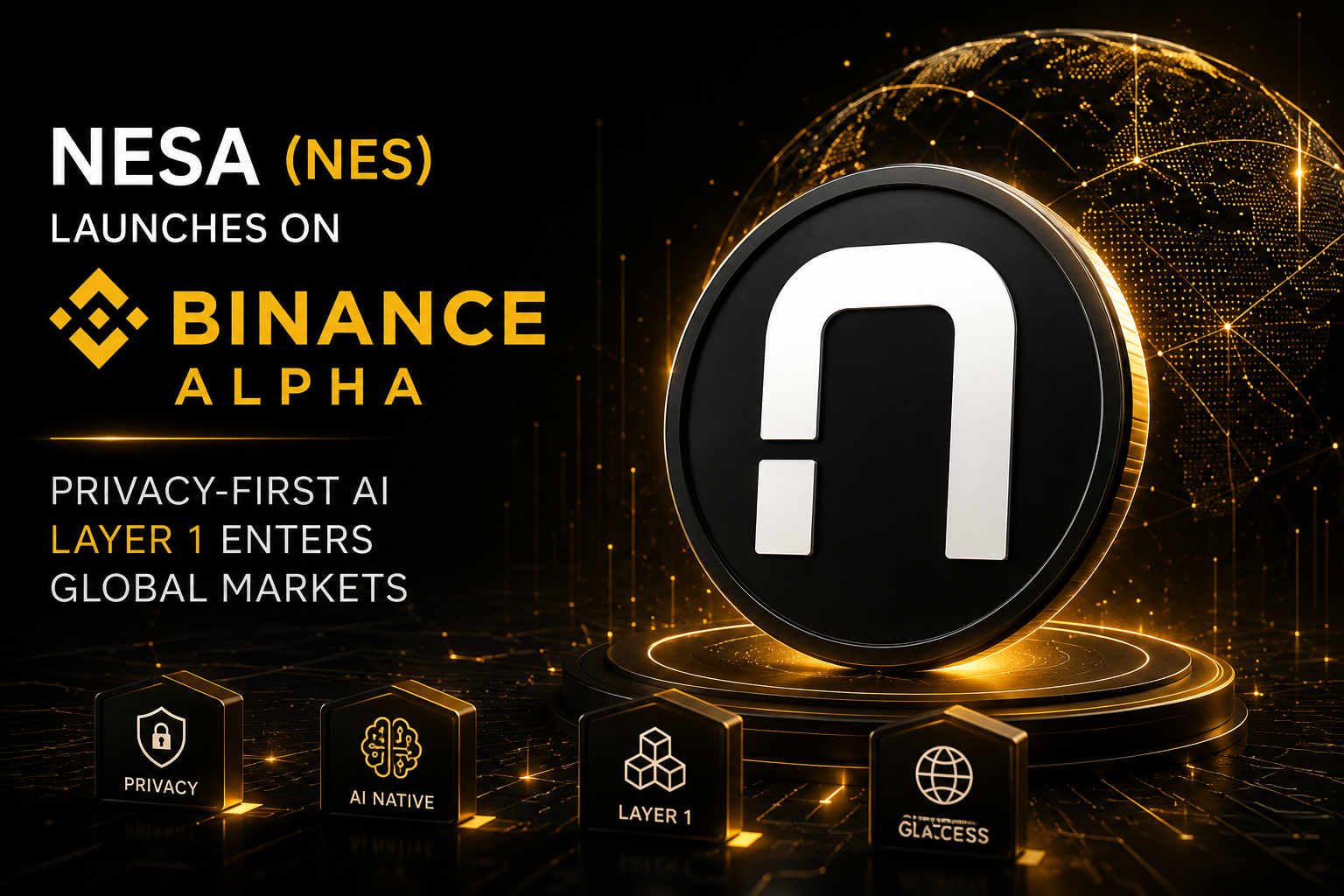
Nesa has had one of the more carefully orchestrated token launches in the AI-crypto space this month. On June 24, 2026, Binance Alpha featured Nesa as its first-ever highlighted project, running an airdrop campaign that distributed NES tokens to eligible users based on their Binance Alpha Points — a structure designed to reward active participants rather than bots or passive holders. The same day, NES/USDT spot pairs went live across Binance Alpha, KuCoin, and Bitget, with DigiFinex following with its own listing on June 25.
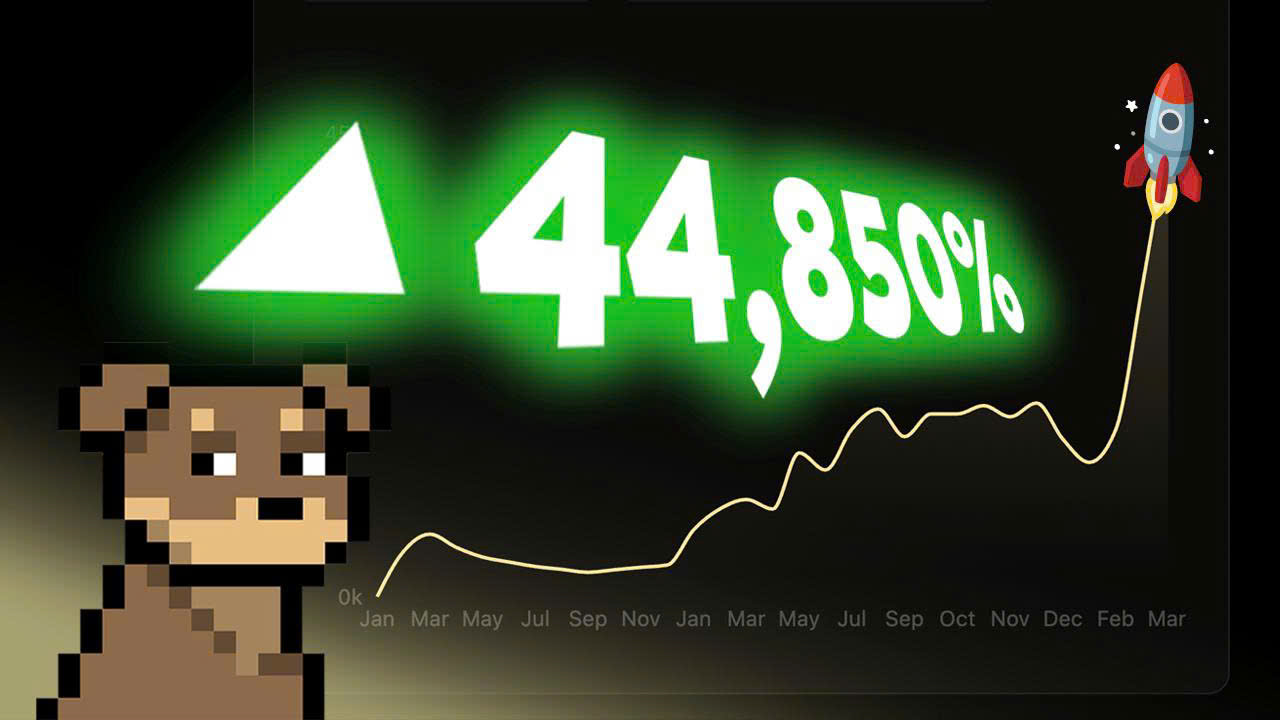
NES rallied to an all-time high near $1.45 in March 2026 during the broader AI-token surge before retracing to a swing low near $0.72 in April as liquidity rotated back to majors. The token is currently trading around $0.92, with a market cap of roughly $420 million and 24-hour volume of about $38 million.
What Nesa Actually Builds
Nesa is a lightweight Layer 1 blockchain focused on providing a distributed execution environment for AI inference tasks that require high privacy, security, and trust. It allows developers to operate multimodal models — such as language and vision — without trusting a single server or centralized platform, while achieving verifiable results through cryptographic methods.
The technical architecture sets it apart from general-purpose AI compute platforms. To resolve the critical risks of data manipulation, privacy breaches, and monopolistic control inherent in centralized machine learning silos, the protocol deploys Zero-Knowledge Machine Learning alongside a distributed marketplace framework — enabling complex AI models to process and evaluate datasets without exposing underlying sensitive information.
Nesa's decentralized Model Marketplace already securely hosts more than 1,000 active AI models, encompassing an extensive variety of frameworks including advanced text classifiers and financial sentiment engines. The system applies homomorphic secret sharing to distribute encrypted model fragments across independent mining nodes — meaning no single node ever holds a complete model shard or full query representation, making data integrity mathematically guaranteed rather than trust-dependent.
The Binance Alpha Launch Structure
The decision to feature Nesa as the first highlighted project on Binance Alpha is seen as a significant endorsement within the ecosystem. Binance Alpha is increasingly being used as a launch pathway for early-stage tokens, particularly those that combine strong narrative potential with technical innovation.
Binance also ran a separate booster campaign with a total reward pool of 1 million NES tokens, with a 50,000-winner cap keeping reward distribution broad without being diluted. Tying eligibility to Alpha Points filtered for genuinely active users — a mechanism that tends to produce cleaner initial price discovery than open, first-come-first-served airdrop models where bot activity distorts the distribution.
The mainnet launched on May 9, 2026 with 1 billion NES created at genesis, moving the project beyond a testnet-only narrative and giving the token direct roles in transaction fees, staking, node participation, and governance.
NES Token Mechanics and Supply Structure
NES serves as the gas asset for all on-chain transactions including AI inference queries. Users can pay inference fees in stablecoins, and the system automatically converts them to NES for settlement. That automatic conversion mechanic is a meaningful user experience design — it removes the friction of requiring users to hold a specific token for gas while still creating genuine NES demand through every inference request.
Secondary launch coverage reports 39.83% for ecosystem and community, 25.55% for genesis allocation, 14.62% for investors, 10% for the team, and 10% for initial core contributors. The heavily community-weighted allocation is a deliberate signal that the project is prioritizing long-term adoption over early investor extraction — though actual vesting schedules will determine how that distribution plays out in practice.
Inflation starts at 8% annually and declines by 8% each year until reaching a 1.8% floor — a tapering model that funds early network security and validator rewards while reducing long-term dilution as the ecosystem matures.
Backed by Binance Labs' Season 7 MVB Accelerator Program, with Harvard and Imperial College-affiliated founders, Nesa enters the public market with more institutional credibility than most AI-crypto launches at comparable stages. Enterprise adoption is the swing factor — Fortune 500 pilots in regulated industries signal real utility, which can compress the gap between narrative value and cash-flow-like network demand.