NFT marketplace infrastructure for Web3 gaming connects the item a player sees in a store with payment, blockchain ownership, and the version that appears inside the game. The Ronin gaming ec
NFT marketplace infrastructure for Web3 gaming connects the item a player sees in a store with payment, blockchain ownership, and the version that appears inside the game. The Ronin gaming ecosystem demonstrates the distinction clearly: Ronin Market supports NFT discovery and secondary trading, while Ronin Store sells game items and bundles through a purchase flow tied more closely to player accounts and delivery.
A studio therefore should not begin by shopping for marketplace software. It should decide whether an item is a collectible, a playable asset, a consumable purchase, or a combination of those. That classification determines whether the player needs a public order book, an in-game store, wallet ownership, account delivery, resale, or all five.
Start with the item, not the blockchain stack
A tradable card, a character skin, a season pass, and a pack of premium currency should not share the same checkout and ownership rules. The first architecture decision is to define what the buyer receives and what can happen to it after purchase.
Game itemBest ownership modelMarketplace treatmentDetail the buyer must seeCollectible cardPlayer-controlled NFTPublic listings and offers can support repeated resaleCard set, edition, play eligibility, balance changes, and royaltyCharacter or weapon skinNFT or account-bound item, depending on transfer policyFixed-price store plus optional secondary marketCompatible character, visual preview, trade lock, and delivery accountSeason passUsually account-bound and time-limitedDirect store purchase rather than an open order bookStart date, end date, included rewards, and refund restrictionLand or persistent world assetPlayer-controlled NFT with game-side permissionsListings and auctions, with clear transfer consequencesLocation, resource rights, building state, and what resets after saleCurrency or consumable packOffchain account balance in most casesDirect store checkoutQuantity, region, expiry, delivery time, and refund policy
Tokenizing every row would add wallet and support work without automatically improving the game. NFT ownership is most defensible where transfer, provenance, scarcity, or composability creates practical NFT utility. Consumables and temporary access usually benefit more from fast account delivery.
Make an item an NFT when players genuinely need to trade it, prove its origin, or carry it beyond one game session. Keep it account-bound when it expires, is consumed, or only matters inside one player's progression path. A secondary market should only follow once the game can explain what happens to utility, restrictions, and support after ownership changes.
From marketplace listing to playable inventory
A complete purchase has five meaningful states: listed, reserved, paid, transferred, and usable. The marketplace, wallet, payment service, ownership tracker, storage layer, and game inventory each own part of that path. Payment authorization is not treated as delivery; the order remains pending until ownership changes and the game recognizes the new owner.
StageWhat the player seesWhat must be true before moving forwardItem inspectionPrice, traits, usage requirement, seller, and total checkout costThe token matches the official collection and is eligible for saleReservationA short checkout timer and one order referenceThe listing is active and cannot be filled by another buyerPaymentCard or wallet approval with fees shown before confirmationThe quote is valid and the requested permission matches the purchaseOwnership transferA pending state that survives a closed screenThe transfer reaches the studio's required confirmation stateGame deliveryThe item appears with its current restrictionsThe new wallet maps to the player account and the previous owner loses access
If delivery is delayed, the same order reference should let support locate the payment, transfer, and inventory update without charging the buyer again. NFT tracking tools can provide a second ownership view, but the studio still needs its own repair path.
The player should never have to diagnose this flow. Show the exact item, total cost, and receiving account before payment; show a pending state and one support reference afterwards; then show delivery inside the game once ownership is confirmed.
Ronin Market, Ronin Store, and OpenSea solve different jobs
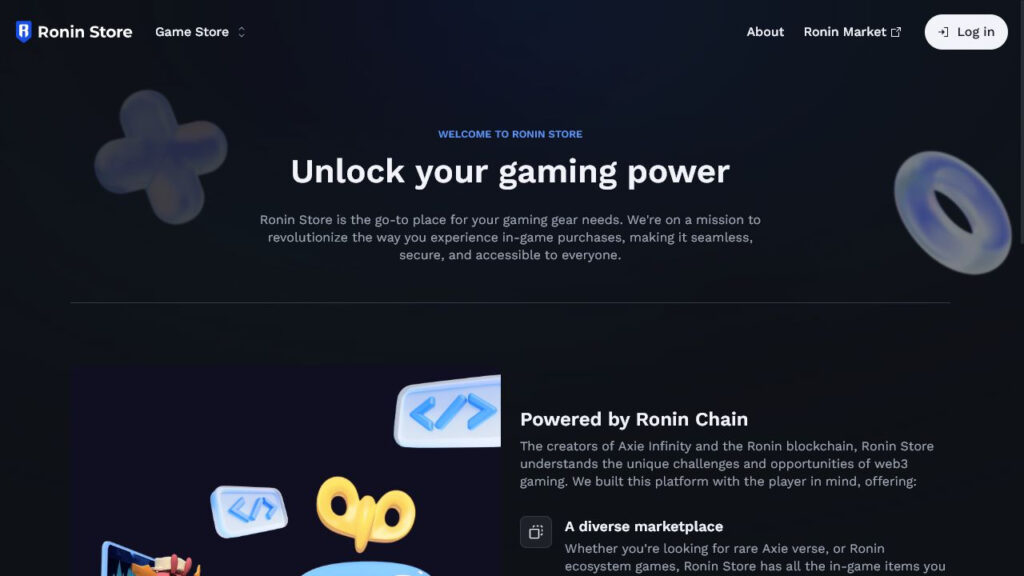
The difference becomes easier to see through products players can already visit. Ronin Market organizes collections, listings, offers, and recent sales around NFTs on Ronin. Ronin's public ecosystem page positions the marketplace and wallet as part of the same gaming network, reducing the distance between asset discovery and a compatible player account.
 Source: Ronin
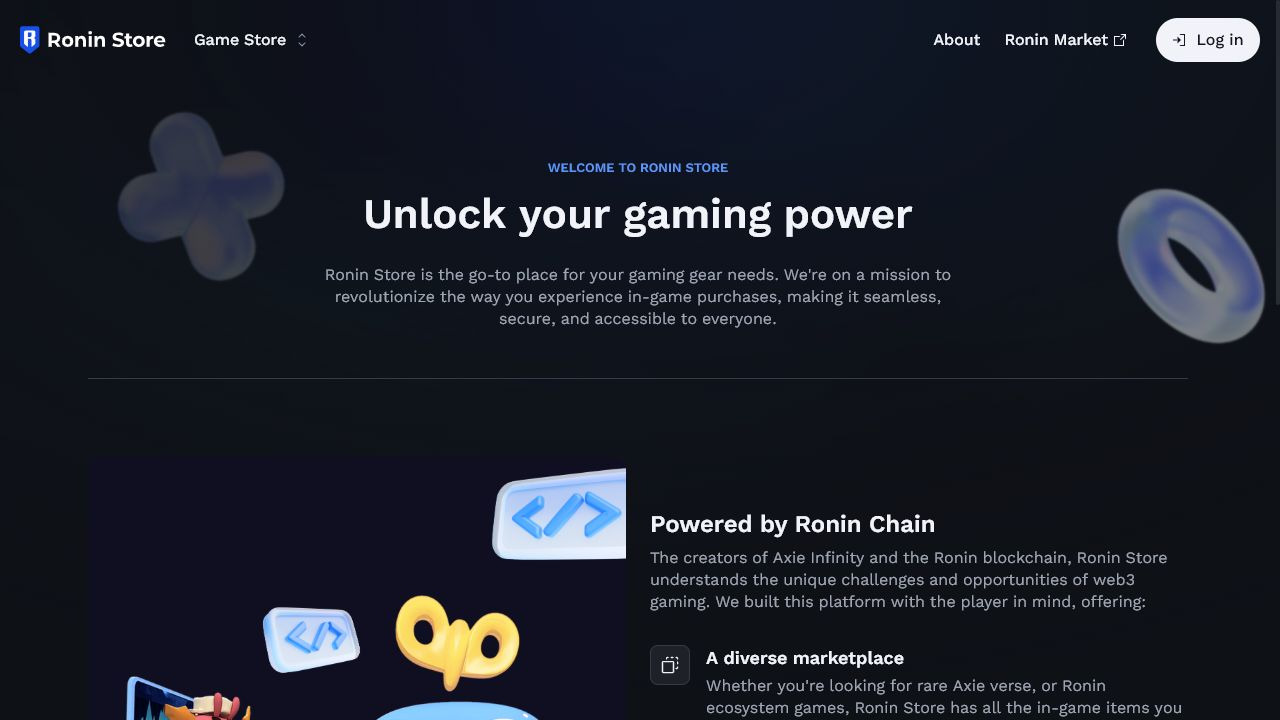
Ronin Store is closer to game commerce. Its storefront groups items by game and emphasizes direct purchasing rather than collection-floor trading. That model is more appropriate for bundles, premium items, or products delivered to a Mavis account or game ID. Order history and support matter more here because a successful payment still needs to produce the correct in-game delivery.
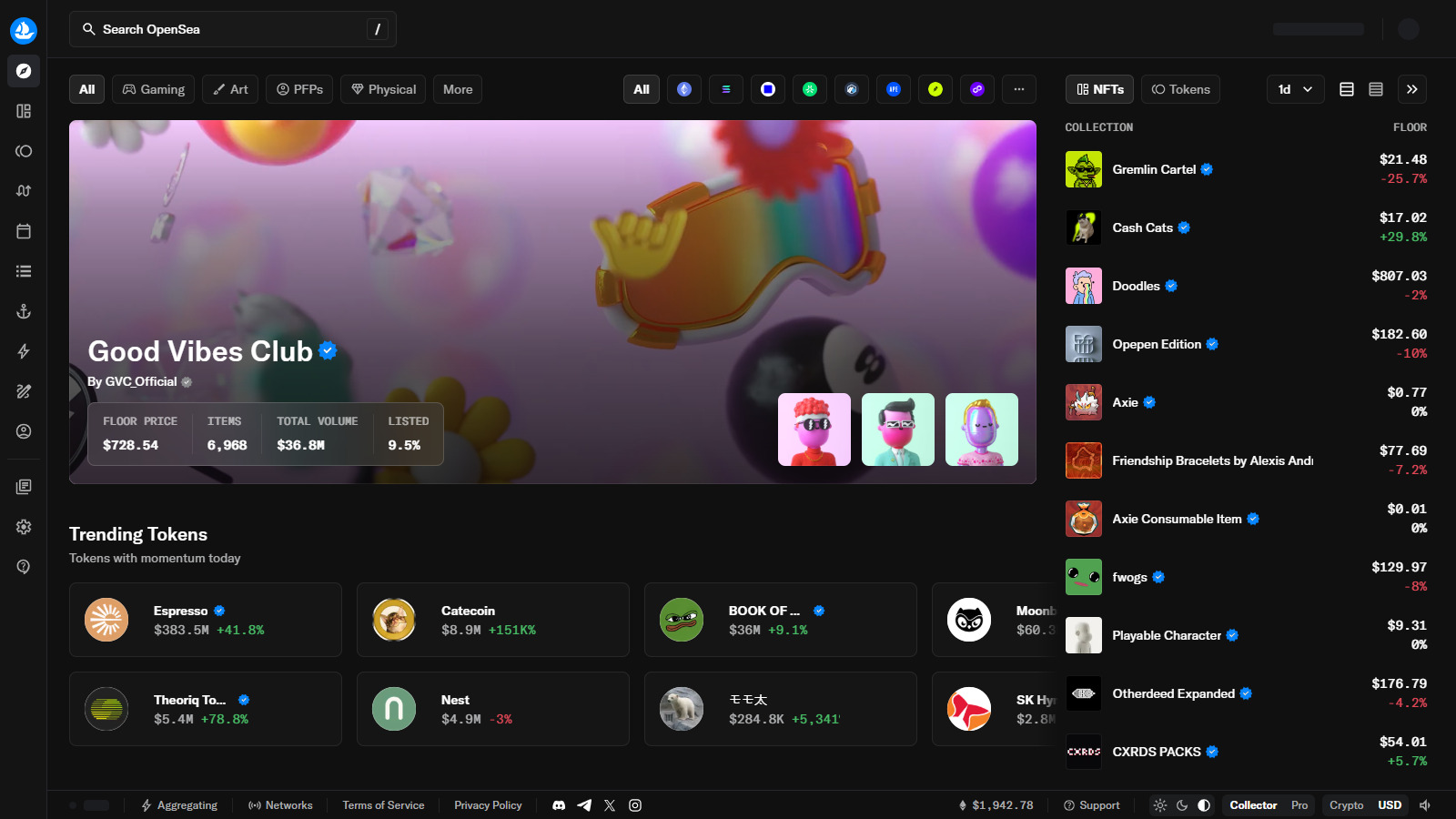
OpenSea offers broader public discovery and secondary-market reach, but it cannot determine whether a purchased asset is equipped, season-eligible, or compatible with a player's game account. A studio using an external marketplace must provide that context itself and maintain a reliable path from wallet ownership to inventory.
SurfaceUse it forDo not expect it to solveRonin Market-style ecosystem marketplaceNFT discovery, collection offers, resale, and ecosystem liquidityDetailed gameplay state or account-specific eligibilityRonin Store-style game commerceGame bundles, direct purchases, account delivery, and order supportOpen secondary-market price discovery for every itemOpenSea-style external marketplaceBroad collector reach and public NFT tradingAutomatic delivery into the correct game accountMarketplace inside the gameContextual upgrades, crafting inputs, rentals, and instant inventory feedbackBroad discovery among collectors outside the game
The practical answer is often hybrid: keep utility-led purchases and delivery feedback close to the game, while using a public marketplace for transferable assets and secondary liquidity. Both surfaces must point to the same collection, token, order, and entitlement rules.
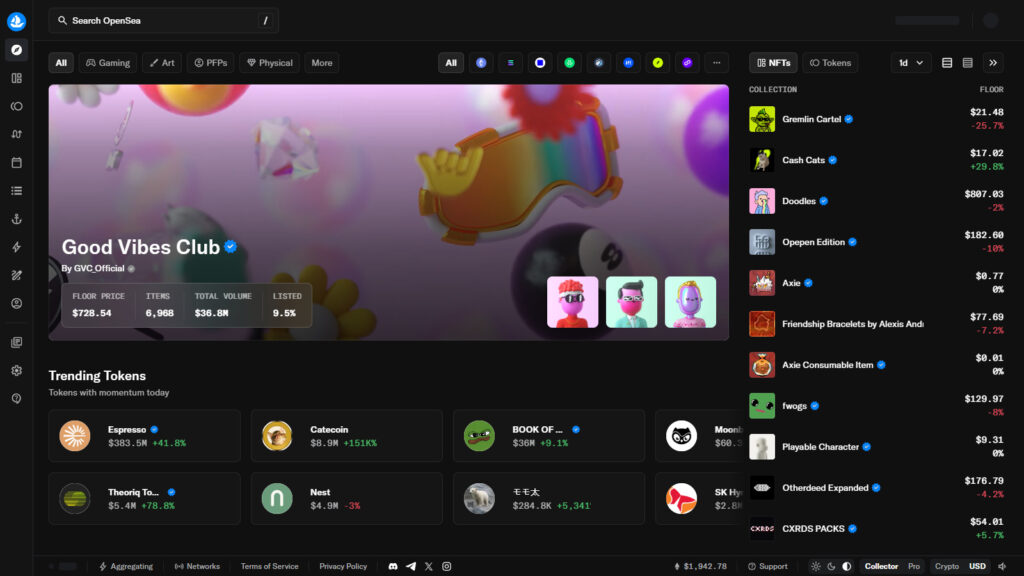 Source: OpenSea
A player buying a starter bundle needs a game store, simple payment, and immediate delivery. A collector comparing traits or offers needs a public marketplace with searchable collection data. A player buying a usable weapon needs both market price discovery and a clear in-game compatibility check.
Metadata, storage, and playable inventory
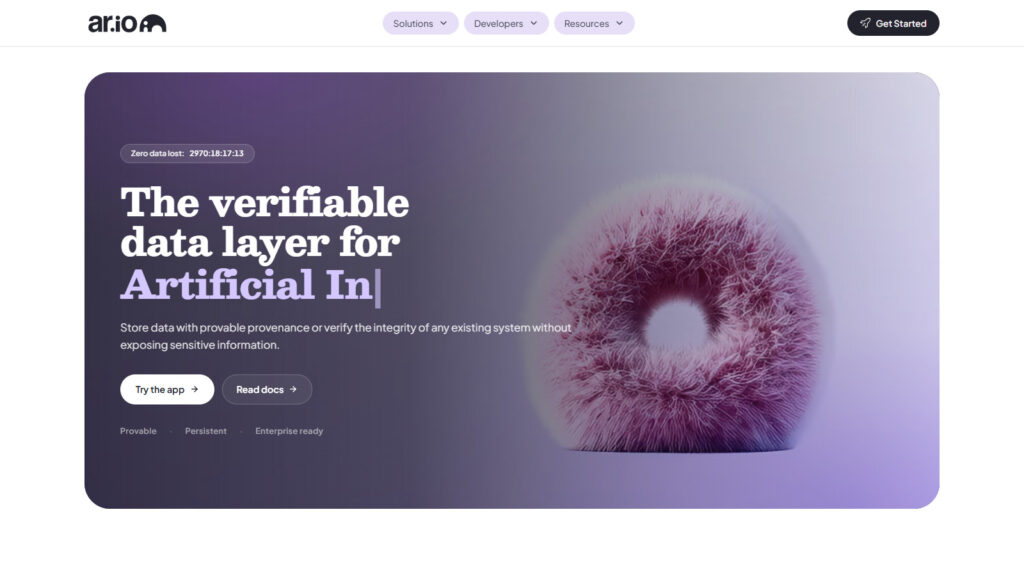
Keep stable facts in metadata and changing game rules in the game backend. OpenSea marketplace shows the fields that public marketplaces expose, while IPFS and ar.io help separate content addressing from retrieval.
Identity, edition, art, animation, and permanent traits belong in the record created during the NFT minting process. Durability, cooldowns, equipped state, matchmaking restrictions, and temporary buffs belong in the game database. Before launch, resolve the same item through two media retrieval paths and show a fallback image with a support state rather than a blank collectible page.
 Source: ar.io
Wallets and checkout without crypto friction
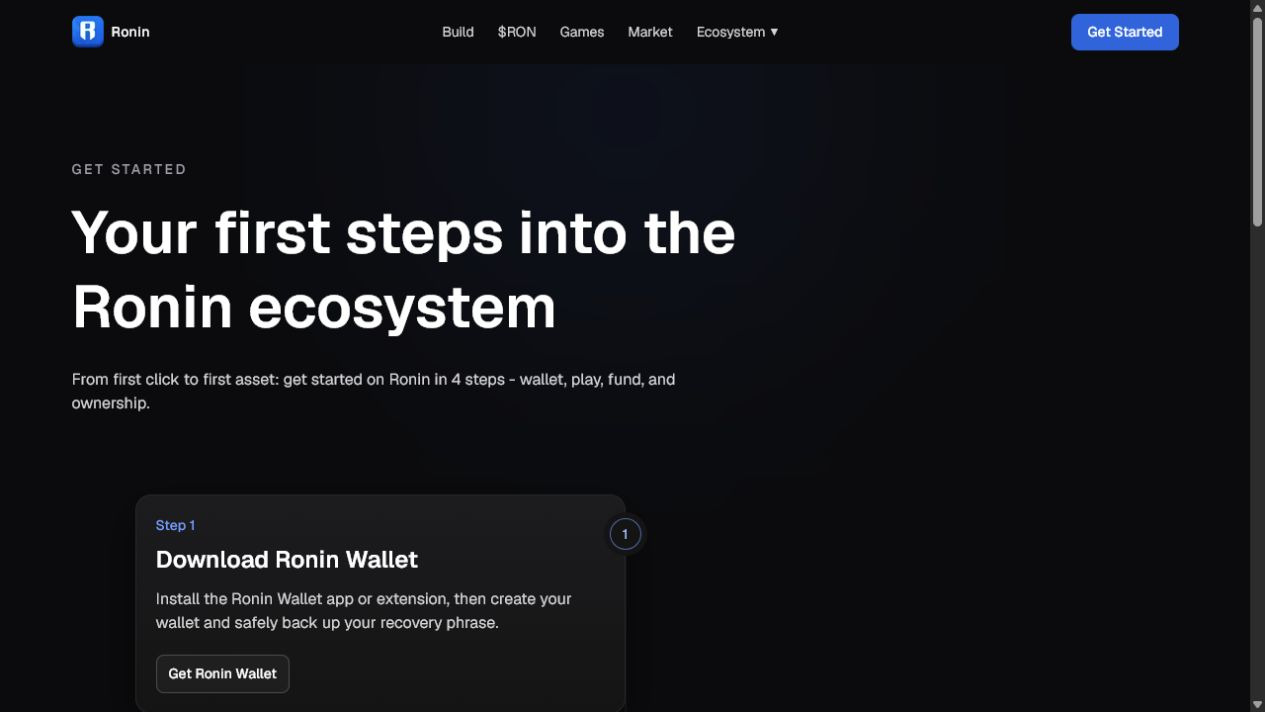
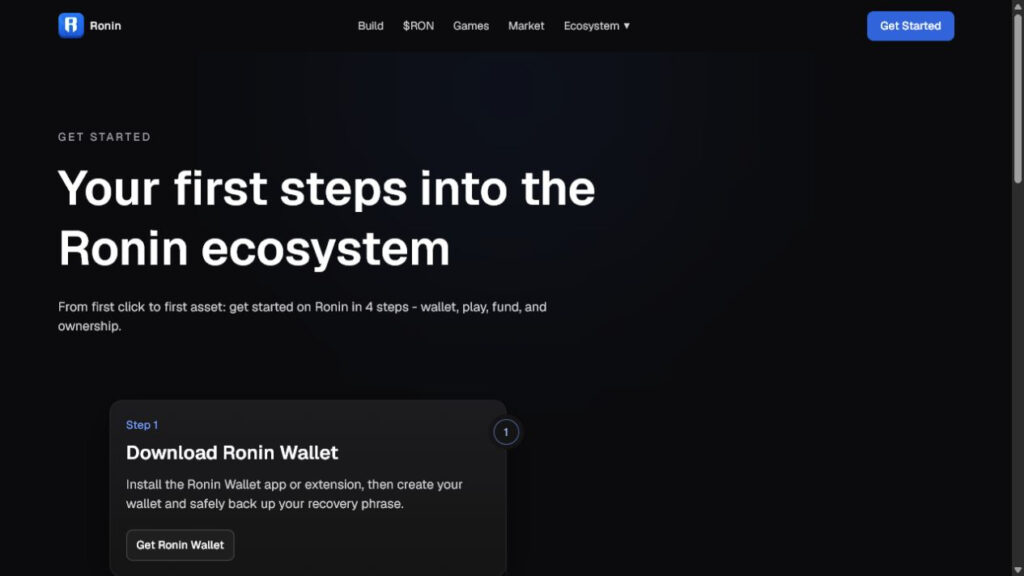
The wallet choice decides whether the marketplace feels like part of the game or like a separate crypto task. Existing wallet connection suits crypto-native players; embedded wallets with email, social login, or passkeys suit a broader player base.
Before enabling checkout, decide and disclose:
- Who can recover the account, export assets, freeze access, or reverse an account-level delivery error.
- Whether card, stablecoin, or game-token payment reaches settlement without manual bridging or gas acquisition.
- Which fees appear in the quote and where gas sponsorship stops, so repeat failures cannot create an unlimited studio bill.
The checkout screen should show the item, total cost, delivery account, expiry, and refund route in one view. Any extra conversion or wallet step should have its own failure message and support owner.
 Source: Ronin Get Started
Trading rules that protect the game economy
Choose the trade mechanic around the item rather than adding every format at launch:
- Use fixed-price listings for common cosmetics and simple player-to-player sales.
- Use auctions for scarce land, founder items, or limited releases where price discovery matters.
- Use offers for liquid collections where sellers need a quick exit.
- Use rentals only when the game can enforce the return date and prevent the rented item from being resold.
- Keep equipped, tournament-locked, or newly minted items off the market until the game can enforce the restriction.
Do not judge the economy by volume alone. NFT analytics tools should show whether unique players are buying, whether listings sell, whether the spread is usable, and whether purchased items are actually used in the game.
Build, compose, or adopt a managed platform
Building the trading layer provides control over custom crafting, rentals, tournament locks, and item sinks, but also makes the studio responsible for security, order reliability, upgrades, and support. A managed platform can shorten launch time, while a modular stack preserves more freedom to replace individual services.
ApproachExampleBest fitDecision that matters mostManaged in-game commerce
BlockusTeam seeking wallet, marketplace, card, and crypto checkout in one gaming productOwnership of player data, fees, supported chains, and exit pathModular gaming platform
SequenceStudio combining embedded wallets, payments, indexing, and marketplace featuresRecovery model, contract control, fallback behavior, and migration costConfigurable components
thirdwebTeam assembling wallet, contract, payment, and backend functionsVendor abstractions, sponsored-gas policy, observability, and replacement effortBranded NFT marketplace layer
RaribleProject prioritizing a branded storefront and broader NFT trading experienceModeration, liquidity, order portability, and chain coverage
Use the table to narrow a shortlist, then test the hardest player action. A collectible game should test an offer, a resale, and a buyer switching wallets; a competitive game should test an equipped item, a tournament lock, and a failed delivery; account-bound purchases should cover payment success, account mapping, order history, and refund support. Reject any option that cannot show exactly how it handles those states. A polished demo listing is not evidence that the product can support a live economy.
Launch readiness and live-market operations
Use measurable release gates rather than a generic “production ready” label. The values below are starting targets for a launch rehearsal, not universal industry benchmarks; a studio should tighten them around its chain and player expectations.
Release gateStarting targetTest that proves itDuplicate payment or item deliveryZeroRetry checkout after timeout and replay the same ownership eventSold item left available for purchaseZeroSubmit competing purchases against the final item in stockInventory deliveryProduct-defined, with a suggested P95 under 60 secondsBuy through every supported payment and wallet routeBroken item mediaUnder 0.1% in the launch collectionResolve every token URI without relying on a warm cacheUnowned order stuck over 10 minutesZeroInterrupt payment, settlement, and inventory update separatelyFake collection publishedZeroSubmit copied branding and a mismatched collection contract
Operators should watch checkout completion, inventory delivery, stale listings, refunds, and unresolved tickets separately from trading volume. Moderation should also cover common NFT rug-pull risk factors, including copied branding, privileged contract roles, misleading utility, and compromised links.
Do not open trading when any of these remains unresolved:
- A completed payment cannot be traced to a delivery status.
- A player can buy an item that is equipped, rented, or otherwise unavailable.
- A copied collection can appear beside the official item page.
- Support cannot tell the player whether the failure sits with payment, wallet, settlement, or inventory.
Conclusion
The strongest marketplace is not the one with the most features. It is the one where a player can buy an item, see it arrive, understand the trade rules, and receive an answer if delivery fails. Treat public trading as an extension of the game economy, not a separate NFT storefront.
Frequently asked questions
Is an NFT marketplace the same as a game inventory?
No. The marketplace exposes listing, buying, and selling. The game inventory decides which owned items are usable inside gameplay. They should share data but not pretend to be the same system.
Should a Web3 game build its own marketplace?
Build only when trading is core to the game loop or when custody, fees, moderation, or asset rules are too specific for a generic marketplace. Otherwise, start with infrastructure that can be replaced later.
Is IPFS enough for permanent NFT metadata?
IPFS helps content addressing, but files still need pinning, gateway redundancy, and retrieval testing. Permanence requires an operational storage plan, not just a CID.
What is the biggest launch risk?
The biggest launch risk is a mismatch between chain ownership and player-facing inventory. Test stale data, failed events, and support workflows before opening trading.
Disclaimer: This article is for research and editorial comparison purposes only. It does not constitute financial, investment, legal, or tax advice. NFT tools, marketplaces, fees, chain support, and live availability can change quickly, so verify current conditions on the official platform before making any decision involving funds, assets, or private keys.
Read original article on nftenex.com