Nigeria's Senate is advancing a crypto regulation bill that would establish a licensing framework for digital asset exchanges, marking a significant step in the country's effort to bring form
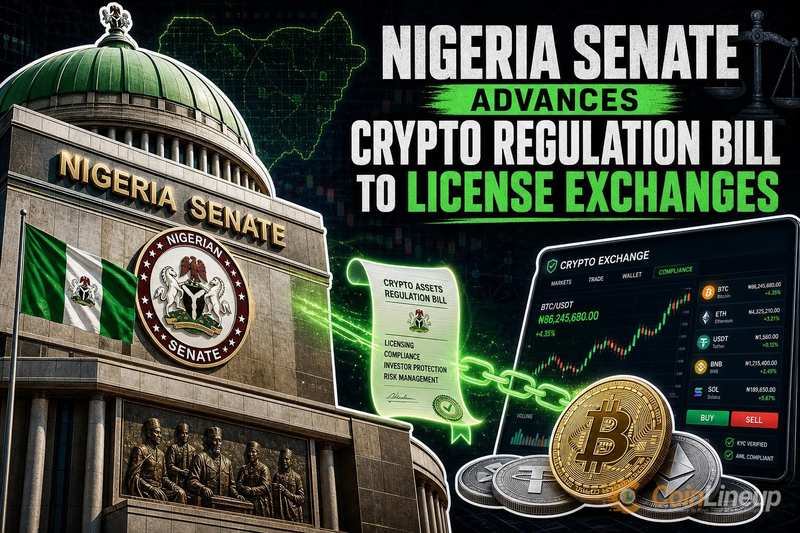
Nigeria's Senate is advancing a crypto regulation bill that would establish a licensing framework for digital asset exchanges, marking a significant step in the country's effort to bring formal oversight to its rapidly growing cryptocurrency market.
What the Senate's legislative move signals
The bill's advancement through the Senate represents a concrete legislative action, not a finalized law. Nigeria's approach to crypto regulation has evolved considerably, with the Securities and Exchange Commission (SEC) already publishing rules on the issuance, offering, and custody of digital assets, laying groundwork for broader regulatory infrastructure.
The broader legislative context includes Nigeria's Investments and Securities Act updates in 2025, which expanded the SEC's mandate to cover digital assets. The Senate bill builds on that foundation by targeting exchange operations specifically.
Senator Jibrin Barau, who chairs the relevant committee, has been publicly engaged with the bill's progress, signaling institutional support for the regulatory push.
Why exchange licensing is the provision to watch
Exchange licensing sits at the center of this bill because exchanges are the primary point of contact between Nigerian users and the crypto market. A licensing requirement would force platforms operating in Nigeria to meet defined standards for security, capital reserves, and consumer protection.
Nigeria's SEC has already moved to set revised minimum capital requirements for regulated capital market entities, suggesting that licensed exchanges would face similar capitalization thresholds. This mirrors approaches seen in other jurisdictions where regulators have moved to formalize crypto market infrastructure.
The licensing mechanism distinguishes this bill from broader, less actionable regulatory proposals. Rather than attempting to define the legal status of every token category, the bill focuses on the intermediaries that facilitate trading, a more enforceable regulatory target.
As global regulators increasingly scrutinize exchange operations, from the expansion of perpetual futures offerings on regulated platforms to growing institutional participation through products like Bitcoin premium income ETFs, Nigeria's move aligns with a worldwide trend toward structured exchange oversight.
How this shapes Nigeria's crypto landscape
The bill's advancement is a regulatory signal, not a market transformation. Exchanges currently operating in Nigeria without formal licensing will need to monitor the bill's progress through remaining legislative stages before any compliance obligations take effect.
Nigeria has one of the highest rates of crypto adoption in Africa. A licensing framework could attract larger, more established exchanges willing to operate under clear rules, while smaller or non-compliant platforms may face pressure to exit or formalize.
The development also arrives as tokenized real-world assets continue growing across blockchain networks, broadening the range of digital asset activity that Nigerian regulators may eventually need to address beyond simple exchange trading.
The bill still faces additional legislative steps before becoming law. Its current advancement through the Senate indicates political momentum, but the final regulatory framework, including specific licensing criteria, fees, and enforcement mechanisms, will only become clear as the legislative process continues.
Disclaimer: This article is for informational purposes only and does not constitute financial or investment advice. Cryptocurrency and digital asset markets carry significant risk. Always do your own research before making decisions.
Read original article on coinlineup.com