Nigerian healthtech organisation HelpMum has been selected as one of only two Nigerian companies among 18 grantees for ICONIQ Impact’s newly launched Child Survival Portfolio, a three-year, $
Nigerian healthtech organisation HelpMum has been selected as one of only two Nigerian companies among 18 grantees for ICONIQ Impact’s newly launched Child Survival Portfolio, a three-year, $100 million philanthropic commitment to close critical gaps in nutrition, immunisation, and frontline health services for children across Sub-Saharan Africa and South Asia.
The announcement was made on Thursday, June 25, 2026, by ICONIQ Impact, the collaborative philanthropy platform of global investment firm ICONIQ. The portfolio is anchored by a $100 million commitment from founding donors Rick Moskovitz and Nancy Siegel Moskovitz. It builds on an earlier $65 million catalytic commitment from the Sea Grape Foundation that launched the broader initiative in January 2026.
The fund was created in direct response to a sharp decline in global funding for child health. USAID’s abrupt withdrawal of roughly $12.7 billion disrupted immunisation outreach, nutrition treatment, and frontline health services across both target regions, threatening to reverse decades of progress in reducing child mortality, the very challenge HelpMum seeks to address.
Sub-Saharan Africa and South Asia were prioritised because they account for nearly 90% of global child deaths, over 85% of severe wasting cases, and more than 70% of unvaccinated children worldwide.
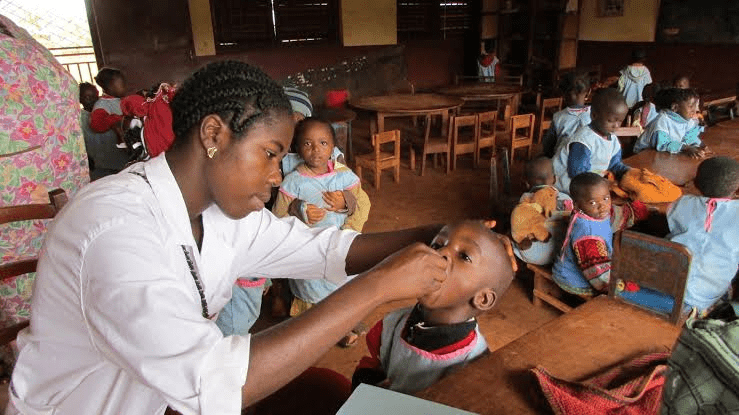
HelpMum and eHealth Africa are both classified under the portfolio’s “Innovation and AI” lever, a category specifically focused on accelerating and sustaining impact through practical technology, predictive data tools, solar-powered cold chains, AI-enabled logistics, and local manufacturing designed to strengthen how care reaches children who fall outside traditional health delivery systems.
HelpMum focuses on using data-driven and AI-enabled approaches to improve maternal and child health outcomes, positioning it within a broader cohort of grantees, including Akros, Khushi Baby, and Suvita, that are using digital tools to solve one of global health’s hardest problems: reaching children that health systems simply cannot see.
eHealth Africa, the other grantee, is a Nigeria-based health systems and digital health organisation that supports governments across the region through digital health systems, geospatial intelligence, and cold-chain strengthening, technology specifically designed to identify, locate, and reach underserved and zero-dose children who exist outside the visibility of conventional health records.
HelpMum’s selection reflects growing confidence in Nigerian healthtech
The portfolio’s core thesis rests on a specific data point: undernutrition is an underlying cause of approximately 45% of child deaths worldwide, with most of those deaths caused by infections that routine vaccination could have prevented.
Rather than funding nutrition and immunisation programmes separately, as has historically been the case, the Child Survival Portfolio is deliberately funding organisations that integrate both services into the same community visits, strengthening shared supply chains and health workforce delivery in the process.
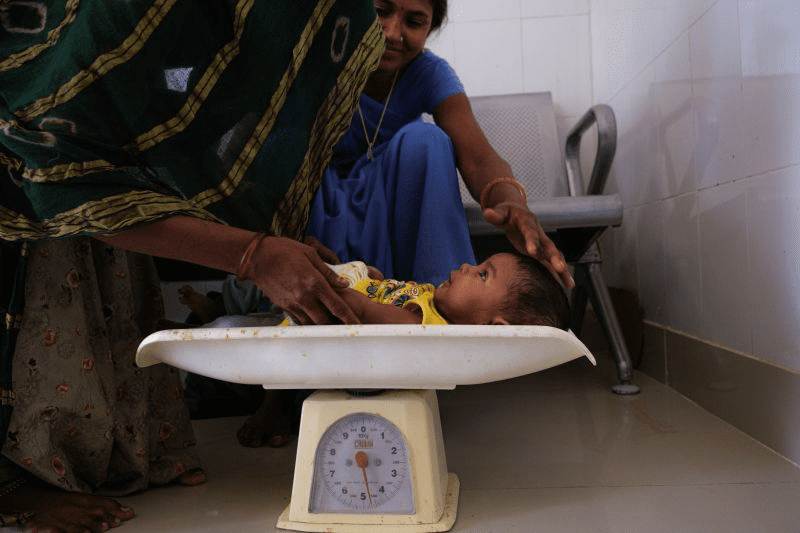
In its first phase, the initiative is projected to reach approximately 350,000 children, including treatment for 200,000 children suffering from acute malnutrition and immunisation of 150,000 zero-dose or under-immunised children in communities facing the greatest risk of child mortality.
Matti Navellou, head of ICONIQ Impact, said the urgency behind the fund’s design reflects how quickly philanthropic capital needs to move when institutional aid contracts.
“When overseas aid contracts, philanthropic capital must move quickly to get resources to critical frontline organisations,” he said. “The Child Survival Portfolio aims to do exactly that, funding organisations saving children’s lives now and building stronger systems for the future.”
For Nigeria specifically, the selection of two organisations, HelpMum and eHealth Africa, out of only 18 global grantees, signals growing international confidence in Nigerian-built health technology as a credible, scalable solution to a crisis that institutional donors are increasingly struggling to address alone.
Also read: How health and climate teams across Africa use Google’s Open Buildings data to improve society