The Nigerian telecoms industry has suffered more than 150,000 fibre cut incidents across April and May 2026, the highest number of such cuts on record. The figures reveal a continued struggle
The Nigerian telecoms industry has suffered more than 150,000 fibre cut incidents across April and May 2026, the highest number of such cuts on record. The figures reveal a continued struggle to attain quality network experience in Nigeria.
According to the Nigerian Communications Commission (NCC) quality of experience update, the industry recorded 74,276 fibre-cut incidents in April, spanning various cases and causal agents. The cuts increased by 6.5% to another record of 79,121 incidents in May 2026.
The joint summation of 155,397 fibre cuts in the two months shows the struggles of telecom operators to offer the service Nigerians need and how subscribers have been at the receiving end. In such a situation, experiencing the value for airtime and data cost becomes almost impossible.
Breakdown of the data shows that vandalism is the leading factor, with more than 54,000 cases attributed to the act across both months. Bad actors continue to pose major threats to connectivity nationwide despite recent regulations.
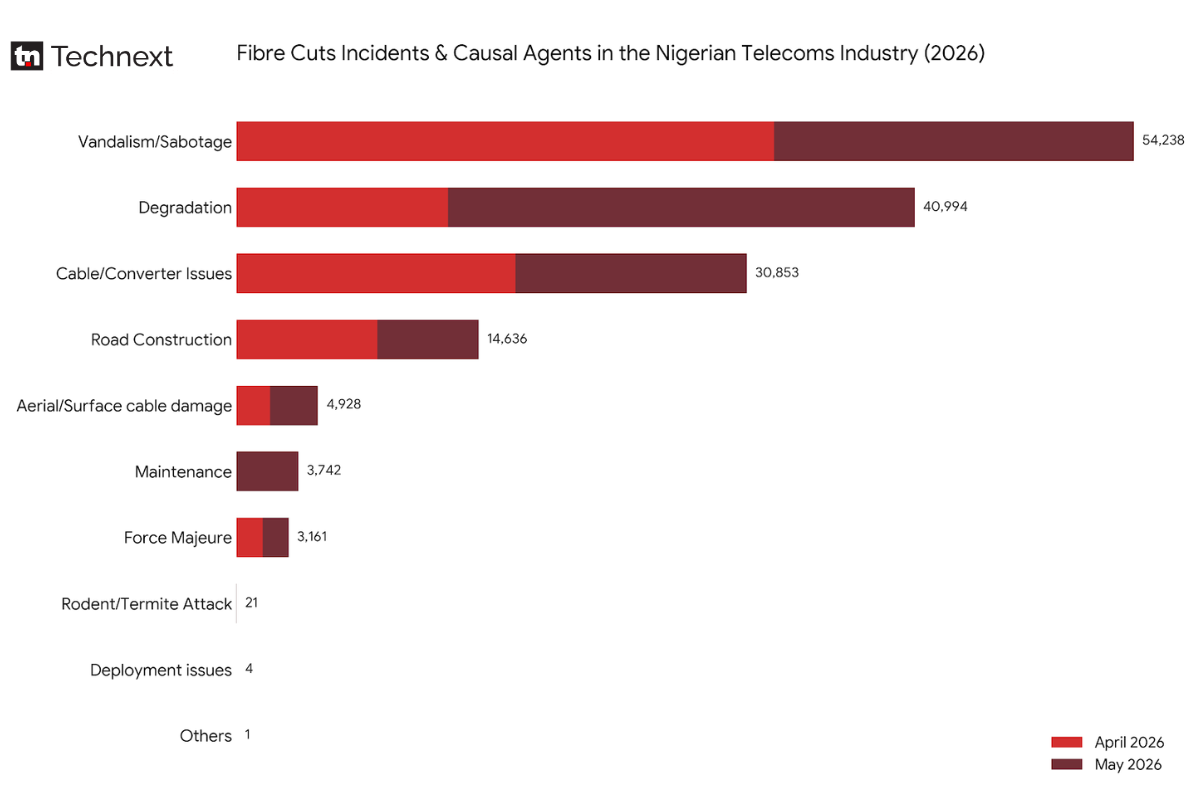
Fibre cuts in April and May 2026
Recall that under the Critical National Information Infrastructure (CNII) framework, which designated telecoms equipment as national assets, persons found guilty of vandalising such equipment face a prison sentence of up to 10 years without the option of a fine. Despite these measures, vandalism and theft of telecoms equipment continue to rise.
In other factors, over 40,000 cases were caused by degradation, while cable and converter issues triggered about 30,100 cuts. Preventable incidents attributed to road construction resulted in 14,600 cuts, while uncontrolled factors termed “Force Majeure” led to 3,161 fibre cuts across April and May 2026.
While Nigerian telecom operators continued to record month-on-month increases in both phone and internet adoption, subscribers continued to face weekly disruptions that left many out of coverage.
The latest report is by far the highest experienced by the industry. In fact, the figure is a 2,428% increase compared to the first three months of the year, where operators recorded 5,934 cases or nearly 500 cases per week.
Thefts and access denials
While fibre cuts keep limiting network performance, equipment thefts have also maintained consistency in being a severe bottleneck to Nigeria’s connectivity growth.
In April and May 2026, telecom operators suffered 675 equipment thefts, ranging from batteries, cables, diesel, generators, multiple thefts and others. Diesel diversion from base stations recorded the highest with nearly 300 incidents across both months.
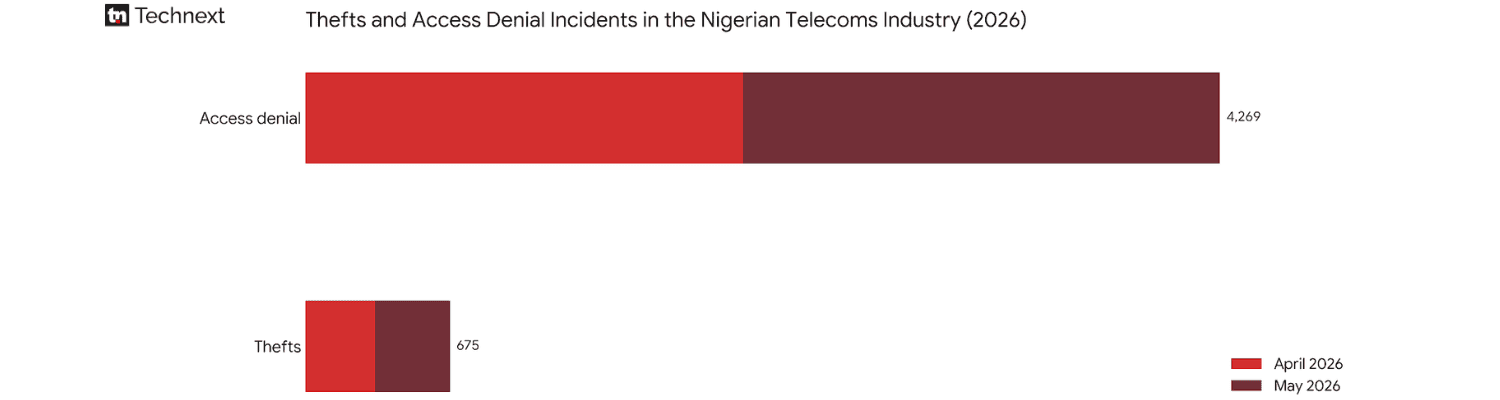
Access denials to base stations in April and May 2026
Also, access denial to base stations for repairs, maintenance checks, refuel and other activities has been on the rise. And more than half of the details were attributed to the rising insecurity ravaging the country. With 4,319 recorded cases of access denials nationwide, 74% were caused by insecurity.
Other contributing factors are community (mostly “area boys”), landlords (owing to disputes), government actions (stemming from regulations) and Force Majeure.
Also Read: MTN, Airtel, Glo, others recorded 500 weekly fibre cuts in Q1 2026.
Fibre cuts: connected, yet disconnected
For every fibre cut, millions of users are temporarily deprived of quality networks as the infrastructure serves as the underground cables that carry internet and voice data. In such a scenario, subscribers experience persistent drops in calls while performing internet operations as little as making a money transfer or downloading a picture.
For a businessman in bustling commercial hubs like Lagos, this triggers instant operational downtime. It stalls digital transactions, prevents customer communication, and severely reduces overall productivity
Fibre cuts and equipment thefts have become leading causes of network outages in recent times, stemming from avoidable and uncontrolled factors. However, the persistent rise in network failure leads to drops in coverage and negative effects on internet penetration.

While recent data presentation has revealed that around 35,000km of Nigerian fibres are in the ground, only 16% of Nigerians are connected to quality networks due to frequent cases of fibre cuts and theft incidents.
Calls for Dig-Once policy
Meanwhile, recent interventions have been coordinated to create a sustainable solution to prevent fibre cuts.
At the National Dig-Once Policy Forum in Lagos in April, stakeholders called on the federal government to adopt a unified framework for fibre deployment alongside road construction. This ensures that fibre ducts are installed alongside road and rail line construction or rehabilitation, and other public infrastructure, preventing a second round of digging on fibre duct layouts.
During the forum, a fibre sensing technology that detects and locates cable damage in real time was also unveiled, with stakeholders encouraging adoption by telecom operators.
Unveiled by Huawei, the initiative combines a sensing device attached to a live fibre with an artificial intelligence unit that runs a 32-dimensional algorithm to analyse the signals collected.
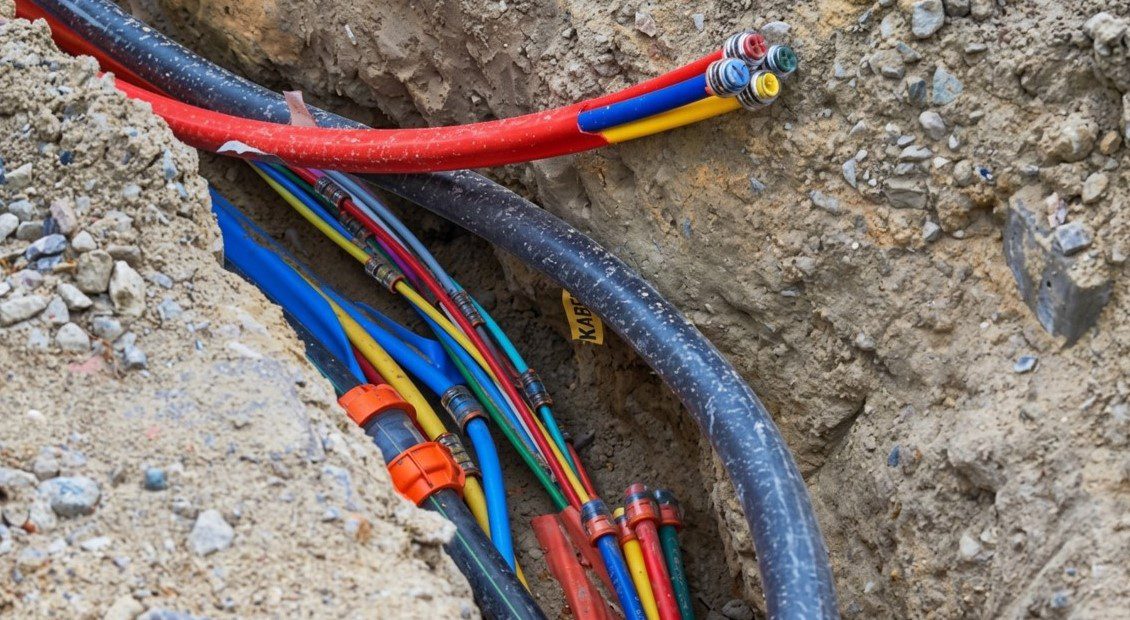
Fibre cuts
Stemming from the conversation, the NCC has begun advancing a national Dig-Once policy framework. Recently, the Commission held a stakeholder forum to establish a transparent, cost-based pricing structure to regulate how telecom operators and infrastructure companies share these underground ducts.