The National Information Technology Development Agency (NITDA) has transferred ownership and operational responsibility of Nigeria’s Public Key Infrastructure (PKI) to the National Identity M
The National Information Technology Development Agency (NITDA) has transferred ownership and operational responsibility of Nigeria’s Public Key Infrastructure (PKI) to the National Identity Management Commission (NIMC). It marks a significant milestone in Nigeria’s technological advancement.
In an email seen by Technext on Thursday, NITDA noted that the transfer of assets and technology to NIMC is expected to provide the security backbone needed to establish a modern, integrated, and highly secure national digital identity ecosystem.
The development means that the NIMC now manages the infrastructure that verifies digital identities, authenticates users and enables trusted electronic transactions of Nigeria’s national identity system. It forms a means to promote nationwide technological advancement.
The move also aligns with the recently amended NIMC Act. The law, signed by President Bola Ahmed Tinubu, which replaces a nearly two-decade-old framework from 2007, expands NIMC’s mandate from just issuing National Identification Numbers (NINs) to managing Nigeria’s broader digital identity ecosystem.
In addition, the Act aims to harmonise identity databases across government agencies and establish the NIN as the cornerstone for identity verification, authentication, and public service delivery.
As such, the transfer of technology gives NIMC more control over the brain of the NIN.

Kashifu Inuwa Abdullahi, DG of NITDA
Reacting to the development during the formal handover ceremony, NITDA Director-General Kashifu Inuwa Abdullahi said the move demonstrates the agency’s collaboration with other institutions for technology advancement and national development.
The NITDA boss noted that all foundational work on PKI and Digital Public Infrastructure (DPI) had been perfected by the agency. He also stressed that the DPI is just as vital to economic growth as physical infrastructure and must remain secure, reliable, and accessible
As a technical framework, PKI enables the creation, management, verification, and authentication of digital identities using digital certificates. It serves as a vital tool for ensuring secure, trusted, and encrypted communications and transactions across the country.
At the handover ceremony, NIMC Director-General and CEO, Engr. Abisoye Coker-Odusote explained that the new law marks a structured, coded transition from a traditional identity database to a modern digital identity ecosystem. She noted that the transition will ensure seamless operation and tighten security across both public and private sector platforms.

Director General/CEO of NIMC, Engr Abisoye Coker-Odusote,
The consolidation of the PKI under NIMC now ensures that identity records, authentication, and identity verification sit under one institution, thereby reducing duplication across government.
Also Read: Digital economy: FG pushes unified framework for online platforms across NCC, NITDA and NDPC.
What the NIMC – NITDA technology transfer means
The PKI and DPI technology handover is another move in Nigeria’s digital governance. As against different agencies building overlapping systems, the Nigerian government is now centralising foundational digital infrastructure directly under institutions that manage the operation.
Inside the new NIMC Act lies the ambition of making the NIN the single trusted identity for accessing both public and private services. And for that to happen, the government wants to eradicate duplication of operations and make the technology sit under the control of one agency.
With NIMC gaining control of the technology, Nigerians can now experience faster online identity verification, fewer repeated identity checks across agencies and easier onboarding for banks, fintechs and telecom companies.
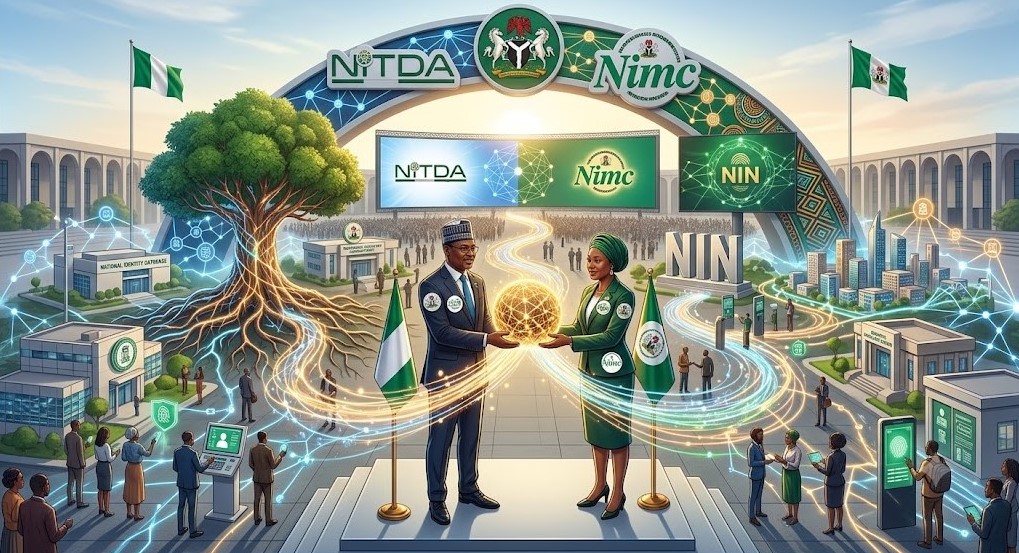
NIMC – NITDA
In controlling the technology, NIMC will be working with the Act, which already provides the essential legal backing for deploying PKI and other trust frameworks to secure these digital interactions.
However, implementation is key to the success of this transition. Several issues depend on data protection, public trust in terms of identity errors, verification outages and integration across government agencies.
To safeguard Nigerians’ data and maintain public trust, the NIMC has noted that the transition will be done in carefully planned, gradual phases.