Key Takeaways Boeing secured a multibillion-dollar deal from the U.S. Navy to develop the F/A-XX sixth-generation fighter aircraft. Shares of Northrop Grumman dropped approximately 4% during
Key Takeaways
- Boeing secured a multibillion-dollar deal from the U.S. Navy to develop the F/A-XX sixth-generation fighter aircraft.
- Shares of Northrop Grumman dropped approximately 4% during pre-market hours after losing the competitive bid.
- Boeing’s stock gained around 3% in pre-market trading on the announcement.
- The victory represents Boeing’s second sixth-generation fighter contract win in 2025, following its Air Force F-47 program win over Lockheed Martin.
- The F/A-XX program is designed to eventually replace Boeing’s F-18 Super Hornet and enhance the operational reach of Navy carrier strike groups.
Boeing has secured another major defense victory. On Tuesday, the Navy announced Boeing as the winner of its contract to develop the F/A-XX sixth-generation fighter aircraft, defeating competitor Northrop Grumman in the process.
Shares of Northrop Grumman declined 4% during pre-market trading after the announcement, falling to $482.94. In contrast, Boeing’s stock surged 3% in pre-market activity, reaching $192.49.
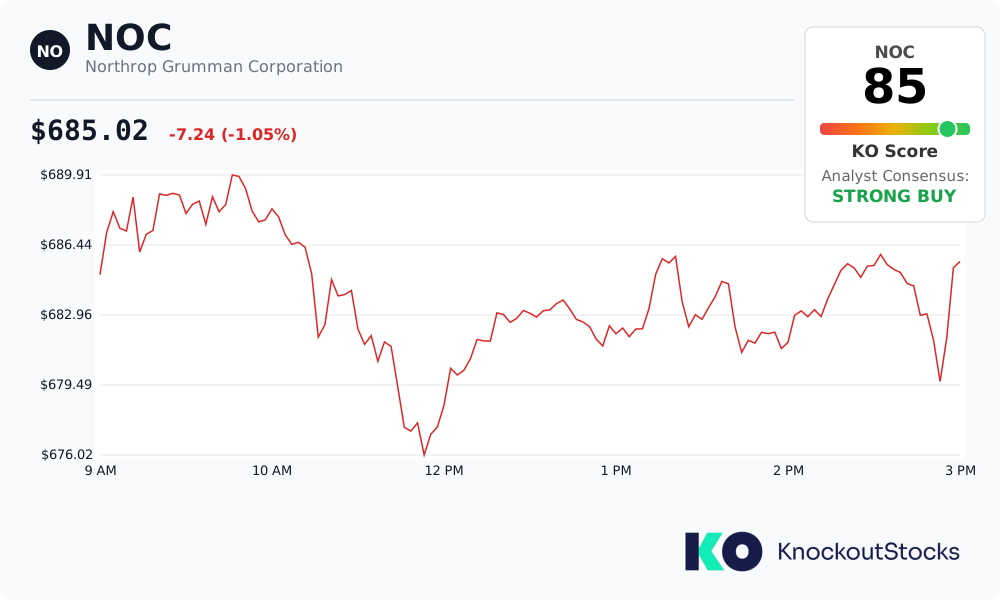 Northrop Grumman Corporation, NOC
The defeat carries additional weight considering market sentiment. Industry analysts and investors widely believed Northrop Grumman held a competitive advantage entering this competition.
This confidence stemmed partially from Boeing’s recent victories. After Boeing secured the Air Force’s F-47 sixth-generation fighter contract earlier in 2025, defeating Lockheed Martin, many observers speculated the military might distribute awards to maintain multiple viable sixth-generation development programs across different contractors.
Those predictions proved incorrect.
Understanding the F/A-XX Program
Specific details surrounding the F/A-XX remain heavily classified, with the Pentagon disclosing minimal information. No official figures have been released regarding total program expenditures, planned production quantities, or projected timelines for operational deployment.
Available information indicates this aircraft will serve as the eventual successor to the F-18 Super Hornet, which Boeing currently manufactures. The platform aims to significantly increase the strike range capabilities of carrier-based naval aviation.
Sixth-generation fighter aircraft feature advanced weapons integration, sophisticated software architectures, and enhanced stealth capabilities. These technological improvements carry substantial financial implications. The F-35 fifth-generation fighter, for reference, costs upward of $100 million per unit, with lifetime maintenance expenses ranging between $500 million and $700 million.
Defense Secretary Pete Hegseth and Deputy Secretary Steve Feinberg previously expressed reservations about the F/A-XX initiative last year. Their concerns centered on whether America’s defense manufacturing infrastructure could simultaneously support two parallel sixth-generation aircraft development programs.
Congressional leadership disagreed with this assessment and mandated program continuation by appropriating hundreds of millions in dedicated funding.
Questions About Boeing’s Production Capacity
With Boeing now controlling both Air Force and Navy sixth-generation fighter programs, capacity concerns have emerged: can the company adequately staff both concurrent development efforts?
J.J. Gertler, formerly with the Congressional Research Service, identified workforce availability as the primary limiting factor moving forward. “At some point the constraint becomes people,” he explained, highlighting the declining pool of qualified engineers and technical specialists available near Boeing’s St. Louis manufacturing facilities.
Aviation industry analyst Richard Aboulafia suggested that missing this contract doesn’t represent a catastrophic setback for Northrop Grumman. The company maintains substantial ongoing commitments, including the B-21 stealth bomber program and the Sentinel intercontinental ballistic missile system, ensuring continued robust operations.
Nevertheless, Aboulafia characterized the dual contract victories as transformative for Boeing, describing the company as “masters of the new universe” within the defense contracting sector.
Boeing’s defense division has faced considerable challenges recently. The unit reported a $128 million operating loss in 2025, representing improvement from the $5.4 billion loss recorded in 2024. The division hasn’t achieved full-year profitability since 2021.
William Blair analyst Louie DiPalma characterized the Navy contract as a “milestone” achievement for Boeing’s struggling defense operations.
Boeing shares had already appreciated 2% during Tuesday’s regular trading session before the contract announcement, recovering some losses incurred earlier in the week following reports of software issues affecting 737 MAX aircraft.
The post Northrop Grumman (NOC) Shares Drop 4% as Boeing Secures Navy’s F/A-XX Fighter Contract appeared first on Blockonomi.