Nvidia shares fell as much as 14.3% on Thursday, November 12, after co-founder and chief executive Jensen Huang resigned amid a controversy involving an alleged affair with a businesswoman su
Nvidia shares fell as much as 14.3% on Thursday, November 12, after co-founder and chief executive Jensen Huang resigned amid a controversy involving an alleged affair with a businesswoman suspected by US authorities of having links to Chinese intelligence.
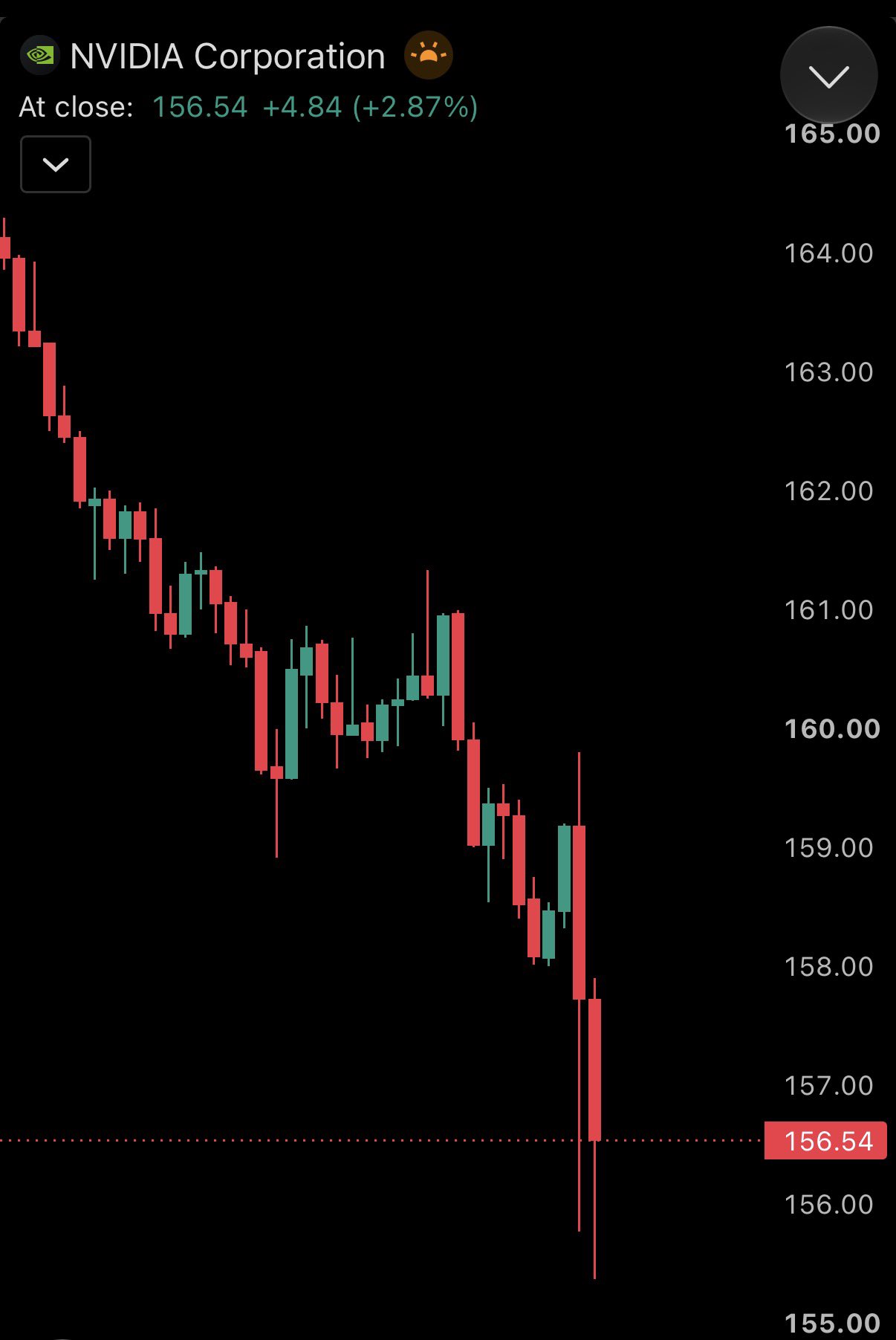
The stock dropped to an intraday low of $148.80, its lowest level since June 2025, before recovering some of its losses. It closed at approximately $164.66, down 5.2% from Wednesday’s closing price of $173.73.
At its intraday low, the decline wiped more than $600 billion off Nvidia’s market value. The latest fall also extended a sell-off that had erased a substantial portion of the company’s value since it reached a record closing price of $239.24 on October 6.
The resignation followed reports of two alleged extramarital relationships involving Huang, including one with a former executive of Singapore-based data centre company Megaspeed International. The revelations prompted an investigation by Nvidia’s board and raised questions about the company’s leadership and potential national security implications.
Huang’s departure, effective immediately, marks the end of his 33-year leadership of the chipmaker he co-founded in 1993 and helped transform into a central player in the global artificial intelligence industry.
A leadership shake-up at Nvidia
Nvidia said in a regulatory filing that its board accepted Huang’s resignation on Wednesday. He also stepped down from the board, leaving the company without its long-time chief executive as it navigates the controversy.
Under Huang’s leadership, Nvidia grew into a company valued at more than $4 trillion, supplying the advanced processors used to train and operate artificial intelligence systems.
The board appointed Chief Financial Officer Colette Kress as interim chief executive while it searches for a permanent replacement. It also appointed Harvey C. Jones as its first board chair. Kress will retain her position as finance chief until a permanent successor is appointed. The board said it would consider both internal and external candidates as part of the search.

Credit: TheInformation.com
The allegations have also attracted attention from US lawmakers, who want to question Huang about his relationships, the company’s security practices and potential exposure to foreign intelligence activities. However, the allegations have not established that Nvidia’s trade secrets or national security information were compromised. The company has said it has no reason to believe its confidential information was affected and is investigating the matter.
Read more: Nvidia CEO Jensen Huang resigns, names Colette Kress interim boss
A slide that began before Thursday
Thursday’s fall extended a decline that had already gathered pace in the preceding weeks. Nvidia shares started at $188.85 on January 2, 2026, before reaching a record closing price of $239.24 on October 6. The stock subsequently lost ground, falling to $173.73 on November 11, before the latest plunge.
By Thursday’s close of $164.66, the shares had lost approximately 12.8% of their value since the beginning of the year and 31.2% from their October record. The decline was not driven by the Huang controversy alone. Nvidia had faced pressure from concerns about artificial intelligence spending, competition and US restrictions on advanced chip exports to China.
In September, the stock fell 3.4% as concerns raised by executives at Anthropic, OpenAI and xAI about the risks of rapid artificial intelligence development triggered a wider sell-off in semiconductor stocks. The Philadelphia Semiconductor Index dropped 5.9% during the September 14 session, while AMD and Broadcom each lost more than 4%. The decline reflected wider investor concerns about the sustainability of the massive investments driving the AI infrastructure boom.
Nvidia also continued to face uncertainty over its access to the Chinese market. US export restrictions have limited its ability to sell some advanced chips to Chinese customers, while Beijing’s restrictions have further complicated its efforts to maintain sales in the country.
The concerns intensified in November after Huang acknowledged an affair with Alice Huang, a former Megaspeed International executive whom US authorities reportedly suspect of having links to Chinese intelligence. Nvidia’s board subsequently opened an investigation into the matter. Its shares fell as much as 8.8% on November 9, wiping nearly $400 billion from its market value during the session, according to Bloomberg. The stock fell further over the following days, closing at $168.89 on November 10 before recovering to $173.73 on November 11. The announcement of Huang’s departure then triggered Thursday’s sharper decline.
Analysts turn cautious
The leadership uncertainty has also prompted several Wall Street firms to reassess their outlook for Nvidia.
Bloomberg reported that at least seven investment firms downgraded the stock over the preceding week. Bernstein cut its price target from $400 to $200, while Cantor Fitzgerald removed Nvidia from its list of top stock picks. The revisions reflect concerns about whether Nvidia can maintain its competitive position and growth trajectory without Huang, who has played a central role in the company’s strategy, partnerships and investor relations.
Some analysts have described the decline as a leadership discount, suggesting investors are reassessing the premium previously attached to Huang’s presence at the company. Others have argued that Nvidia’s underlying business remains valuable despite the uncertainty surrounding its chief executive.
The difference in views reflects the challenge investors face in separating the company’s financial performance and technological position from the leadership controversy.
While Nvidia struggled, some of its competitors benefited from the uncertainty surrounding the company. Shares of Broadcom and Advanced Micro Devices (AMD) gained approximately 5% and 3%, respectively, during Thursday’s trading, as investors considered alternatives in the artificial intelligence semiconductor market.
AMD had also gained nearly 17% since Monday, November 9, as Nvidia’s shares came under pressure. Both companies design semiconductor chips used in artificial intelligence infrastructure and compete with Nvidia in parts of the market.
The movement suggests that some investors may be reconsidering their exposure to Nvidia and looking towards other companies positioned to benefit from continued AI investment. However, the gains were not shared across the semiconductor industry. Micron fell as much as 4.6% in early trading, while the wider technology market also experienced pressure.
The Nasdaq Composite and S&P 500 subsequently recovered some of their earlier losses, indicating that the sell-off was not necessarily a broader rejection of artificial intelligence investment.
What to watch next
Investors are now turning their attention to Nvidia’s fiscal third-quarter results, scheduled for November 17, which will be the company’s first financial report following Huang’s departure.
Nvidia reported $96.2 billion in revenue for the second quarter of its 2027 financial year, representing a 106% increase from the same period a year earlier.
For the third quarter, the company forecast revenue of approximately $108 billion, plus or minus 2%, although its guidance assumed no data centre computing revenue from China.
The upcoming results will provide investors with an opportunity to assess whether demand for Nvidia’s chips remains strong enough to support its growth despite the leadership uncertainty.
They will also offer an early indication of how the company is managing the transition to interim leadership and whether its financial performance can reassure investors who are increasingly concerned about its future without Huang at the helm.
Read also:Nvidia plans to modernise laptops for the AI era with a new processor for PCs