OKX moves core exchange functions to a permissionless protocol OKX has unveiled an open, permissionless trading infrastructure it calls X Layer, shifting core exchange functions such as match
OKX moves core exchange functions to a permissionless protocol
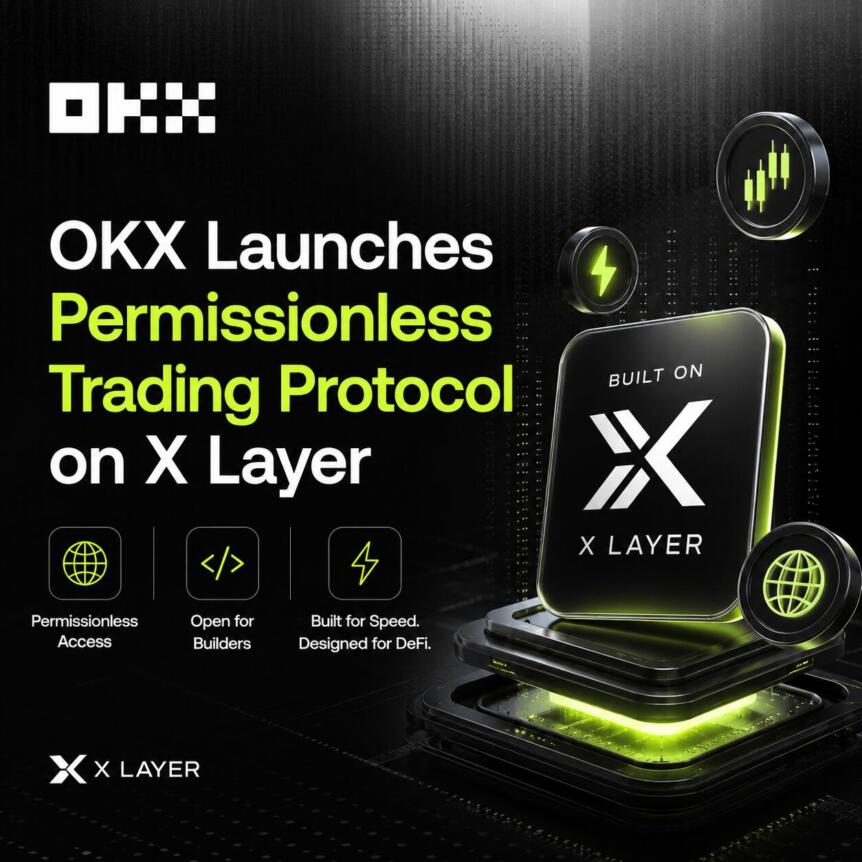
OKX has unveiled an open, permissionless trading infrastructure it calls X Layer, shifting core exchange functions such as matching, margining, liquidation, settlement and risk management down to a protocol layer. The company said the system allows any developer to deploy spot, perpetual and outcomes markets, and it will support both institutional participants and Web3-native builders.
The first live deployment on the new architecture is a prediction market: OKX’s 2026 World Cup Outcomes Market, which the company scheduled to launch on May 28. OKX founder and CEO Star Xu published a company blog post outlining the project. The announcement marks a notable step in the industry trend of moving traditionally centralized exchange features closer to the protocol level.
What the change means for market creation
By relocating matching and risk functions to a protocol layer, OKX is effectively offering a set of reusable infrastructure primitives. That could lower the technical barrier for third parties to create markets because builders would no longer need to recreate complex exchange engines from scratch. Instead they would plug into the protocol to launch spot pairs, perpetual contracts or event-based outcomes markets.
For institutional users, the appeal is predictable settlement and standardized risk controls. For Web3-native teams, the benefit is composability and the potential to integrate markets with on-chain tooling. In practice, a permissionless model can enable faster product iteration and a broader variety of market types, including bespoke markets tailored to niche use cases.
Technical and market implications
Moving matching, margining and liquidation into a protocol layer introduces a few important implications for market microstructure and capital efficiency. On the positive side, shared protocol-level margining and risk modules can enable cross-market capital efficiencies, reducing the need for isolated margin pools. Standardized settlement primitives can also simplify integrations with wallets, custody solutions and liquidity providers.
At the same time, permissionless market creation risks liquidity fragmentation. If many similar markets compete for liquidity, spreads may widen and execution quality could vary across deployments. The success of a permissionless market ecosystem often depends on incentives for liquidity providers and mechanisms to aggregate or route orders across listings.
Another technical consideration is oracle dependency. Outcomes markets require reliable real-world data inputs to resolve event outcomes. Protocol-level reliance on oracles raises questions about redundancy, decentralization and dispute resolution processes. Similarly, moving liquidation and margin logic to a shared protocol places greater emphasis on the security and correctness of those contract modules.
Prediction markets and regulatory context
Prediction markets, particularly those tied to sports outcomes, occupy a complex regulatory space. Many jurisdictions classify betting and gambling separately from financial trading, imposing specific licensing, consumer-protection and advertising rules. A permissionless architecture that permits any builder to spin up a World Cup outcomes market may therefore encounter differing legal regimes depending on where users are located and where the operator chooses to comply.
OKX’s announcement does not change those cross-border regulatory realities. Operators and builders using an open protocol will still need to implement compliance measures and controls where required. That dynamic raises broader questions about how exchanges and protocol providers will coordinate on KYC, AML and geo-blocking enforcement in a permissionless environment.
Risk management and smart contract considerations
Centralizing core functions as on-chain or protocol-level modules can improve transparency, but it also concentrates systemic risk. Bugs in matching, margining or liquidation code could affect multiple markets simultaneously. This amplifies the importance of rigorous audits, formal verification where feasible, and careful upgrade governance.
Users should also weigh custody models and counterparty exposure. Even if market logic is permissionless, funds custody and settlement arrangements determine who ultimately bears credit and operational risk. The balance between decentralized market mechanics and custodial controls will be a key design choice for builders and institutional adopters.
What to watch next
Key indicators of the protocol’s early traction will include liquidity metrics for the World Cup Outcomes Market, third-party deployments on X Layer and the composition of liquidity providers. Observers will also track how OKX and downstream builders address oracle design, dispute resolution and regulatory compliance.
Finally, the broader industry will be watching whether other major venues adopt similar protocol-layer approaches. If successful, the model could accelerate the modularization of exchange infrastructure, with potential benefits for innovation and interoperability, but also new operational and regulatory tradeoffs.
For now, OKX’s move signals a continued push by trading platforms to blend exchange-grade capabilities with the composability that has defined much of the Web3 ecosystem. The practical outcomes will depend on adoption, security practices and how the industry balances openness with the controls that regulators and institutional participants expect.
Disclosure
This article is based on company communications and publicly available information. It does not include proprietary or confidential details about the protocol’s technical design beyond what the company has disclosed.
This article was originally published as OKX Launches Permissionless Trading Protocol on X Layer on Crypto Breaking News – your trusted source for crypto news, Bitcoin news, and blockchain updates.