OPay has emerged as a significant player in Nigeria’s digital payments market, facilitating transfers, bill payments, and various financial services for millions of users. Its expanding prese
OPay has emerged as a significant player in Nigeria’s digital payments market, facilitating transfers, bill payments, and various financial services for millions of users. Its expanding presence has raised the question of how it compares financially to established banks such as Access Bank, UBA, Zenith Bank, FirstBank, and GTBank.
In its recent financial filing, OPay provided an update on its performance for the six months ending June 30, 2026. The company reported $467.1 million in revenue, $90.9 million in net income, and $339.1 billion in gross transaction value.
However, these figures do not automatically indicate that OPay is larger than the banks. Revenue, profit, transaction value, and total assets are measured differently, making direct comparisons challenging. Additionally, there is a reporting gap: Access Holdings and UBA had not yet published their H1 2026 results as of October 12.
Why these five banks?
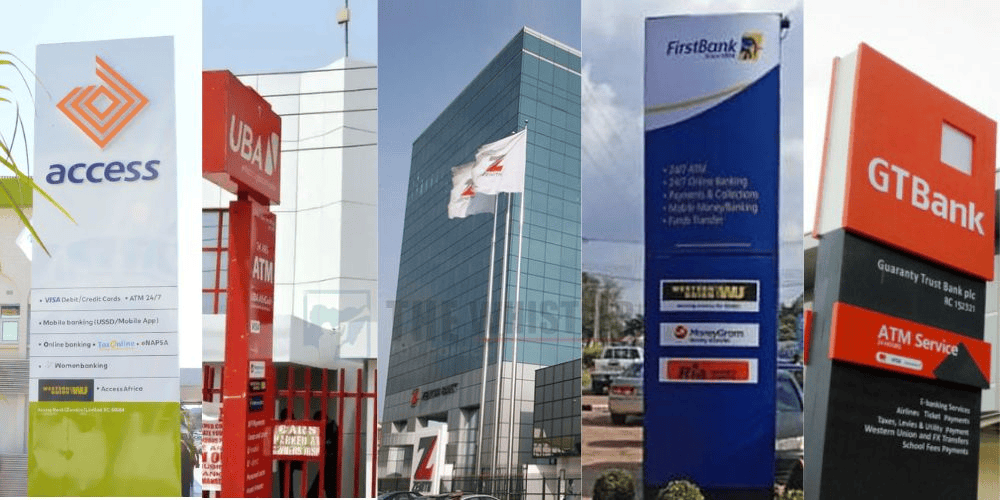
The list is based on total assets in the banks’ audited 2025 financial results, a common measure of balance-sheet size. The five groups- Access Holdings, UBA, Zenith Bank, First HoldCo, and GTCO- held a combined ₦161.3 trillion in assets at the end of 2025. They are commonly known as Nigeria’s tier-one banking groups, or FUGAZ.
Similar read: OPay secures approval for NGX listing, opening path for Nigerian investors
These are banking groups, not simply the individual banks customers see on their phones. Their consolidated figures include other businesses and, in some cases, international operations. We use their latest available 2026 results below, while clearly identifying where H1 figures are missing.
1. OPay: $467.1 million in H1 revenue
OPay reported $467.1 million in revenue for the six months ending June 30, 2026, an increase from $197.5 million during the same period in 2025. Net income rose to $90.9 million, up from $21.7 million.
The company’s gross transaction value (GTV) increased to $339.1 billion, compared to $139.3 billion a year earlier. During this period, the platform processed 53.5 billion transactions, more than double the 25.7 billion transactions recorded the previous year.
These figures highlight the rapid growth of OPay’s business. It’s important to note that while GTV represents the total value of transactions processed on the platform, it does not reflect the revenue earned by OPay. The company generates revenue through various services, including payments, loan financing, and interest on short-term investments.
Specifically, loan financing services accounted for $236.1 million in revenue for the first half of the year, while transaction-based services contributed $130.6 million.
Additionally, OPay’s filing reports that over the 12 months ending June 30, 2026, the platform processed 90.1 billion transactions valued at $558 billion. This figure represents the trailing 12-month results, rather than the totals for the first half of the year.
These statistics were drawn from OPay’s filing with the U.S. Securities and Exchange Commission, and the first-half financial results are currently unaudited.
2. Access Holdings: H1 results still outstanding
Access Holdings, the parent company of Access Bank, had yet to publicly release its H1 2026 financial statements as of October 13. The group is still awaiting approval from the Central Bank of Nigeria after receiving an extension from the Nigerian Exchange.
The most recent data comes from its Q1 2026 results, which reported gross earnings of approximately ₦1.38 trillion, a profit of ₦216.54 billion, and total assets of ₦53.44 trillion as of March 31.
While these figures reflect the group’s scale, they only cover three months and should not be equated with H1 results or directly compared to the six-month figures reported by OPay and other banks. Access Holdings’ H1 results will be essential for accurate and consistent comparisons.
3. UBA: H1 figures yet to be confirmed
United Bank for Africa (UBA) had not released its H1 2026 financial statements by October 13. The bank had previously secured an extension until September 30 to file the results, pending regulatory approval.
UBA’s Q1 results reported gross earnings of ₦801.46 billion, a profit after tax of ₦146.62 billion, and total assets of ₦33.13 trillion as of March 31.
While these figures provide insight into the bank’s early-year performance, they cannot replace the H1 accounts. Presenting these results alongside six-month data without a clear distinction could mislead readers. The bank’s H1 statements are essential for accurately comparing its first-half earnings and balance sheet with other groups.
4. Zenith Bank: ₦637.6 billion in H1 profit before tax
Zenith Bank reported a profit before tax of ₦637.6 billion for the half-year period ending June 30, 2026, representing an increase of 1.9% from ₦625.6 billion during the same period in 2025. However, profit after tax decreased by 19.1%, dropping to ₦430.8 billion. This illustrates that pre-tax profit and post-tax profit can move in different directions.
The bank’s pre-tax profit benefited from a significant reduction in impairment charges, which are provisions set aside for potential loan losses. Conversely, foreign-exchange trading shifted from a profit in the first half of 2025 to a loss in the first half of 2026. Additionally, a higher tax bill negatively impacted the final profit.
These results highlight that a single figure does not provide a complete picture of a bank’s performance. Profit before tax, profit after tax, total assets, and customer deposits each offer unique insights into the business.
5. First HoldCo: ₦653.5 billion in H1 profit before tax
First HoldCo, the powerhouse behind FirstBank, delivered impressive financial results for the first half of 2026, reporting a remarkable ₦1.93 trillion in gross earnings. This reflects a robust 16.7% growth compared to ₦1.66 trillion during the same period last year.
What’s even more striking is the surge in profit before tax, which skyrocketed by 83.5% to reach ₦653.5 billion. By the end of the period, profit surged to ₦526.1 billion, signalling a healthy financial trajectory. Total assets also saw a significant increase, climbing to ₦30.65 trillion by June 30, up from ₦27.25 trillion at the close of 2025.
These stellar results not only position First HoldCo ahead of competitors like Zenith Bank and GTCO in reported H1 profit before tax, but they also urge us to look deeper. While these figures are impressive, they don’t alone determine the strongest group. Factors such as business mix, asset quality, cost management, and overall balance sheets are vital in assessing long-term success.
It’s worth noting that these figures reflect the broader First HoldCo group, highlighting its diverse strengths beyond just FirstBank. As the landscape of the financial sector continues to evolve, First HoldCo’s performance certainly sets a noteworthy benchmark for its peers.

Nigerian Banks
6. GTCO: ₦603.03 billion in H1 profit before tax
Guaranty Trust Holding Company (GTCO), the parent group of GTBank, has delivered a promising financial performance for the first half of 2026, reporting a profit before tax of ₦603.03 billion. This marks a modest increase of 0.4% from ₦600.9 billion in the same period last year, showcasing the company’s resilience in a challenging economic landscape.
However, profit after tax declined, dropping 7.8% to ₦414.2 billion, which prompts a deeper look into the company’s financial dynamics. GTCO’s total assets saw an impressive rise, climbing to ₦18.6 trillion by June 30, up from ₦17.76 trillion at the close of 2025, indicating a robust expansion strategy.
The bank reported a 7.5% increase in interest income, alongside a remarkable 24.7% boost in trading income, reflecting its adeptness at capitalising on market opportunities. Nevertheless, a fair-value loss of ₦46.2 billion posed challenges, curbing the overall growth in pre-tax profit.
It’s important to note that GTCO’s results shine a light on the nuances of banking performance, reminding investors and analysts alike to look beyond surface-level earnings growth. Much like Access Holdings and First HoldCo, GTCO’s consolidated figures encompass a diverse array of businesses that extend beyond its traditional commercial banking operations.
This multifaceted approach helps paint a comprehensive picture of the company’s financial health and long-term viability.
How their latest 2026 numbers compare
Company
Latest available figures
Reporting period
OPay
$467.1m revenue; $90.9m net income; $339.1bn gross transaction value
H1 2026
Access Holdings
₦1.38tn gross earnings; ₦216.54bn profit for the period; ₦53.44tn assets
Q1 2026
UBA
₦801.46bn gross earnings; ₦146.62bn profit after tax; ₦33.13tn assets
Q1 2026
Zenith Bank
₦637.6bn profit before tax; ₦430.8bn profit after tax
H1 2026
First HoldCo
₦1.93tn gross earnings; ₦653.5bn profit before tax; ₦30.65tn assets
H1 2026
GTCO
₦603.03bn profit before tax; ₦414.2bn profit after tax; ₦18.6tn assets
H1 2026
Note: The figures cover different reporting periods and financial measures. OPay reports in US dollars, while the banks report in naira. Gross Transaction Value (GTV) is not revenue, and profit for the period is not necessarily the same as profit attributable to ordinary shareholders. Access Holdings’ and UBA’s H1 results were not publicly available in the sources verified for this article as of October 13, 2026.
Does OPay’s growth make it bigger than the banks?
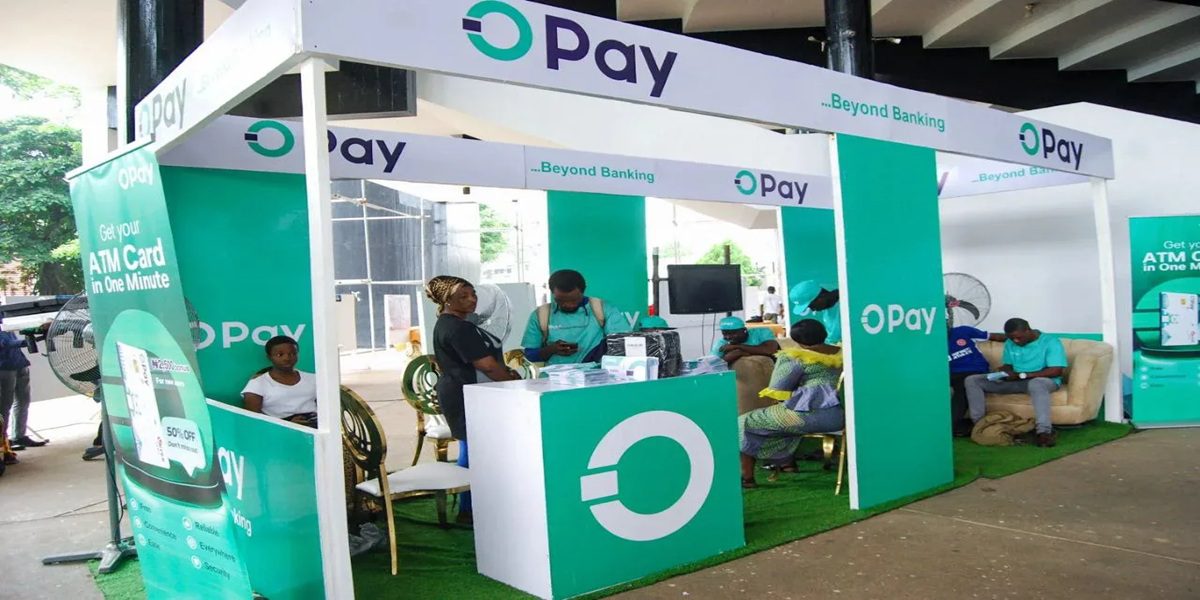
When it comes to understanding the financial landscape, it’s crucial to look beyond just numbers, and the latest results from OPay are a perfect illustration of this. OPay is undoubtedly a juggernaut in the realm of financial platforms, showcasing remarkable growth, with its revenue and transaction volumes soaring to new heights.
With a staggering $339.1 billion in Gross Transaction Value (GTV), it’s clear that OPay is facilitating a massive flow of money through its platform, engaging millions of users in the process.
Also read: OPay makes $90.9 million profit in six months as it files for a US IPO
However, it’s essential to clarify an important distinction: $339.1 billion represents transactions moving through OPay, not revenue that the company directly earns or owns. This is a critical factor when comparing OPay to traditional banks, which play a multifaceted role in the financial ecosystem. Banks manage customer deposits, extend loans, and invest in a variety of assets, all of which contribute to their total assets, a metric that doesn’t directly correlate with OPay’s GTV.
To make an accurate comparison, we need to differentiate between key financial metrics: revenue, profit, total assets, customer deposits, and transaction volumes. Additionally, using consistent reporting periods is vital for a fair assessment.
At this point, while OPay’s impressive figures certainly highlight the scale of its payment operations, they don’t yet confirm that it surpasses Nigeria’s largest banking groups in terms of total assets or overall financial influence.
We’ll have to wait until Access Holdings and UBA release their H1 2026 results for a more comprehensive and balanced comparison. Until then, OPay remains a fascinating player in the ever-evolving financial game.