Open USD has been in circulation since September 30, 2026. Behind the dollar stablecoin stand Coinbase, Mastercard, Shopify, Stripe and Visa, and it is issued by Bridge, Stripe’s stablecoin s
Open USD has been in circulation since September 30, 2026. Behind the dollar stablecoin stand Coinbase, Mastercard, Shopify, Stripe and Visa, and it is issued by Bridge, Stripe’s stablecoin subsidiary. For you in Europe, though, a different question counts more than the partner list: may this token be offered publicly here? On October 1, 2026 the answer is no. The issuer holds its European authorisation; the token itself is not notified in the MiCA register.
This is not a detail for lawyers. It decides whether an exchange regulated in the EU may offer you Open USD, what rights you would hold against the issuer, and whether you will ever see a yield for holding it. This article separates three things that blur together in the launch coverage: what actually went live, what MiCA demands of a dollar stablecoin, and how much of that was in place on October 1, 2026.
Open USD (OUSD): the dollar stablecoin from Stripe’s subsidiary Bridge
A stablecoin is a crypto token whose price is pegged to a currency. Open USD, ticker OUSD, is pegged to the US dollar and stood at $0.9995 on October 1, 2026 according to CoinGecko. The peg therefore held at launch; a deviation of 0.05 percent is unremarkable for a stablecoin.
OUSD is issued by Bridge. Stripe acquired the company in 2024 for $1.1 billion. The organisation behind the token is called Open Standard; Coinbase, Mastercard, Shopify, Stripe and Visa hold equal founding stakes there as the five founding partners and have jointly pledged more than $1 billion to build liquidity over the coming months.
How many companies are involved in total differs between sources. Reports from July 2026 named more than 140 partners, while Open Standard’s own launch statement spoke of over 200 financial institutions, fintechs, banks and companies. Both figures stand here side by side deliberately, because it cannot be established which counting method each follows.
Technically OUSD runs on four networks from the outset: Ethereum, Solana, Base and Tempo. According to the launch announcements the token traded at Coinbase, Kraken and Uniswap from the start, with Coinbase support due to begin on October 1.
E-money tokens under MiCA: why a dollar stablecoin needs authorisation in the EU
The EU regulation MiCA has a category of its own for stablecoins. A token that references a single official currency is an e-money token, EMT for short. Open USD references the US dollar and therefore falls into this category, even though the issuer is based in the United States.
E-money tokens face a double hurdle. Under Article 48 MiCA, an e-money token may be offered publicly or admitted to trading in the Union only if the offeror is the issuer of the token, is authorised as a credit institution or as an electronic money institution, and has notified and published a crypto-asset white paper with the competent authority for this precise token. Both conditions have to be met, not one of the two.
In practice that means an exchange with a MiCA licence in the EU cannot simply list a dollar stablecoin because it is successful in the United States. It is on exactly this rule that several large dollar tokens have come unstuck in the European market in recent years. The obligations the regulation places on companies are set out at length in our overview of the MiCA licensing duties for crypto companies.
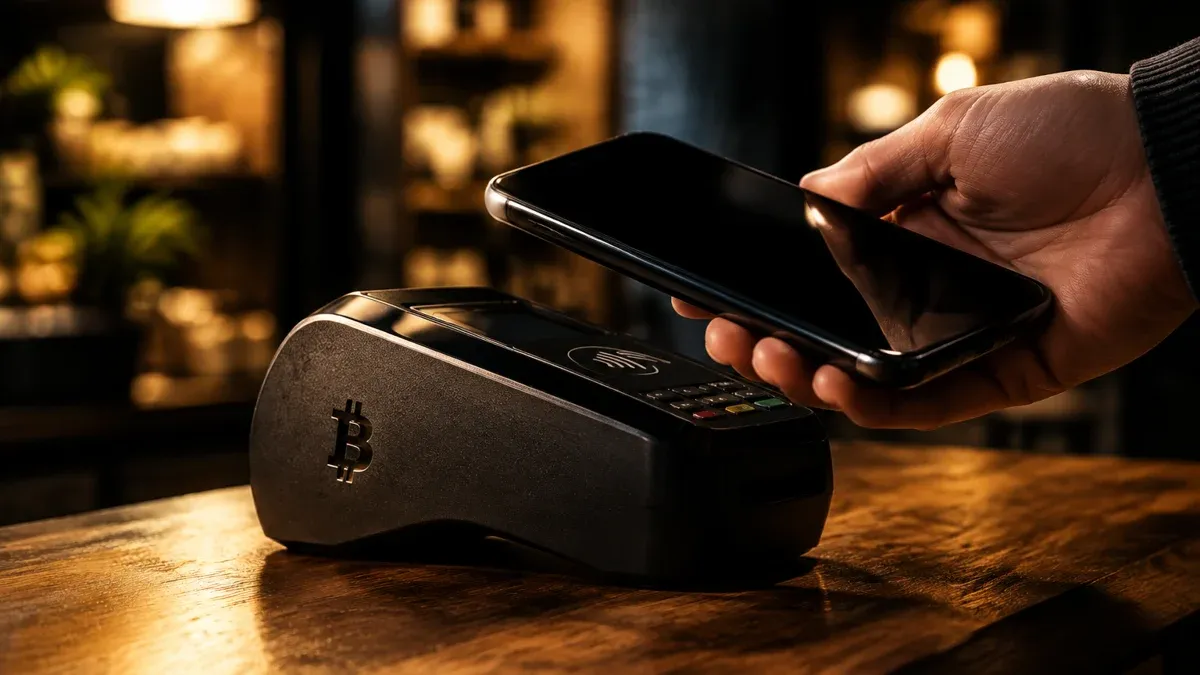
Open USD is built as a means of payment for merchants: the yield from the reserves flows to companies that generate circulation.
The MiCA register on October 1, 2026: the issuer is listed, Open USD is not
On October 1, 2026 we went through the register of electronic money institutions authorised under MiCA and the e-money tokens they have notified, and compared it against the MiCA page of ESMA. All 25 issuers listed there were checked, with 50 notified white papers from 14 countries between them, each entry individually for a token named Open USD or OUSD. This analysis was carried out by cryptoticker.io itself on October 1, 2026.
The result has two sides. The issuer is present: Bridge Building S.A., registered in Luxembourg, authorised by the Luxembourg supervisor CSSF as an electronic money institution, entered since July 23, 2026. This company is the European entity of the Stripe-owned Bridge, and the legal entity identifier reads 254900MVWQXMF77YZP65.
The second side is the decisive one. Exactly one notified white paper was recorded for this issuer, and it concerns a euro token with the ticker EURR. No white paper for Open USD was entered, and OUSD appeared under none of the 50 notified tokens.
One discrepancy belongs in the picture: reports from July 2026 described Bridge as the forty-second authorised issuer of e-money tokens. The register we examined lists 25 issuers. The figures evidently follow different counting methods, for instance because authorisations as a crypto-asset service provider and as an electronic money institution are combined. For the question about Open USD this is immaterial, because there the token decides and not the issuer’s place in a ranking.
Whitepaper notification: the difference between an authorised issuer and an authorised token
This distinction is the most important insight for you, and launch coverage blurs it regularly. The authorisation attaches to the company. The white paper attaches to the individual token.
An authorised electronic money institution can issue several tokens, and for each one it has to notify and publish a white paper of its own. Bridge Building has done so for a euro token. The fact that the same group is launching a dollar token in the United States does not automatically extend the European permission. Anyone who reads that Bridge is MiCA-licensed and concludes from it that Open USD is tradable in the EU is drawing an inference the register does not support.
How to spot it yourself
You need no legal database for this. The ESMA register lists for every issuer the notified tokens together with the publication date of the white paper. If the token you want to buy is not there, it is not notified as an e-money token in the EU. That is a two-minute look, and it answers more than any partner list.
Reserves at BlackRock, Lead Bank and BNY: monthly attestation as the only evidence
According to the issuer, the backing for OUSD sits with BlackRock, Lead Bank and BNY. Bridge has undertaken to publish confirmations on the reserves monthly.
An attestation is an auditor’s confirmation as at a reporting date, not an annual audit. It says that certain funds were present on a particular day. About the days in between it says nothing, and about the quality of the internal processes it says less than a full audit does. That is customary in the industry and is nonetheless the point at which you should keep apart what you demand of a regulated euro stablecoin and what you demand of a US dollar token.
Under MiCA the standard would be tighter. An electronic money institution has to hold the corresponding value in full and separately from its own assets, and holders have a claim to redemption at par. As long as a token is not notified, that framework does not apply to it, and what remains is the issuer’s contractual promise.
Article 50 MiCA: holders get no interest, the yield goes to the merchants
The economics of Open USD are unusual and are readily sold as an advantage. After deduction of a small management fee, the income from the reserves goes to the participating companies, measured by the circulation and transaction activity they contribute. Equity is distributed to founders and network participants over four to five years. The five founding partners receive no separate preferential share of the proceeds.
Read that sentence again and note who does not appear in it: you. The yield flows to merchants and platforms that generate circulation, not to private holders. Anyone who leaves OUSD sitting in a wallet gets nothing for it under this model.
Under MiCA they could not either. Article 50 prohibits issuers of e-money tokens from granting interest, and prohibits the same for the crypto-asset service providers that offer services relating to such tokens. Interest here covers every remuneration and every other benefit tied to the length of holding, even when it comes from third parties. The legislator wanted to prevent stablecoins from becoming interest-bearing savings deposits and competing with bank deposits.
For you that yields a clear classification: an e-money token is a means of payment and a parking space, not an investment with a return. Anyone looking for dollar income inevitably ends up with other products carrying other risks. Anyone wanting to use the token for paying will find the routes actually available in Europe in our comparison of crypto credit cards.

MiCA prescribes at least 40 working days of lead time before an e-money token may be offered in the EU.
Coinbase, Kraken and Uniswap: the trading launch and the open EU question
The launch announcements name Coinbase, Kraken and Uniswap as the first venues. These are globally active providers, and it does not follow that a customer in Germany sees the same offering as one in the United States. Large exchanges maintain separate listings for the European market, because MiCA compels them to.
We did not examine in this round whether and where OUSD is shown to German customers, and so we assert nothing in either direction. What you can look at yourself is quickly done: search for the token in your account’s trading list, and look in your exchange’s asset overview to see whether it is enabled for customers in the European Economic Area. If you do not find it, that is the expected state for a non-notified e-money token and not a fault in your app.
Which providers hold European authorisation at all is shown by our overview of regulated crypto exchanges. With a token whose European status is open, a look at the venue’s licence is worth twice as much.
Swapping into a stablecoin and the holding period: when the German tax office sees a disposal
This is where it gets expensive for many people, and it concerns every stablecoin, not just this one. If you swap Bitcoin or another coin into a stablecoin, that is not a pause for tax purposes but a disposal. Under the law as it stands the swap triggers a private sale transaction, with everything that hangs on it: calculating the gain as at the time of the swap, and the question whether the coin given up had completed the one-year holding period.
Anyone moving into a stablecoin and back several times during volatile weeks creates a chain of tax-relevant events that has to be documented by the end of the year. This is precisely where self-declarations regularly fail, because the records are scattered across several platforms. Which tools keep that chain traceable is set out in our comparison of crypto tax tools and portfolio trackers.
There is also a caveat with a date on it. The German finance ministry has put forward a draft bill on the taxation of certain crypto assets which, according to our report of October 1, 2026, is due to go before the cabinet on October 14, 2026 and provides among other things for a substitute assessment where a purchase record is missing. Whatever is decided there shifts the legal position for the years from 2027. We have written up the details and the state of the procedure in our article on the substitute assessment without a purchase record. We deliberately name no figure for the exemption threshold here, because it can only be stated reliably with reference to the particular assessment year.
Custody and depeg: the redemption right is the real protection
With a stablecoin the first thing people think of is the price. The real protection lies elsewhere, namely in the claim against the issuer. MiCA gives holders of an e-money token a claim against the issuer and the right to return the token at par at any time. That right is why the peg holds under pressure with regulated tokens: someone who can redeem does not sell in a panic below value.
Where that framework is absent, what remains is the issuer’s promise and the reserve structure it discloses. With OUSD that means three well-known custodians and a monthly confirmation. That is respectable and still something other than an enforceable redemption claim under European law.
Where you hold the token
If a stablecoin sits in an account at an exchange, you additionally carry the risk of that house. If it sits in a wallet of your own, you carry responsibility for the keys but not the default risk of the exchange. With a token whose European status is still open, the question carries extra weight: if a venue discontinues the offering for EEA customers, a position in self-custody is not directly affected by that.
40 working days’ notice: the earliest possible date for an EU offering
Anyone waiting for Open USD to arrive in Europe can work out the time frame. MiCA requires the issuer of an e-money token to notify the competent authority of its intention at least 40 working days before the planned public offer or admission to trading. The white paper itself has to be notified at least 20 working days before publication.
Forty working days is around eight weeks. Even if Bridge Building were to file the notification for Open USD immediately, a European offering would therefore not be in place before the end of November 2026. On October 1, 2026 no such notification was recorded in the register. Whether and when it comes is a decision for the company, and nothing can be demonstrated about it here.
That the issuer already holds the Luxembourg authorisation does, however, shorten the path considerably. The laborious part, authorisation as an electronic money institution including supervision by the CSSF, is done. What is missing is a procedural step for a further token, and that is a different order of magnitude from an authorisation procedure started from scratch.
Open USD in Germany: How to proceed now
- Look at the status instead of the headline. Check in the ESMA register whether a notified white paper is entered for Open USD, and look in your venue’s asset list to see whether the token is enabled for EEA customers. Whether your provider holds European authorisation at all is shown by the overview of regulated crypto exchanges.
- Reckon with the tax consequences before you swap. Every move into a stablecoin and back is a separate event with a date and a value. Set up the documentation beforehand, not in May of the following year; the suitable tools are in the comparison of crypto tax tools.
- Expect no income from holding. The revenue model of Open USD serves merchants and platforms, and MiCA forbids interest on e-money tokens in any case. If your aim is paying, compare the available routes among the crypto credit cards.
(As of October 1, 2026. This article is not investment advice. Prices and fee structures change; check the terms with the provider before you buy.)