AI War 2026 Heats Up: OpenAI, Anthropic Cut Prices as Grok Advances The AI War just changed shape. For two years, the fight between the top labs centered on raw intelligence: which model reas
AI War 2026 Heats Up: OpenAI, Anthropic Cut Prices as Grok Advances
The AI War just changed shape. For two years, the fight between the top labs centered on raw intelligence: which model reasons best, which one writes the cleanest code, which one wins the benchmark charts. This week, the fight moved to price.
Source: Financial Times
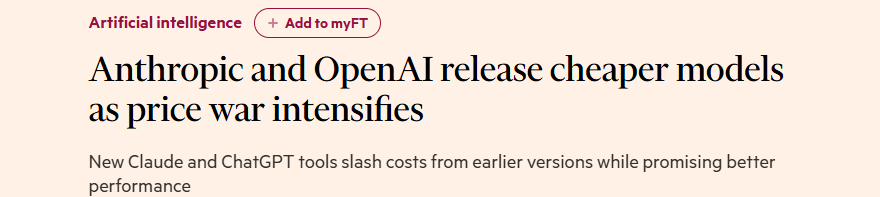
On Tuesday, OpenAI and Anthropic released new models within roughly 90 minutes of each other, each one cheaper than the last generation. Both companies launched cheaper, more capable AI models back-to-back, signaling that the AI race is shifting from raw intelligence to economics.
Ten days earlier, both CEOs had publicly called for slower frontier releases. Instead, they cut prices.
AI War 2026 Heats Up: OpenAI, Anthropic Cut Prices as Grok Advances
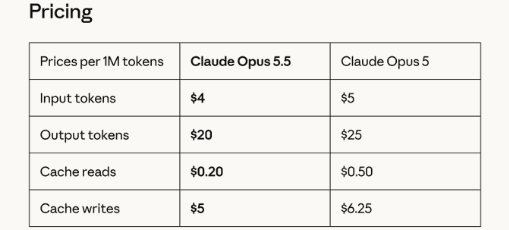
Anthropic moved first. The company launched Claude Opus 5.5, saying the model runs 40% cheaper than Opus 5 on typical workloads while producing output more than 30% faster.
List pricing dropped from $5 and $25 per million tokens to:
Input tokens: $4 per million
Output tokens: $20 per million
Cache-read pricing: $0.20 per million, a 60% cut
Source: Official Pricing Chart
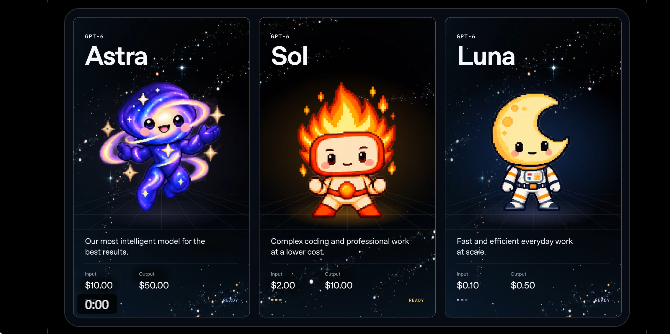
OpenAI answered the same day. GPT-6 Sol and GPT-6 Luna joined the GPT-6 lineup below flagship GPT-6 Astra, with pricing built around caching and inference improvements. The new rates:
GPT-6 Sol: $2 per million input tokens, $10 per million output tokens
GPT-6 Luna: $0.10 per million input tokens, $0.50 per million output tokens
Both priced roughly 50% below GPT-5.6 promotional rates
Source: Official Announcement
Sol targets coding, debugging, and data work. Luna handles high-volume, repetitive jobs like summarizing documents. Neither company frames this as a retreat. Cheaper tokens mean more enterprise customers running AI at scale, and scale is what actually decides the AI War now.
Grok 4.7 Joins the AI War as Agentic Coding Rankings Shift Fast Too
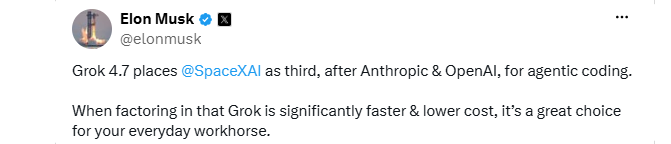
Elon Musk's xAI, now folded into SpaceX's broader AI operations, is also taking a cost-focused approach. Musk said Grok 4.7 now ranks third in agentic coding, trailing only Anthropic and OpenAI, and framed that placement as a practical win built on speed and low running cost.
Source: X Official
Grok 4.7 costs $2 per million input tokens and $6 per million output tokens, matching Grok 4.6. It remains cheaper than Claude Opus 5 and GPT-5.6 Sol while ranking second on a major real-world task benchmark.
The catch: Grok tends to burn more tokens per task, which can quietly erase some of that headline savings depending on the job.
How the AI War Links to Crypto Wallets, Mining, and Agent Trading
Cheaper, faster coding models don't stay contained to software teams. Autonomous agents generally cannot open a bank account, so crypto wallets and stablecoins are becoming the practical rail for machine-to-machine payments. A handful of overlaps are worth watching closely:
Coding agents built on these cheaper models can speed up smart contract development and auditing
Trading bots that research markets and place orders already run on this same model layer
Data centers running AI inference compete with Bitcoin mining rigs for the same power grids
None of that settles where value ultimately lands. It does mean the price war between OpenAI, Anthropic, and SpaceX AI reaches well past chatbots and coding tools, into anything built on automated, always-on software.
Artificial Intelligence: Key Benefits, Risks, and Challenges
The same models fueling this price war are already reshaping work far beyond coding. AI is being used across industries to improve productivity, automate tasks, and support decision-making. But as its benefits grow, so do the risks.
A quick snapshot of where this lands:
Healthcare and science: faster diagnostics, earlier drug discovery, more accessible screening tools
Finance:real-time fraud detection, faster credit decisions, automated compliance checks
Education: personalized tutoring, faster grading, wider access to instruction
Misuse cases: deepfake fraud, cloned voices, AI-assisted phishing, and AI-written malware
Job displacement sits somewhere between the two columns. Cheaper models mean routine tasks get automated faster, and how fast new roles replace old ones is still an open question nobody has fully answered.
The Bigger Picture
Price cuts make headlines, but the real shift is access. Tools that once needed a large budget now cost a fraction of that, which pulls in more builders, more industries, and more risk at the same time.
The AI War will likely keep moving on price and coding strength through the rest of 2026. What happens with safety, jobs, and misuse alongside that race may end up mattering more than who wins any single benchmark.
Disclaimer: This article is for informational purposes only and does not constitute financial or investment advice. Crypto markets carry significant risk. Always do your own research before making any investment decisions.
