ChatGPT Wallet was introduced to the public by OpenAI on November 13, 2026. With this feature, the company’s always-on, persistent AI agents, known as dots, are able to complete purchases for
ChatGPT Wallet was introduced to the public by OpenAI on November 13, 2026. With this feature, the company’s always-on, persistent AI agents, known as dots, are able to complete purchases for eligible ChatGPT Pro users living in the U.S.
OpenAI is involved in the checkout process, while merchants take care of the sale and card issuers approve payments.
How a dot pays without seeing your card
ChatGPT Wallet is currently only available to users who are over 18 years old and possess eligible cards issued in the US. Users are required to complete a secure form where they can provide their card details.
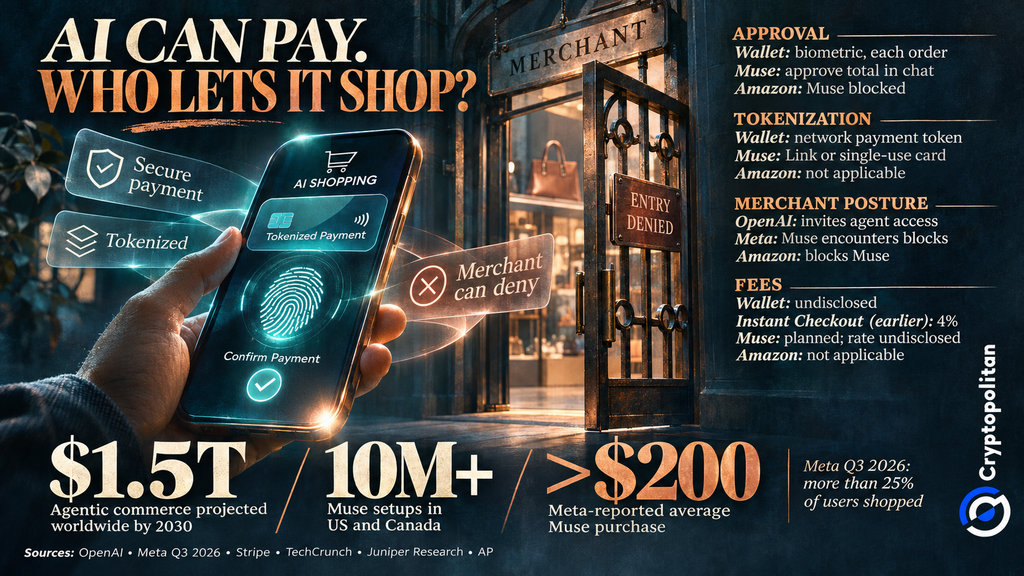
In the checkout step, the screen displays information related to the merchant, the purchased items, the total amount charged, and the selected card option. For the payment to go through, customers must confirm the payment using either Face ID or a fingerprint, according to OpenAI.
When the transaction is confirmed by the customer, the payment network generates a token, which will take the place of the actual card details of the user. Both the merchant and the agent are unable to see the actual number on the card. The Wallet was created by OpenAI in partnership with major payment service providers, such as American Express, Mastercard, and Visa.
That said, safeguarding card details can still not assure a successful transaction. According to the merchant guidelines issued by OpenAI, retailers must identify genuine agent behavior as well as partner with fraud solution providers to reduce the incidence of rejecting authentic orders.
Retailers can still deny a transaction even when implementation of these proactive measures is carried out.
Why OpenAI stays out of the bank role
ChatGPT Wallet can be utilized for making purchases, but OpenAI doesn’t function as a bank to its users. Under the terms of ChatGPT Wallet, OpenAI neither holds funds for any purchases nor provides any banking services. As far as pricing, delivery, processing of returns, and providing customer service is concerned, responsibility rests with the merchant. Card issuers take charge of payments and disputes relating to billing.
For now, customers must approve every purchase. OpenAI eventually plans to allow purchases approved in advance, subject to spending, product-category or time limits.
What merchants will pay remains unclear. OpenAI’s 2025 Instant Checkout, previously covered by Cryptopolitan, charged merchants 4% per sale, Associated Press reported. OpenAI has not disclosed a Wallet fee. Retailers will have to decide whether sales brought in by AI agents justify any additional costs.
Meta is also pushing into AI-assisted shopping. During its October 21 earnings call, the company reported more than 10 million Muse setups across the US and Canada within six weeks. More than 25% of weekly active users shopped through Muse, with purchases averaging over $200. These are Meta’s figures, not independently verified sales totals.
Muse handles payments through Stripe’s Link. Customers approve purchases in chat. Link then processes payments at participating stores or generates a single-use virtual card for other retailers. Meta also plans to charge businesses transaction fees, although it has not announced a rate.
But having a payment system does not guarantee access to every store. In September, Amazon blocked Muse from shopping on its website, citing unauthorized agent access. Even with a customer’s approval and a valid payment method, an AI agent still needs the retailer’s permission.
OpenAI ChatGPT Wallet Lets AI Agents Pay Without Card Data
Banks, fraud, and a $1.5 trillion question
The potential market is enormous. Juniper Research expects global spending through AI agents to reach $1.5 trillion by 2030. However, the research firm warns that consumer trust remains the biggest obstacle. Meanwhile, McKinsey estimates AI agents could put $75 billion in global payments revenue at risk by changing how transactions are handled.
Banks are preparing for these changes. Six institutions, including NatWest, have published principles calling for greater transparency, security and compatibility between payment systems.
For ChatGPT Wallet, three things must happen before a purchase succeeds. The customer must approve the order, the card issuer must authorize payment, and the merchant must accept the transaction.
OpenAI has built Wallet around customer approval and existing card networks. But retailers still decide whether to accept purchases made by AI agents. Their willingness to participate could determine how much of the projected spending becomes actual sales.
The smartest crypto minds already read our newsletter. Want in? Join them.