Key Takeaways ORCL shares declined for nine consecutive trading sessions, shedding 24% — marking the longest losing streak since December 2021. The stock hovers around $140, representing a ro
Key Takeaways
- ORCL shares declined for nine consecutive trading sessions, shedding 24% — marking the longest losing streak since December 2021.
- The stock hovers around $140, representing a roughly 27% decline over the last six months and approaching its 52-week low.
- Wall Street remains overwhelmingly positive, with 84% of analysts rating ORCL as a Buy and an average price target of $254.84.
- Market concerns focus primarily on Oracle’s substantial capital expenditure requirements and increasing debt levels.
- Piper Sandler projects approximately $2.2 billion in additional OCI revenue potential for FY2027 not reflected in current consensus forecasts.
Oracle (ORCL) shares are mounting a recovery Monday morning, climbing approximately 3.5% in pre-market trading following a brutal nine-session losing streak. That extended decline erased 24% of the stock’s value — representing the company’s worst performance since December 2021.
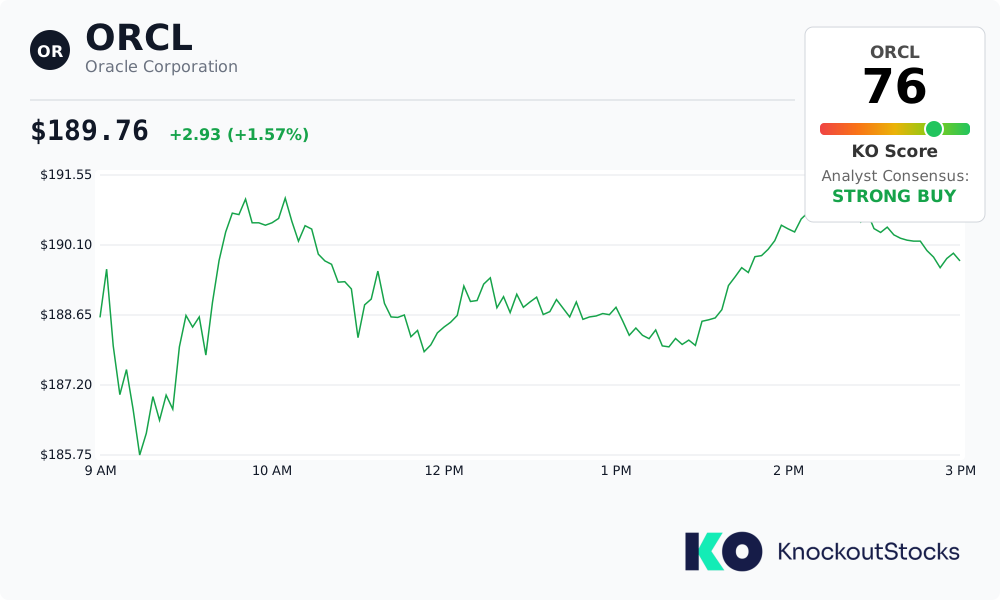 Oracle Corporation, ORCL
Shares are currently hovering around $140.27, dangerously close to the 52-week low and reflecting a 27% drop over the past half-year. For perspective, the stock is now trading 57% beneath its record closing peak achieved on September 10, 2025.
The timing of this selloff is particularly striking. While the broader software industry has been experiencing a rebound, Oracle has moved in the opposite direction. The iShares Expanded Tech-Software Sector ETF posted five consecutive winning sessions through last Thursday, rallying over 10% during that period. Oracle bucked the trend entirely.
Since reaching a 2026 high of $248.15 at the close on June 1, ORCL has declined on 18 of the following 22 trading days. This isn’t a minor correction — it represents a persistent downward trend.
The Source of Market Anxiety
The fundamental issue troubling investors isn’t related to growth prospects. It’s centered on spending. Market participants are growing increasingly nervous about Oracle’s massive capital expenditure obligations and expanding debt burden. The company is engaged in an aggressive buildout of AI infrastructure, which demands substantial financial resources.
Piper Sandler maintained its Overweight rating with a $225 price target while directly acknowledging these investor anxieties. The firm highlighted concerns surrounding the capital requirements for AI infrastructure development, customer concentration risks, margin pressure, and questions about how AI investments translate into actual revenue generation.
Mizuho analyst Siti Panigrahi, among the most optimistic voices with a $320 price target, acknowledged that Oracle will probably require external financing to support its capex needs. He specifically identified “financing challenges” as a significant risk factor — despite naming the stock as one of Mizuho’s preferred picks.
The Case for Optimism
Despite the sharp selloff, Wall Street analyst sentiment remains remarkably strong. A full 84% of analysts tracking ORCL maintain Buy ratings, according to FactSet data. This level of bullish consensus has only been exceeded once in the past two decades, briefly during May 2011.
The consensus price target stands at $254.84 — suggesting potential upside of approximately 82% from last Thursday’s closing price.
KeyBanc upgraded its estimates last month, indicating growing confidence that operating expense growth will remain disciplined. The firm retained its Overweight rating with a $300 target, citing cost management as the primary driver of future gains.
Evercore ISI kept its Outperform rating with a $245 target, highlighting Oracle’s substantial AI backlog and noting that the company’s current remaining performance obligation reached $77 billion.
Piper Sandler’s research provides additional perspective: the firm anticipates approximately 2,400 megawatts of OCI capacity potentially launching in fiscal 2027, which could generate roughly $2.2 billion in revenue currently absent from consensus projections.
Freedom Broker reduced its target to $210 from $230 while maintaining a Buy rating, characterizing Oracle’s transition toward AI compute infrastructure as a long-term positive development.
Oracle’s PEG ratio currently registers at 0.69, which Piper Sandler interprets as indicating the stock appears undervalued relative to its growth trajectory.
Revenue expansion over the trailing twelve months reached 17%, and Piper Sandler observed that the incoming CFO might introduce more conservative guidance — potentially recalibrating expectations in a manner that provides the stock with upward momentum.
The post Oracle (ORCL) Stock Plunges 24% in Nine Days — Wall Street Sees Major Buying Opportunity appeared first on Blockonomi.