Orbs is taking a massive leap. The Layer-3 blockchain project just opened a voting window that could completely reshape how it operates. The proposal in question is called OIP-9. If it passes
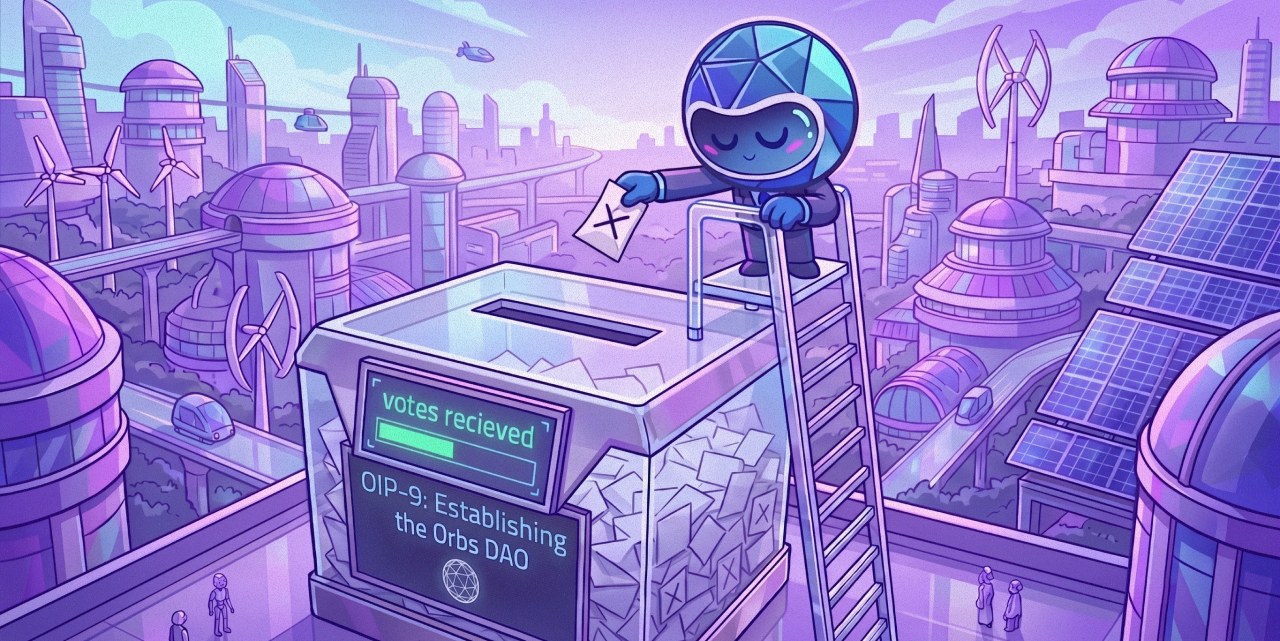
Orbs is taking a massive leap. The Layer-3 blockchain project just opened a voting window that could completely reshape how it operates. The proposal in question is called OIP-9. If it passes, it will establish the network's very first decentralized autonomous organization. We are looking at a major shift from core-team control to genuine community governance. And it has been a long time coming. The team spent over seven years developing the protocol, followed by another four running on-chain governance experiments. Now, they want the users to take the wheel.
Starting Small but Thinking Big
Right now, this is not a free-for-all. Participation in this new DAO is reserved strictly for people who hold tokens staked in the Orbs Proof-of-Stake contract. Voting will happen over on Snapshot. Once a decision is finalized, DAO-controlled multisignature wallets will execute the orders.
So, what exactly is on the ballot? At first, the DAO will only manage specific network parameters tied to the Proof-of-Stake system. Voters will also handle Guardian certifications and revocations, alongside approving major upgrades or new product modules. Orbs designed this deliberately. They want to hand over authority piece by piece rather than dumping the keys to the castle into the public square all at once. Ran Hammer, the Vice President of Business Development at Orbs, explained the logic. He noted the goal is to build a governance framework with clear boundaries. This lets the community grow into heavier responsibilities as time goes on.
The Blueprint for Future Expansion
This initial rollout is just step one. The proposal outlines a clear roadmap for the future. Down the line, the DAO could eventually swallow up much larger responsibilities through subsequent votes. We are talking about serious financial levers. Those future areas include managing protocol revenue, handling the treasury, dictating liquidity strategies, and approving grants. They might even take over token burn mechanics and broader tokenomics.
But there is a catch. Sometimes things break. Waiting for a community vote during a crisis is a terrible idea. To fix this, OIP-9 includes a fail-safe mechanism. The core team retains the power to step in and take immediate action if an emergency strikes. However, they cannot just walk away after the dust settles. The DAO must formally ratify any emergency actions after the fact.
Setting the Stage for Season One
Timing is everything here. If voters greenlight OIP-9, it lays the necessary groundwork for a highly anticipated Season 1 tokenomics proposal. Orbs wants the community firmly in charge when it is time to make hard choices about network incentives, economic structures, and ecosystem growth.
This entire pivot makes perfect sense given the current climate in decentralized finance. Major blockchain networks are rapidly adopting structured governance models. They want to give token holders a louder voice. At the same time, they need to keep the ship steady during transition periods. Orbs fits right into this trend. As a decentralized Layer-3 network complementing EVM-compatible blockchains, it powers tools like dLIMIT, dTWAP, and Liquidity Hub. A decentralized Proof-of-Stake architecture keeps everything running smoothly behind the scenes.
Conclusion
Everything hinges on this current vote. The outcome will decide if the DAO framework becomes a reality. If it fails, it is back to the drawing board for the developers. If it succeeds, it sets a brand new precedent for Orbs. A successful vote will pave the way for sweeping tokenomics changes and a truly community-led future.