In brief: Philippines VASP regulation is drawing attention because of a draft from the central bank, the BSP. The current debate around Philippines VASP regulation turns on a possible twelve-
In brief: Philippines VASP regulation is drawing attention because of a draft from the central bank, the BSP. The current debate around Philippines VASP regulation turns on a possible twelve-month halt to new registration applications for payment system operators, together with stricter controls on payment relationships with VASP-adjacent companies. A halt to payment operator registration would not amount to a general ban on crypto exchanges in the Philippines. This piece sets out who could be affected, what already applies and which official documents matter now.
Several trade publications have reported in recent weeks on possible new restrictions for crypto-adjacent payment services in the Philippines. Those reports rest on a policy exposure draft published in 2026 by the Bangko Sentral ng Pilipinas (BSP), the Philippine central bank. The BSP draft covers two distinct subjects: a possible suspension of new applications for Operators of Payment Systems (OPS), and tighter requirements for payment relationships with companies that work with virtual assets. One point matters throughout: a draft of this kind becomes binding only once it is formally issued. Content, timing and transitional rules can still change before then.
What the BSP draft actually proposes
The draft describes several measures that still have to be read in the conditional, since none has been finally adopted. New OPS registration applications would no longer be accepted, or their processing would be suspended, for twelve months from the date the final circular takes effect. Applications already filed would, according to the draft, continue to be reviewed, but would be neither approved nor rejected during the suspension.
VASP-related companies would in addition be classified as high-risk merchants. Payment relationships would then be envisaged only as a direct merchant relationship, while multi-tier or “layered” arrangements would have to undergo particular scrutiny. The draft also provides for enhanced due diligence, ongoing monitoring and risk-appropriate transaction and settlement limits, settlement being the clearing or final discharge of a payment. For existing layered relationships the draft names a review within six months and adjustments within a further six months. Here too: these deadlines are the content of a draft, not confirmed obligations.

In brief: The OPS halt under discussion would be a planned, time-limited measure in payment supervision law. It would become binding only after a final BSP rule, and on its own it says nothing about a general block on crypto services.
Why payment providers and crypto service providers are not the same thing
Placing this in context is easier with a look at the legal basis of payment operator registration. Under the National Payment Systems Act (Republic Act No. 11127), operators of payment systems must be registered with the BSP, which in turn oversees the safety, efficiency and reliability of the payment system. An OPS is a person or company that manages, processes or enables digital or cash-based money transfers and clearing.
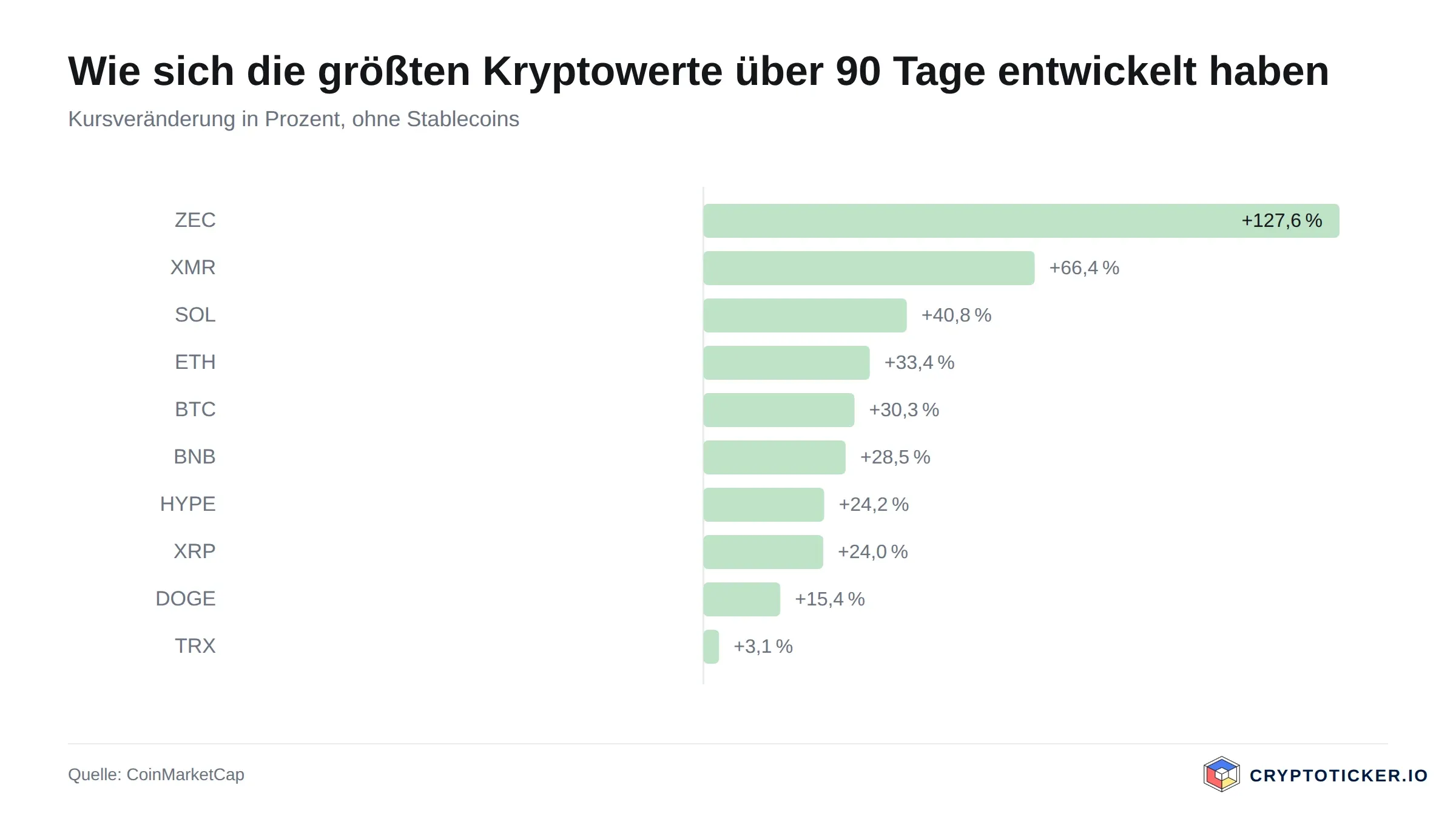
The largest crypto assets over 90 days, based on CoinMarketCap data
A VASP, a virtual asset service provider, is by contrast a provider that transfers or exchanges virtual assets. The BSP places VASPs within the wider supervisory framework for money service businesses. In practice an exchange offering peso deposits and withdrawals may, alongside its crypto functions, also use payment processes, and therefore have several regulatory points of contact at once. A pure payment provider, on the other hand, is not automatically a VASP. For platform operators this distinction is central, because what counts is the services actually provided, the contractual structure and the respective registration, not a company's label alone.
Consequences for market entry, existing platforms and customers
For new providers, a final halt to OPS applications could delay market entry, particularly where a business model depends on holding its own OPS role, or a corresponding partnership, for fiat payment processing. That does not mean every new crypto platform would inevitably be affected. For existing providers, possible stricter VASP checks in the payment environment would bear above all on documentation, risk analysis, monitoring of merchant relationships and adjustment of limits, in other words on classic AML measures (anti-money laundering) and KYC processes (identity verification).
Users and investors may see more cautious deposit and withdrawal channels, longer onboarding processes or a narrower range of new products. The draft makes no mention of existing accounts being blocked. It is worth adding that the BSP has already set out further standing expectations for VASPs: the 2026 listing guidelines require due diligence on tokens, continuous monitoring and delisting thresholds, while privacy coins may not be supported. These listing rules, already in force, should not be confused with the new payments draft.
In brief: For customers the key point is this: more supervision can change procedures, but it does not automatically mean a local or international platform is blocked. For operators, what counts is the specific regulatory role of each individual service.
An existing moratorium must not be mixed up with the new draft
The BSP had already restricted the regular application window for new VASP licences back in September 2022. According to the current BSP Citizen’s Charter, that moratorium was continued by Memorandum M-2025-031 with effect from September 1, 2025, subject to further reassessment. The difference matters: the existing VASP licence moratorium concerns access to a VASP licence, while the new draft deals with OPS registration applications and integrity controls in payments. Earlier moratoria also contained transitions and limited exemptions, which is why market participants should expect neither identical exemptions nor identical consequences automatically.
These documents are the ones market participants should check now
Anyone who could actually be affected should rely on solid sources rather than headlines:
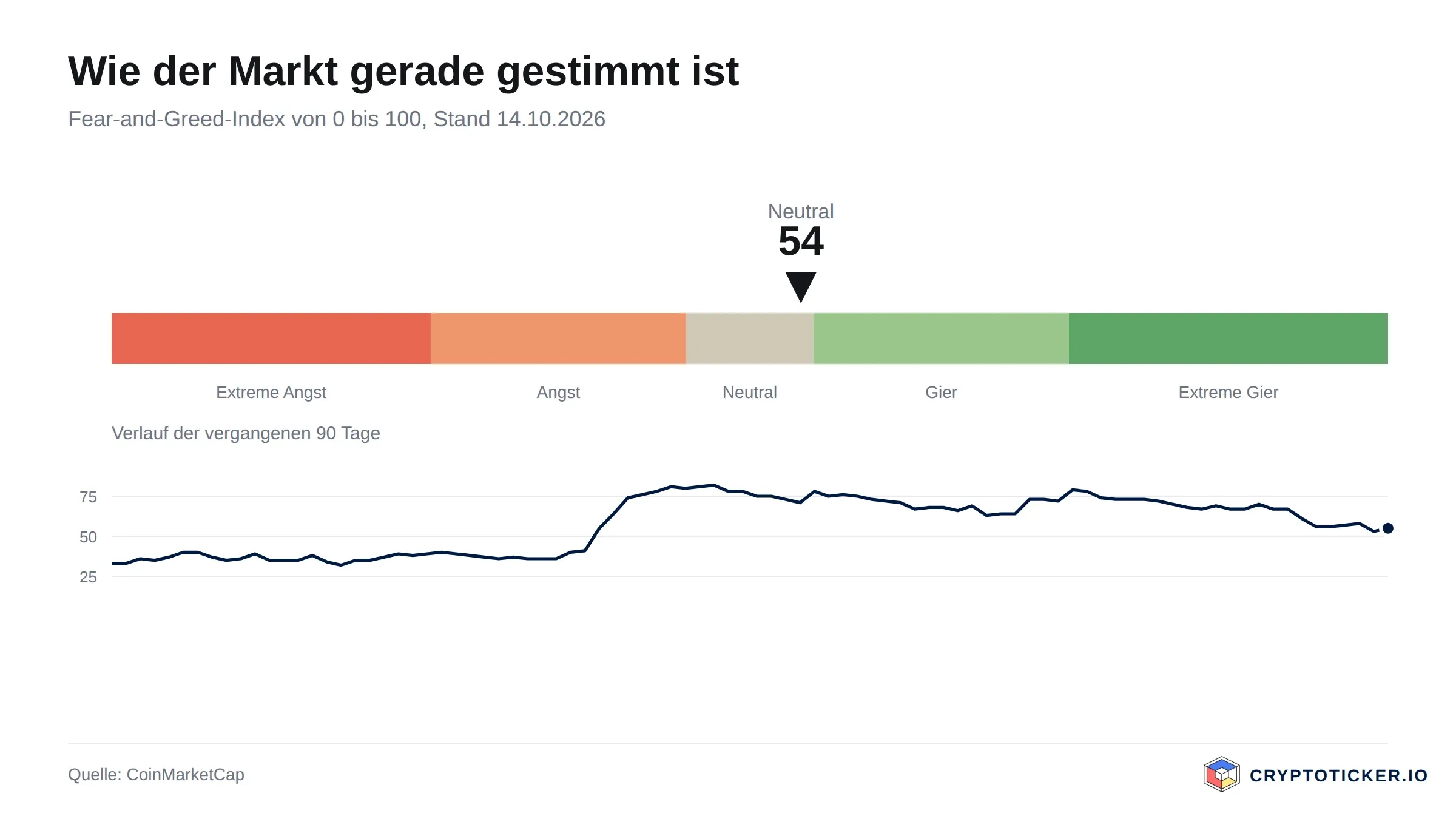
The Fear and Greed Index places market sentiment between extreme fear and extreme greed
- Check the final BSP issuance and any consultation notices: date of application, definitions, exemptions and transitional periods.
- Check separately in the BSP Verifier and the official OPS list what status payment service providers and crypto providers hold. An entry in a register is not a guarantee of safety or creditworthiness.
- Document your own business model: who accepts peso payments, who holds the crypto assets in custody, who is the customer’s contractual partner, and do direct or layered merchant relationships exist?
- Base no business or investment decision on media reports or social networks alone.
In brief: The position becomes solid only with the final BSP document: it has to state unambiguously which companies are covered, when the rules begin and how existing cases are treated.
Reading the regional trend without false equivalences
Crypto regulation in Asia is moving in a similar direction across many markets: licensing, anti-money-laundering measures and consumer protection for crypto providers are gaining weight. National categories, agency responsibilities and transitional rules are not interchangeable, however. The FATF notes in its report that differing national licensing and supervisory approaches can create regulatory gaps, which is why activity-based registration, risk-based supervision and cross-border cooperation remain relevant. For international platforms that means local Philippine requirements have to be assessed separately; EU standards do not replace a local classification.
Philippines VASP regulation: three questions decide the actual effect
With Philippines VASP regulation, three questions ultimately decide the real reach: which business models and companies are covered? From when do final obligations apply? And what transitions apply to companies already registered, to pending applications and to existing merchant relationships? The BSP draft could noticeably affect access for new providers and the payment connections of crypto businesses, but until official finalisation its scope and practical consequences remain open. This article offers general orientation and does not replace legal advice.