Once upon a time, there was a man who thought it would be cool to give Bitcoin (BTC) a physical form. That was Mike Caldwell. He created Casascius coins, which were physical metal tokens with
Once upon a time, there was a man who thought it would be cool to give Bitcoin (BTC) a physical form.
That was Mike Caldwell. He created Casascius coins, which were physical metal tokens with real Bitcoin value embedded into a tamper-evident hologram sticker stuck on the token.
Currently, Caldwell is a Managing Partner at Utah-based Casascius Capital LLC.
Issued in a range of denominations and materials, from solid brass 1 BTC coins to gold-plated 100 BTC savings bars, Casascius coins were a novel form of cold storage in the years before hardware wallets came into the picture.
But Caldwell suspended sales on November 27, 2013 after the United States Financial Crimes Enforcement Network (FinCEN) determined he was operating as an unlicensed money transmitter.
Now one of those physical Bitcoins just got cracked open after more than a decade.
Related: Analyst predicts 'meat' of money printing will benefit Bitcoin
How is a Casascius coin redeemed?
As per the official Casascius website, redeeming a Casascius coin is a straightforward but irreversible process. The owner must first physically peel the tamper-evident hologram on the back of the coin, which reveals the private key on a card embedded inside.
The hologram leaves behind a honeycomb pattern when removed, which is a permanent indicator that the coin has been accessed.
Once the private key is exposed, the owner imports it into a Bitcoin wallet client, which then locates and claims the Bitcoin from the peer-to-peer network.
For coins issued with two-factor encryption, the private key must first be decrypted using the owner's original passphrase before it can be imported and the funds claimed.
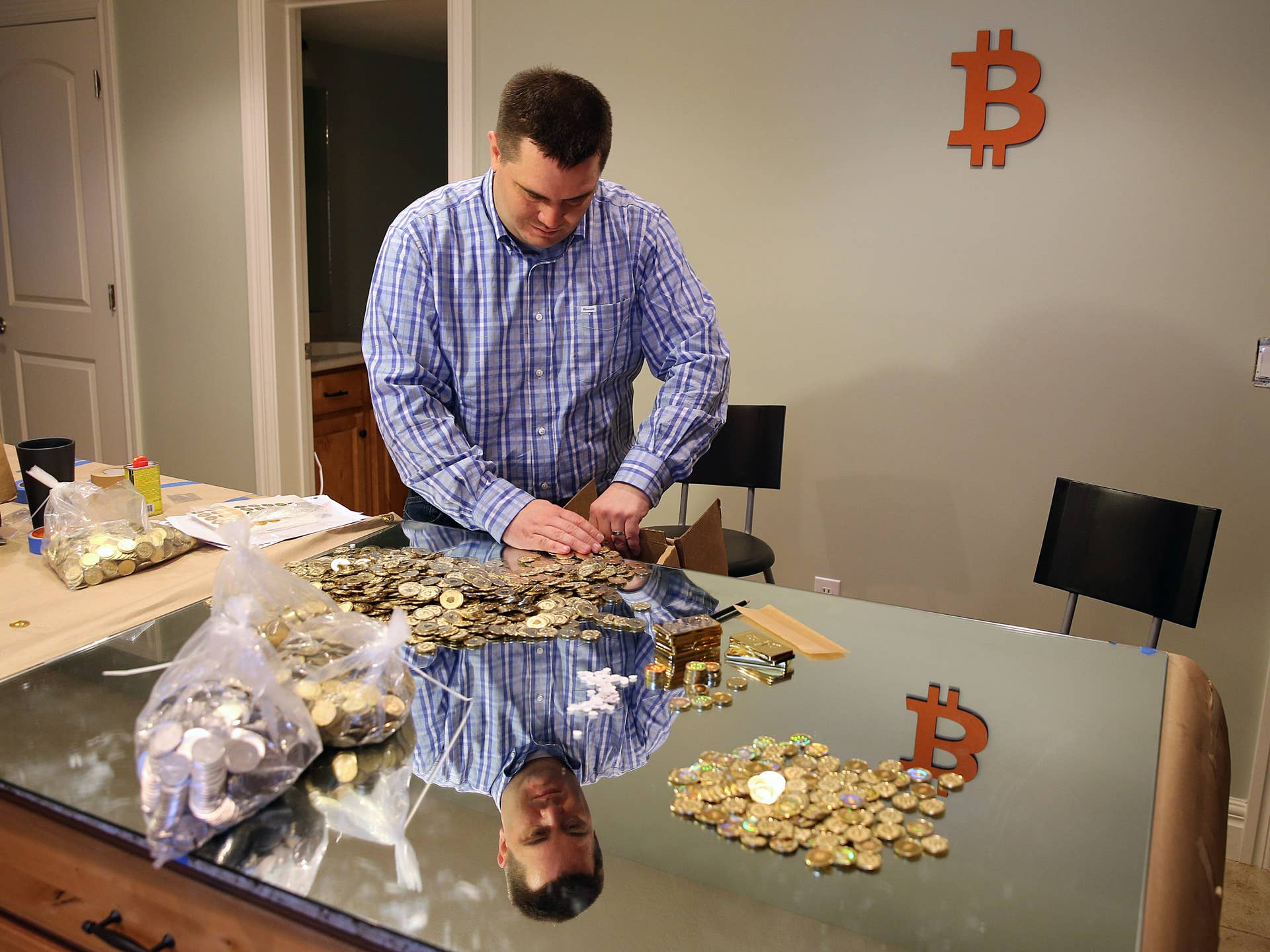
Mike Caldwell in April 2013.
George Frey/Bloomberg via Getty Images
Physical Bitcoin's private key unlocked
A Casascius coin from the legendary 2011-2013 mint had its holographic seal removed recently, with the private key used to move funds on-chain for the first time after 12 years, according to blockchain data flagged by Galaxy Research.
The 25 BTC inside was worth around $1.78 million, according to Galaxy Research.
The transaction was confirmed on the Bitcoin blockchain at block 952,159 on June 2, mined by AntPool with a fee of just $2.79.
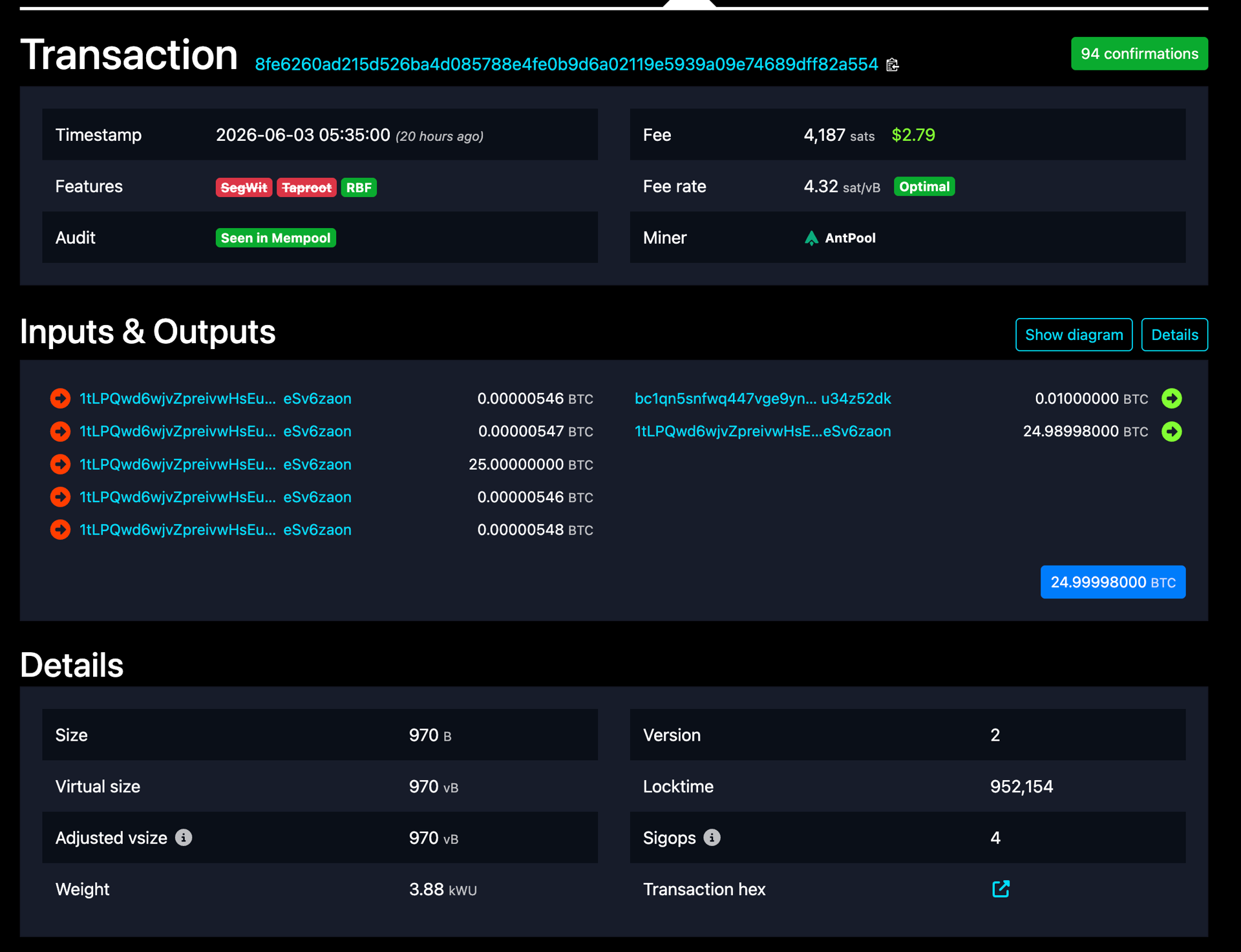
Details of the movement as seen on Mempool.space
Trending on TheStreet Roundtable:
A physical Bitcoin in this economy?
Blockchain data shows the owner sent a small 0.01 BTC to an external address, with the remaining 24.99 BTC returned to the original Casascius address.
The move suggests the owner tested the private key rather than executing a full transfer, meaning the bulk of the Bitcoin has not yet left the wallet.
The identity of the owner remains unknown.
The incident comes at a time when the broader crypto market is going through a bloodbath, with Bitcoin leading the way.
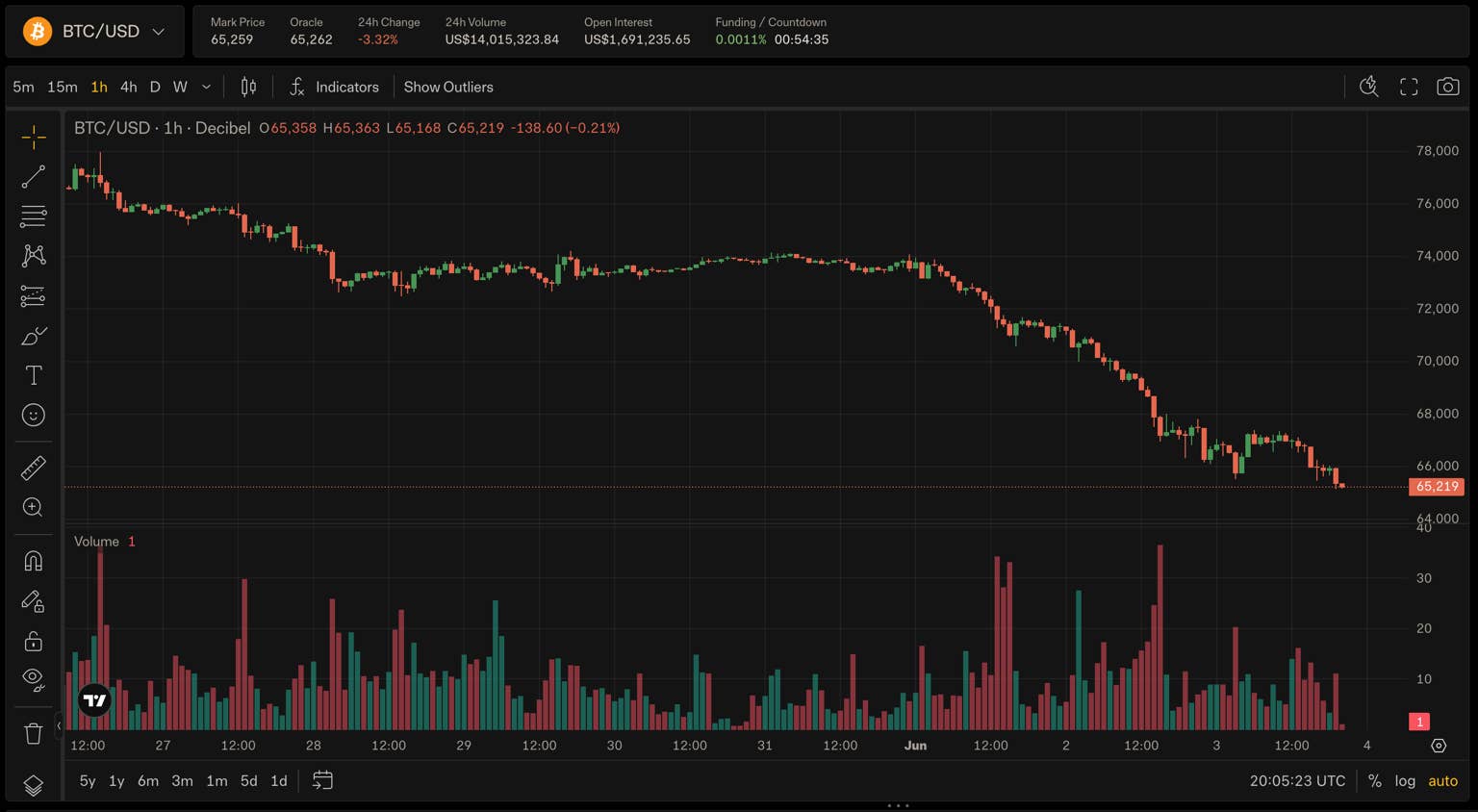
On the same day as the physical coin's redemption, Bitcoin price fell below $66,000 for the first time in months.
BTC/USD, Decibel
Decibel
At press time, Bitcoin was trading at $65,219, down 3.3% in the past 24 hours, as per Decibel. CoinGlass data showed that in the past 24 hours, the total liquidations came in at $937.53 million, with Bitcoin accounting for $351.81 million of the losses.
Related: Analyst who predicted 'Liberation Day' crash sends harsh warning amid market slide