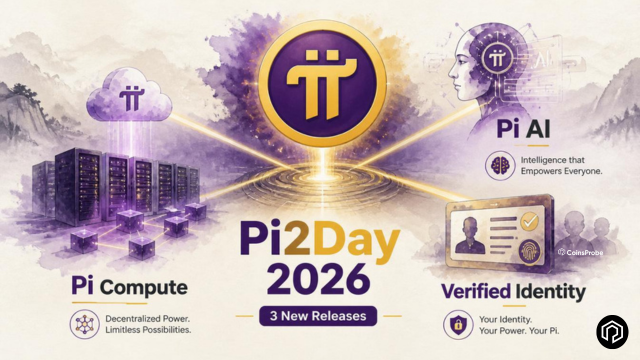
Key Highlights Pi2Day 2026 introduced three major products: SoloHost, Pi Sign-in, and PiVerify, focusing on AI, identity, and utility. SoloHost transforms Pi Desktop into a privacy-first plat
Key Highlights
- Pi2Day 2026 introduced three major products: SoloHost, Pi Sign-in, and PiVerify, focusing on AI, identity, and utility.
- SoloHost transforms Pi Desktop into a privacy-first platform for local AI agents and distributed computing.
- Pi Sign-in enables users to access third-party apps using their Pi accounts, expanding Pi's ecosystem beyond the Pi Browser.
- PiVerify allows external businesses to use Pi's KYC system, creating a new utility-driven revenue stream for the network.
Pi Network used Pi2Day 2026 — observed today, June 28, 2026 — to make a clear strategic statement: this is not a project chasing speculative attention, but one deliberately building infrastructure for the AI era. Three substantial releases — SoloHost, Pi Sign-in, and PiVerify — were unveiled simultaneously, each targeting a distinct but complementary piece of the same broader thesis: compute, identity, and AI as the foundation for Pi’s next phase of utility.
The Strategic Vision — Utility First, Ecosystem Growth Second
The official Pi2Day announcement laid out the underlying philosophy directly:
“By first providing useful services and resources for external third-parties — such as Pi’s blockchain infrastructure, identity verification, and large globally engaged network — Pi offers multiple unique incentives to not only use Pi’s services but also join and contribute to Pi’s existing ecosystem.”
This framing is a notable strategic articulation. Rather than positioning Pi’s growth as dependent primarily on attracting new Pioneers to mine or speculate on the token, the Core Team is explicitly betting that Pi’s existing assets — its verified user base of over 18 million KYC-verified Pioneers, its network of 420,000+ Nodes, and its broader blockchain infrastructure — are valuable enough on their own to attract external developers, businesses, and users into the ecosystem as a secondary effect of providing genuinely useful services first.
This is a meaningfully different growth model than the one that characterised Pi’s earlier mining-focused phase — and it reflects a maturing approach toward sustainable, utility-driven demand rather than purely viral user acquisition.
 Source: @PiCoreTeam (X)
Release 1 — SoloHost (Beta): Local AI and Distributed Computing
SoloHost is a new open, permissionless framework built directly into Pi Desktop. It allows third-party developers to build, list, and publish self-hosted applications that users can discover, install, and run directly on their own computers — rather than through a centralised cloud service.
 Pi Network’s SoloHost Beta/Source: minepi
Key features:
Local AI agents with strong privacy — Data stays on the user’s own device rather than being transmitted to and processed by centralised cloud servers. This privacy-first architecture is a deliberate design choice that directly addresses one of the most significant concerns surrounding AI adoption broadly: where personal and sensitive data actually goes when AI tools process it.
Distributed computing capabilities (coming soon) — SoloHost is designed to eventually leverage Pi’s substantial network of 420,000+ Node operators for distributed computing tasks — turning Pi’s existing infrastructure investment into a practical resource pool for compute-intensive applications.
Example application — Hermes — An open-source local AI agent that runs entirely on the user’s own computer, serving as a concrete demonstration of what SoloHost enables in practice rather than a purely theoretical framework.
What this means structurally: SoloHost effectively transforms Pi Nodes and Pi Desktop into a practical platform for running AI tools and compute-intensive tasks locally — reducing reliance on centralised cloud providers for users who value data privacy, while simultaneously giving Pi’s already-substantial Node network a genuine functional purpose beyond blockchain consensus alone.
Release 2 — Pi Sign-in: Verified Identity for Third-Party Apps
Pi Sign-in allows users to log into supported third-party websites and applications using their existing Pi account — functioning similarly to familiar services like “Sign in with Google” or “Sign in with Apple.”
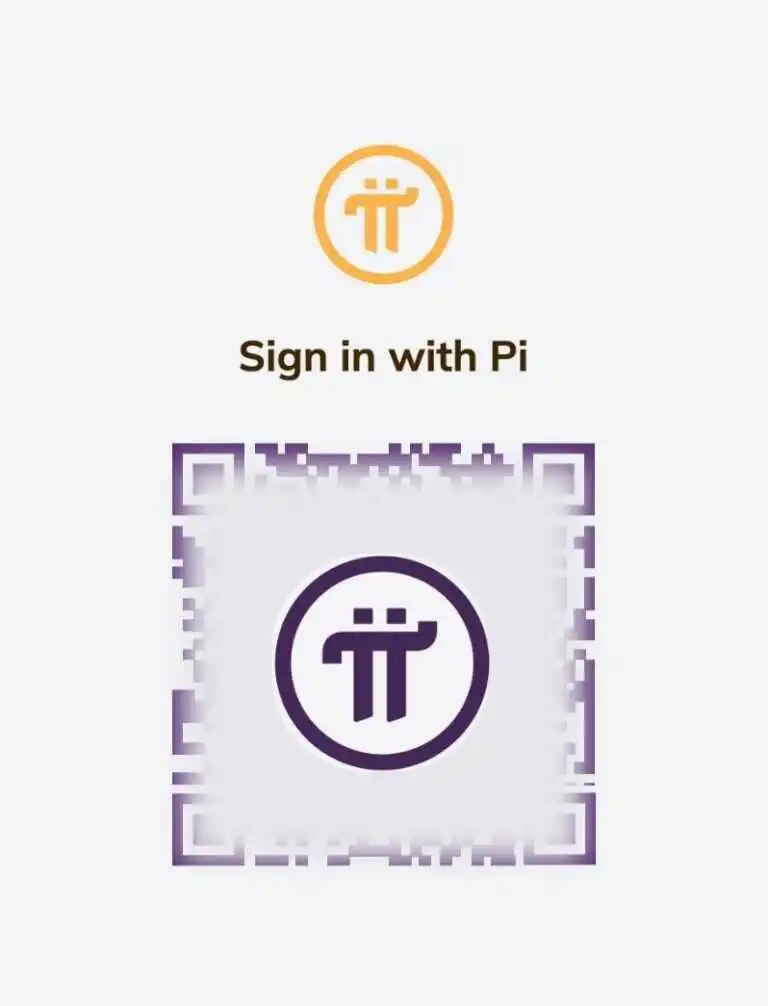 Pi Sign-in/Source: minepi
The benefits this unlocks:
Simplified user experience across the internet — Users gain a single, trusted identity they can carry across multiple third-party platforms without needing to create and manage separate credentials everywhere.
External services leverage Pi’s verified user base — Any third-party platform that integrates Pi Sign-in gains instant access to authenticate against Pi’s large, already-verified user population — a meaningful value proposition for any service that benefits from confirmed real-human users rather than anonymous or easily-faked accounts.
Better device connectivity — Pi Sign-in specifically enables use cases like controlling a desktop AI agent (such as the SoloHost-powered Hermes) remotely from a phone — connecting Pi’s various products into a more cohesive cross-device experience.
Expansion beyond the Pi Browser — Perhaps most significantly, Pi Sign-in extends Pi’s practical presence into the wider web — rather than confining Pi-native functionality exclusively within the Pi Browser environment, as has largely been the case historically.
Release 3 — PiVerify: Identity Verification as a Service
PiVerify takes Pi’s established, real-human KYC (Know Your Customer) verification system and makes it available as a service to external businesses and platforms — not just within Pi’s own ecosystem.
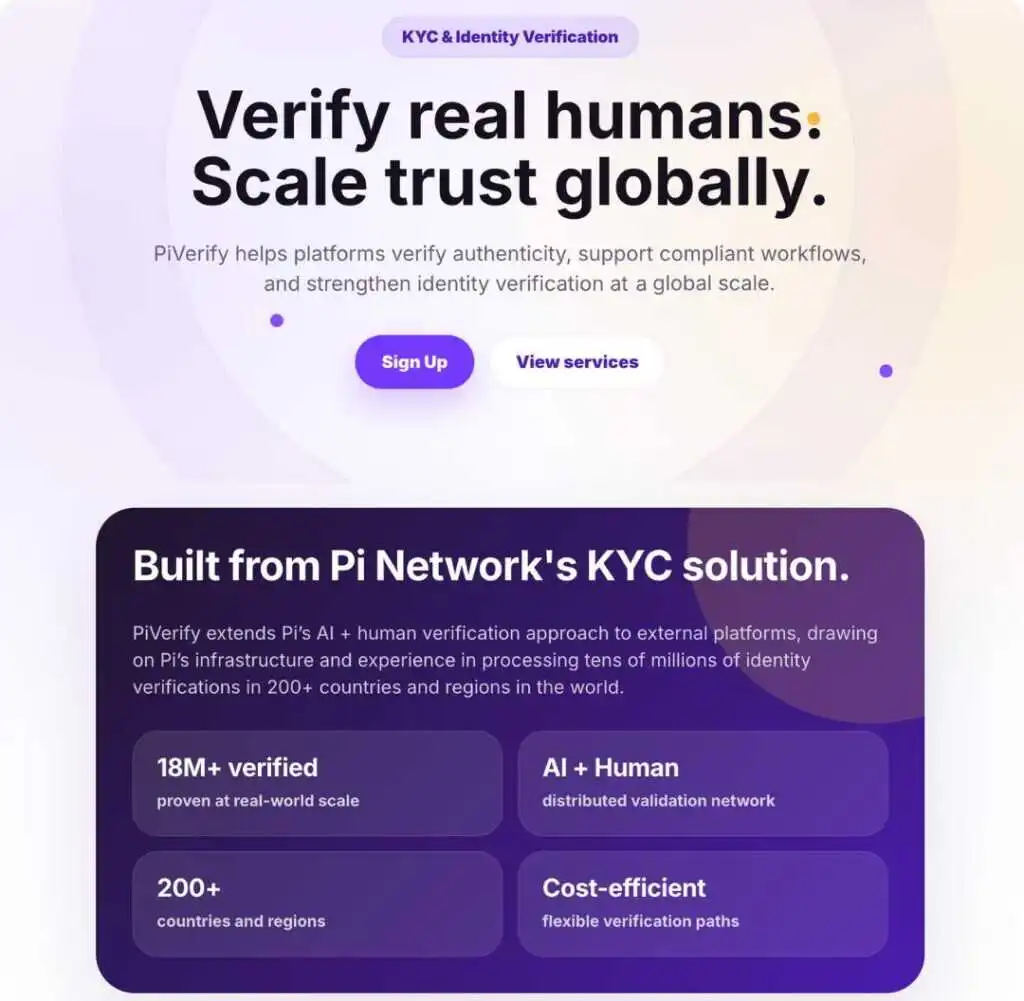 PiVerify/Source: minepi
The core mechanics:
Fraud and compliance solution for third parties — Businesses can use PiVerify to help reduce fake accounts and fraudulent activity on their own platforms, while also helping meet regulatory compliance requirements around customer verification.
Businesses pay in Pi — This is the detail with the most direct economic significance: external businesses pay in Pi to access the verification service. This creates a genuine, demand-driven use case for the Pi token that is entirely independent of speculative trading or mining activity — actual businesses paying actual Pi for a functional service they need.
Built on an 18 million+ verified user foundation — PiVerify’s credibility rests on Pi’s already-substantial base of verified real humans — a dataset and verification infrastructure that took years to build and that few competing identity solutions can match at comparable scale.
Why this matters structurally: PiVerify effectively converts Pi’s identity infrastructure into a revenue-generating service for the broader digital economy — creating a direct mechanism through which external, non-Pioneer businesses contribute genuine Pi-denominated demand to the ecosystem.
Pi2Day Ecosystem Quest — Earn a Commemorative Badge
Alongside the three major product releases, Pi Network also launched the Pi2Day Ecosystem Quest within the Pi mining app — giving Pioneers a direct, hands-on way to engage with today’s announcements.
Pioneers can:
- Learn about the new features — SoloHost, Pi Sign-in, and PiVerify
- Test the releases directly
- Complete a quiz based on what they’ve learned
Successful participants receive a special in-app badge to commemorate Pi2Day 2026 — a small but meaningful gesture that encourages genuine engagement with today’s substantive product news rather than passive observation alone.
 Pi2Day 2026 Badge/Credits: @JituKakati4 (X)
Why These Releases Matter
Taken together, today’s three releases represent a coherent and deliberate continuation of Pi Network’s push toward practical utility rather than pure speculation — a theme we anticipated heading into today’s event in our Pi2Day 2026 preview article.
By opening its core infrastructure — compute via SoloHost, identity via PiVerify and Pi Sign-in — to external parties beyond its own Pioneer community, Pi is attempting to create genuine, demand-driven need for Pi that exists independently of the network’s internal mining and ecosystem dynamics. This is a meaningfully different growth vector than relying solely on expanding the Pioneer base or driving more activity within Pi’s own apps.
These releases also align directly with several of the most significant broader trends currently shaping the technology landscape: privacy-focused local AI (addressed by SoloHost), decentralised compute (also SoloHost, via the Node network), and trusted digital identity (PiVerify and Pi Sign-in) — all of which have become increasingly valuable and sought-after capabilities as AI adoption accelerates globally.
Reactions to Pi2Day 2026 have been genuinely mixed across the Pioneer community. Many Pioneers have expressed appreciation for the clear focus on infrastructure and real utility — viewing today’s releases as evidence of substantive, building-focused progress rather than purely promotional announcements.
Others have expressed frustration over the overall pace of development, and specifically over the absence of any major price-moving announcement — a recurring tension within the community between those focused on Pi’s long-term infrastructure build-out and those hoping for more immediate token-price catalysts.
The Core Team has continued to emphasise its preference for steady, building-focused progress over announcements designed primarily to generate short-term speculative excitement — a positioning consistent with the broader “utility first” framing articulated in today’s official announcement.
Bottom Line
Pi2Day 2026 marks a genuinely significant step in Pi Network’s evolution — from a mobile-mining-centric project toward a broader infrastructure player operating specifically in the AI and decentralised computing space. SoloHost, Pi Sign-in, and PiVerify are now live or in beta simultaneously, and together they represent Pi’s most concrete attempt yet to position its existing resources — its verified user base, its Node network, and its blockchain infrastructure — for genuine external use, rather than relying purely on internal ecosystem growth.
This external-utility push sits alongside a broader pattern of ecosystem maturation we’ve tracked throughout 2026 — from the Vibe Coder Campaign recruiting AI developers, to the improved Launchpad flow and SLICE testnet token refining how utility tokens launch, to the Ecosystem Directory Staking visual update that has already helped real apps gain real users. Each of these pieces — developer recruitment, fair token launches, app discovery, and now external compute, identity, and AI services — is building toward the same goal: genuine, demand-driven utility rather than speculative attention.
Whether this strategic pivot toward external utility translates into measurable demand and adoption will be the key question to watch in the months ahead — and it’s also central to the broader question many Pioneers are tracking: whether $PI can recover above $1 again. Pioneers are encouraged to open the Pi mining app, read the full official announcement, test the new features directly, and participate in the Ecosystem Quest to claim the commemorative Pi2Day 2026 badge.
Disclaimer: The views and analysis presented in this article are for informational purposes only and reflect the author’s perspective, not financial advice. Technical patterns and indicators discussed are subject to market volatility and may or may not yield the anticipated results. Investors are advised to exercise caution, conduct independent research, and make decisions aligned with their individual risk tolerance.
Read Also: Will Pi Network’s $PI Coin Recover Above $1 Again? — Here’s Claude AI’s Honest Answer