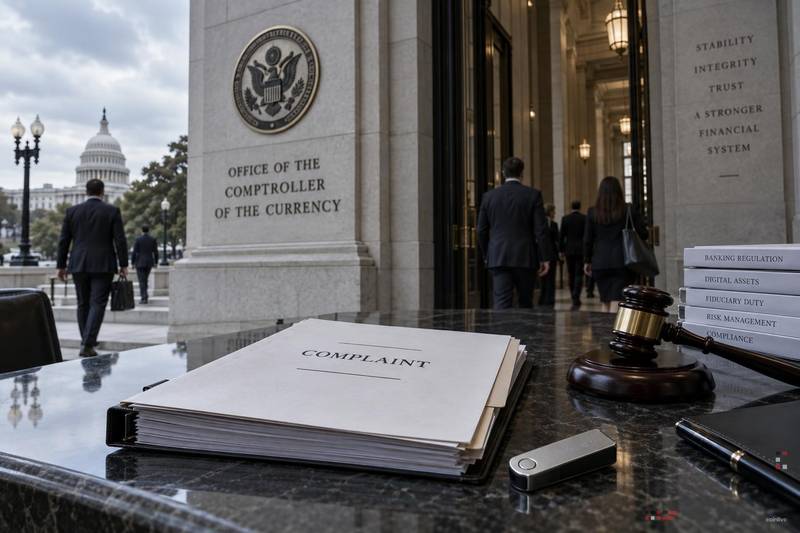
Pi Network Exchange Listings and the Current PI Trading Landscape Is it really trading on major exchanges, or is that mostly noise? Pi-Network exchange listings now cover several large venues
Pi Network Exchange Listings and the Current PI Trading Landscape
Is it really trading on major exchanges, or is that mostly noise? Pi-Network exchange listings now cover several large venues. The biggest names, though, are still missing.
This is the token behind a mobile-first blockchain that began as a phone-mining app. Readers search this topic because listing claims is messy, and some are plainly false.
This guide separates what the project confirms from what market data shows. It also covers supply, liquidity, and risk, using figures checked on October 3, 2026.
One point matters early. A listing is not an endorsement, and it is not a price promise.
What Is Pi Network, and Why Do Listings Matter?
The Network lets users earn PI-through a smartphone app. The published Pi whitepaper describes a network built around identity checks and wide participation. Those are the project's own claims, not audited results.
Listings matter because they decide where holders can sell. An exchange gives a token an order book, which is a live list of buy and sell orders. Without one, price discovery barely exists.
The project's own pages mention millions of verified Pioneers. That is a large base for a market this thin. Pi Network exchange listings decide how that base reaches a market.
Which Pi Network Exchange Listings Does the Project Verify?
The Core Team publishes aKYB-verified business list. KYB means "know your business," a license, and a legitimacy check. The page says only KYB-verified businesses can hold Pi-Mainnet wallets.
Category
Names on the official list
Role
Exchanges
Kraken, OKX, Bitget, Gate, Pionex, LBank, MEXC
Trading venues
On-ramp providers
Onramp.money, Onramper, Zypto, TransFi, Banxa
Card and bank purchase gateways
A name on the list confirms KYB status. It does not confirm every trading pair on that venue.
The list is also short. Several venues that carry pairs in market trackers, such as CoinW, XT.com, and DigiFinex, do not appear on it. Pi Network exchange listings therefore come in two tiers: verified by the project and merely visible in the data.
How Did Kraken and OKX Change Pi Network Exchange Listings?
Kraken started PI-spot trading on March 13, 2026. Market reports call it the first large US-regulated exchange to list the token. OKX later opened-PI access to US users as well.
Other venues listed this network earlier. Market trackers now count about 14 centralized exchanges and no decentralized ones.
More venues spread liquidity across more order books. That can mean thinner depth on each one. Meanwhile, recent coverage of Pi mainnet growth shows a new ledger closing every five seconds.
How Do Pi-Network Exchange Listings Look in Numbers?
The rounded figures below come from market data seen on the same date as above.
Metric
Figure
Price
About $0.090
Market cap
About $1.01 billion
Circulating supply
11.24 billion PI
Total supply
100 billion PI
Fully diluted value (FDV)
About $9 billion
24-hour volume
Roughly $5 million to $6.5 million
Market cap is price times circulating supply. FDV is price times total supply. The gap is wide because only about 11.2% of supply circulates.
Across all Pi-Network exchange listings, daily turnover is well under 1% of market cap. A thin market can swing hard on small orders. Most data pages list total supply at 100 billion PI, but one tracker uses a lower projected figure.
For short-term levels, this Pi price prediction analysis covers support and resistance.
Why Are Binance and Coinbase Missing From Pi Network Exchange Listings?
Binance ran a community vote in February 2025. Reports put support near 86.8% across about 226,000 votes. No listing followed, so the Network exchange listing still lack the largest exchange.
A vote measures interest. It does not bind the exchange. Coinbase has not listed-PI either, and market reports say it has not publicly engaged with the project.
Analysts point to code transparency, audit evidence, and unclear US legal status. Those are interpretations, not statements from either exchange.
What Could Change the Next Phase of Listings?
The Core Team has scheduled Protocol 28 activation for October 16. A protocol is the network's rule set. Reports say it targets stability and smart contract features. The Protocol 28 timeline lists the nearby dates.
A native decentralized exchange, often called PiDEX, is speculated to follow smart contract rollout. It is not confirmed as live. A stablecoin tie-up with Open Standard is also not one of the Pi-Network exchange listing.
How Can Readers Spot Fake-Pi Network Exchange Listings?
The project warns against unverified businesses that claim Pi-Mainnet wallets. Its official safety center carries wider guidance. A few habits help:
Check the venue against the KYB list before depositing.
Treat decentralized PI-pairs with caution. The official list names none.
Know the product. Perpetual futures and IOU-style tokens are not spot PI.
What Are the Main Risks Around PI Trading?
The Network exchange listing carry clear risks:
Thin liquidity: volume sits below 1% of market cap.
Supply overhang: about 88.8% of total supply is not yet circulating, which may add selling pressure.
Fragmentation: pairs sit across many venues, some outside the KYB list.
Volatility: PI-fell roughly 18% within three days in September, according to market data. This Protocol 28 breakout outlook shows how fast sentiment shifts.
Analyst interpretation: access has clearly improved. Liquidity and supply remain the weak points. If Protocol 28 delivers working smart contract tools, activity could shift toward on-chain trading. None of this is confirmed.
Conclusion
Pi-Network exchange listings are real but uneven. The official list names seven exchanges and five on-ramp providers. Kraken and OKX US access added regulated reach. Binance and Coinbase remain absent, and the reasons are unconfirmed.
Liquidity is thin, and most supply is not yet circulating. Readers should check the KYB list, watch what Protocol 28 delivers, and compare order-book depth before trusting any listing claim.
Disclaimer:
This article is for information only and is not financial advice. Crypto assets are volatile and high risk, and a listing does not guarantee liquidity or returns. Readers should do their own research and consult a licensed adviser before making decisions.