Did PiggyBank Gamble With Your Savings? ZachXBT Investigator Says Yes PiggyBank, a Solana-based yield protocol, just shocked its users. A small $100,000 trade spiraled into a crisis affecting
Did PiggyBank Gamble With Your Savings? ZachXBT Investigator Says Yes
PiggyBank, a Solana-based yield protocol, just shocked its users. A small $100,000 trade spiraled into a crisis affecting millions in user funds. Vaults are bleeding. Withdrawals are being questioned. And one famous on-chain detective is calling it out. What exactly went wrong?
From $100K to $1.35 Million — But You Can't Touch It
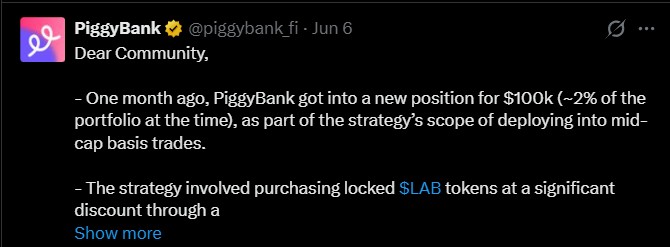
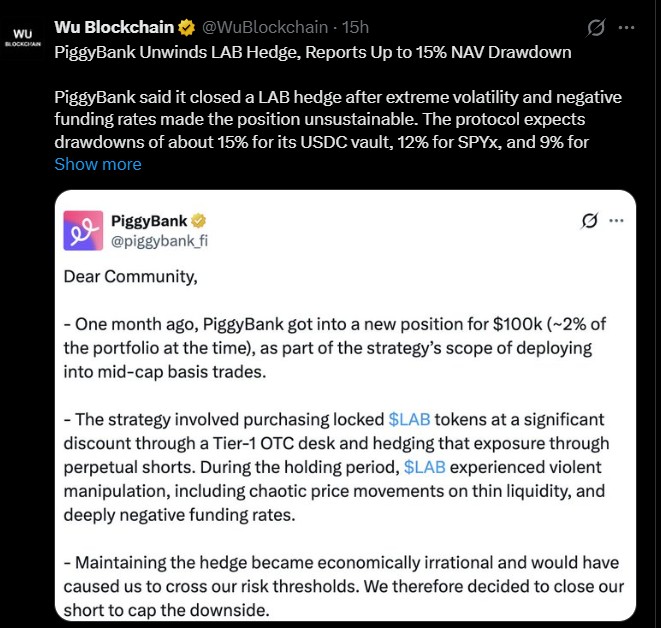
One month ago, PiggyBank made a move. It spent $100,000 buying locked LAB tokens at a discount. That's roughly 2% of the portfolio at the time.
The plan seemed smart. Buy cheap locked tokens. Hedge the risk using perpetual short contracts — bets that profit when prices fall. Pocket the difference. It didn't go that way.
LAB's price swung violently. Liquidity dried up fast. Funding rates on the short contracts turned deeply negative. That means PiggyBank was paying heavily just to hold the hedge open.
So it closed the shorts entirely. That $100,000 position is now worth $1.35 million on paper. But here's the catch — you can't sell it. The tokens are locked until August 14.
Source: Official X
Your Vault Just Dropped. Here's the Real Number
PiggyBank excluded the LAB position from its NAV — that's Net Asset Value, the figure that shows what your deposit is actually worth today.
The result hit users hard and fast:
PiggyBank says this exclusion is the "fairest and most transparent" approach. The position might still recover after the August unlock. But right now, your money shows a real loss on paper. A full report is promised next week.
Why This News Matters to Investors
This event exposes a critical risk hiding inside yield protocols. You deposit funds expecting stable, conservative returns. Instead, your capital quietly funds speculative trades in illiquid tokens. If the hedge fails, you absorb the loss. PiggyBank's 15% drawdown proves that even small positions can cause outsized damage when liquidity disappears. Always read a protocol's strategy scope before depositing.
Source: Wu Blockchain X
ZachXBT Steps In — And He's Not Holding Back
On-chain investigator ZachXBT went public with sharp criticism. He accused PiggyBank of exposing user deposits to a highly speculative, high-risk asset. This wasn't his first warning about LAB. Back in May, he raised serious red flags. His specific concerns included:
Opaque private loans and OTC deals with no public disclosure
Vesting schedule adjustments made without clear explanation
Suspected coordination between market makers
A heavily concentrated token supply in a few wallets
ZachXBT's message is direct. Users trusted PiggyBank with their savings. A yield protocol's job is to protect that capital. Buying a manipulated, illiquid mid-cap token doesn't protect anything.
Was This Ever a Safe Strategy?
PiggyBank calls this a "mid-cap basis trade." That means buying an asset cheap and profiting from price gaps between markets. Professionals use this strategy. It works — in normal markets.
But LAB wasn't a normal market. Thin liquidity made prices easy to manipulate. Negative funding rates ate into returns every single day. The hedge cost more than the potential profit.
Closing the short was the only rational choice left. But it left users fully exposed to a volatile, locked position they never chose. That's the part no one agreed to.
Conclusion
PiggyBank's LAB Token trade shows how fast a small bet becomes a major crisis. Users now face real NAV losses and a locked position frozen until August. Community trust is fractured. The promised weekly report must deliver full transparency — or the damage to PiggyBank's reputation may prove permanent.
Disclaimer: This article is for informational purposes only. It does not constitute financial or investment advice. Always conduct your own research before making any financial decisions involving crypto assets.