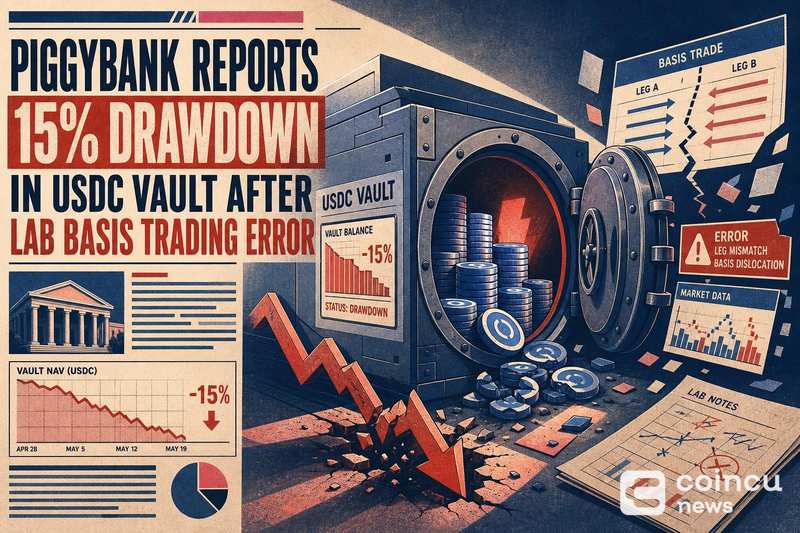
PiggyBank, a DeFi yield protocol, has reported a 15% drawdown in its USDC vault after what the team described as a LAB basis trading error. The incident has drawn scrutiny from on-chain inves
PiggyBank, a DeFi yield protocol, has reported a 15% drawdown in its USDC vault after what the team described as a LAB basis trading error. The incident has drawn scrutiny from on-chain investigator ZachXBT, who publicly questioned the platform's risk management practices.
PiggyBank's USDC vault posted a 15% drawdown
PiggyBank disclosed that its USDC-denominated vault suffered a 15% loss tied to an error in a basis trading strategy involving LAB. The platform framed the event as an isolated operational incident rather than a systemic failure.
The PiggyBank protocol offers yield-generating vaults where users deposit stablecoins, with returns generated through automated trading strategies. A 15% drawdown in a stablecoin vault is notable because users typically expect capital preservation from USDC-denominated products.
PiggyBank addressed the situation publicly on X, acknowledging the drawdown and providing an initial explanation to vault depositors. The disclosure followed growing community concern about unexpected losses in what many users considered a lower-risk product.
A LAB basis trading error triggered the loss
The stated cause of the drawdown was an error in a basis trading strategy connected to LAB. Basis trading involves exploiting the price difference between a spot asset and its corresponding futures contract, a strategy that typically generates modest, steady returns in stable market conditions.
When a basis trade is executed incorrectly, whether through sizing errors, timing missteps, or flawed hedging, the resulting losses can be amplified. In this case, the error was significant enough to produce a 15% decline in the vault's value.
It is important to note that the cause described here reflects PiggyBank's own characterization of the event. Independent verification of the specific trade mechanics has not been publicly confirmed at the time of writing.
ZachXBT questions PiggyBank's risk controls
On-chain investigator ZachXBT raised concerns about PiggyBank's risk management framework following the drawdown disclosure. CryptoTimes reported on June 6 that ZachXBT questioned how a single strategy error could produce such a large loss in a stablecoin vault, pointing to potential gaps in position limits or risk safeguards.
ZachXBT's scrutiny carries weight in the DeFi community, where his on-chain investigations have previously surfaced issues at other protocols. His public questioning of PiggyBank's controls adds pressure on the team to provide a detailed post-mortem.
Why a stablecoin vault drawdown matters
USDC vaults are marketed as lower-risk alternatives within DeFi. Users who deposit into these products typically accept smaller yields in exchange for the expectation that their principal remains largely intact. A 15% loss challenges that assumption directly.
The incident highlights that stablecoin denomination does not eliminate strategy risk. Even when the underlying asset maintains its peg, the trading strategies deployed on top of those assets can introduce significant exposure to execution errors and market volatility.
For vault depositors, the PiggyBank drawdown raises questions about how much visibility users have into the specific strategies their funds are allocated to. Protocols that deploy complex derivatives strategies, such as basis trading, without clearly communicated risk parameters leave users unable to assess their true exposure. Similar questions about risk management in DeFi have surfaced in cases involving large collateral positions and health factor monitoring.
The broader DeFi ecosystem has seen a series of incidents where strategy failures in yield products led to user losses. This event adds to growing calls for clearer risk disclosures and more robust internal controls at yield-generating protocols, a topic that intersects with the ongoing conversation about accountability and enforcement in crypto markets.
What to watch next from PiggyBank
Vault depositors and community members will be looking for several key updates from the PiggyBank team in the coming days. The most immediate question is whether the protocol will publish a detailed post-mortem explaining the exact trade that went wrong and the sequence of events that led to the loss.
Any disclosure about internal safeguards, or the lack thereof, will be closely examined. Specifically, observers want to know whether position size limits, stop-loss mechanisms, or strategy diversification rules were in place, and if so, why they failed to prevent a 15% drawdown.
Users will also want clarity on whether the vault has stabilized or whether further losses are possible. The PiggyBank documentation outlines the protocol's general approach to vault management, but specifics about the LAB basis trading allocation and its current status remain unclear.
Remediation steps, if any, will signal how the protocol intends to rebuild trust. Whether PiggyBank offers compensation, adjusts its strategy framework, or implements new risk controls will shape community perception going forward. The way DeFi protocols respond to losses has become a key factor in user retention, especially as the space matures and users weigh yield opportunities against the broader trajectory of tokenized finance.
FAQ about PiggyBank's USDC vault drawdown
What happened to PiggyBank's USDC vault?
PiggyBank reported that its USDC vault experienced a 15% drawdown caused by an error in a LAB basis trading strategy. The team disclosed the loss publicly and attributed it to an operational issue.
How large was the drawdown?
The reported drawdown was 15% of the vault's value. The exact dollar amount of the loss has not been publicly confirmed.
What is basis trading?
Basis trading is a strategy that seeks to profit from the price difference between a spot asset and its futures contract. It is generally considered a lower-volatility approach, but execution errors or adverse market moves can produce significant losses.
Who raised concerns about PiggyBank's risk management?
On-chain investigator ZachXBT publicly questioned PiggyBank's risk controls after the drawdown was disclosed, asking how a single strategy error could cause such a large loss in a stablecoin vault.
Does a USDC vault guarantee safety?
No. While USDC is a stablecoin that maintains a dollar peg, the trading strategies applied to vault deposits carry their own risks. A stablecoin denomination does not protect against strategy execution errors or market-related losses.
Disclaimer: This article is for informational purposes only and does not constitute financial or investment advice. Cryptocurrency and digital asset markets carry significant risk. Always do your own research before making decisions.
The post PiggyBank Reports 15% Drawdown in USDC Vault After LAB Basis Trading Error was initially published on Coincu.