Kanga, a Poland-founded crypto exchange, says it has secured a Markets in Crypto-Assets Regulation (MiCA) license in Latvia—an approval it says will let it operate across the European Union t
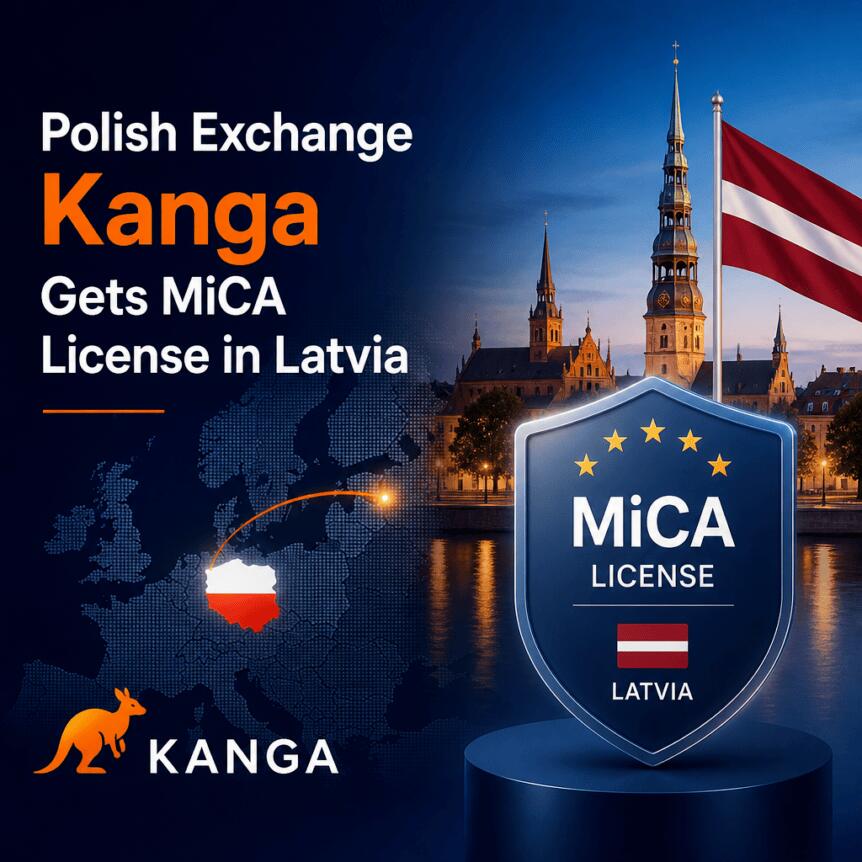
Kanga, a Poland-founded crypto exchange, says it has secured a Markets in Crypto-Assets Regulation (MiCA) license in Latvia—an approval it says will let it operate across the European Union through passporting.
In a Wednesday statement shared with Cointelegraph, Kanga’s operator, SIA AlphaRoute, said it received a Class 3 MiCA license from the Bank of Latvia after the regulator’s Supervisory Committee approved the authorization. The license was granted on June 18 and, according to the exchange, authorizes services including crypto custody, trading, and transfers across the EU.
Key takeaways
- Kanga (via SIA AlphaRoute) obtained a Class 3 MiCA license from the Bank of Latvia, enabling EU passporting.
- The authorization covers core exchange activities including custody, trading, and transfers, per the exchange’s announcement.
- Kanga says it began Latvia pre-licensing in November 2025 to prepare for MiCA’s transitional period.
- Poland remains without MiCA implementation legislation as the EU’s July 1 transitional deadline approaches, due in part to a recurring legislative deadlock.
Latvia licensing sets up EU-wide expansion
MiCA’s framework is designed to harmonize crypto regulation across the EU, but implementation schedules and national legislative processes have differed. Kanga’s move to obtain licensing in Latvia effectively positions it to serve EU customers under a compliant path while other jurisdictions—such as Poland—remain in flux.
According to Kanga’s statement, the relevant authorization was granted after the Bank of Latvia’s Supervisory Committee approved SIA AlphaRoute’s application. The exchange emphasized that the license permits it to provide crypto services across EU member states once passporting mechanisms are used.
Kanga also described how it planned for the regulatory shift. Its chief executive, Dominik Tomczyk, said the company began the pre-licensing process in Latvia in November 2025 after reviewing multiple jurisdictions. He framed the decision around using MiCA’s transitional period to ready internal systems and the organization for the new rules.
“From the very beginning, we knew that we had to use the transitional period provided for under the MiCA regulation to prepare the organisation to operate within the new regulatory framework,” Tomczyk said.
The exchange added that it will share additional information about operational changes and service terms through its official communication channels, pointing to a likely period of adjustment for customers as it aligns offerings with MiCA requirements.
Why passporting matters as MiCA deadlines loom
For operators, MiCA passporting is often the difference between being able to scale across borders quickly and being forced to run separate regulatory processes in each country. By securing a Class 3 license in Latvia, Kanga is effectively aligning itself with an EU-wide compliance route rather than waiting for national legislation elsewhere to catch up.
The timing is notable. The EU’s transitional deadline is set for July 1, and the broader compliance landscape remains uneven across member states. Kanga’s license—granted June 18—arrives shortly before that deadline, during a window when exchanges and custody providers may be reassessing market access and legal certainty.
That context is especially relevant for Poland-based firms. If a home market delays implementation, companies may seek licensing in other EU jurisdictions to avoid service uncertainty and to continue serving EU customers under a stable regulatory framework.
Poland’s legislative deadlock continues
While Kanga points to regulatory progress in Latvia, its home country still faces obstacles to MiCA implementation. According to earlier coverage from Cointelegraph, Poland has remained without MiCA implementation legislation ahead of the EU’s July 1 transitional deadline, with lawmakers attempting to break a deadlock after the Polish president vetoed a government-backed crypto bill three separate times.
Cointelegraph reports that President Nawrocki vetoed the bill for a third time on June 11, arguing that successive versions failed to address his objections—especially provisions he considered overly burdensome for crypto companies. Following the veto, members of the Poland 2050 party, part of Prime Minister Donald Tusk’s governing coalition, reportedly submitted a new proposal incorporating changes requested by the president.
As described by the bill’s sponsors, the latest proposal would reduce some fees, remove certain regulatory provisions, and make the overall framework less restrictive for crypto firms. Poland 2050 has reportedly called for the legislation to be fast-tracked through parliament.
At the same time, regulatory pressure in Poland is not limited to legislative timing. The country’s crypto sector has also faced increased scrutiny following a fraud investigation into Zonda, which Cointelegraph previously reported as Estonia’s largest crypto exchange. Prosecutors reportedly estimate customer losses exceed 350 million zlotys (about $92.7 million). Developments tied to that case may affect how regulators and lawmakers approach compliance and oversight of crypto platforms.
What to watch next for Kanga and EU MiCA adoption
Kanga’s Latvia license provides a concrete example of how crypto firms may navigate MiCA’s rollout when national implementation is delayed. Investors and customers will likely want to monitor how Kanga communicates specific operational changes, and whether Poland’s MiCA bill ultimately passes in the near term—since the pace of home-country legislation can still influence competition, costs, and compliance strategies for exchanges headquartered in Poland.
With the EU transitional deadline approaching, the next key signal will be whether other exchanges follow similar cross-border licensing paths—or whether Poland’s legislative process finally catches up, narrowing the gap between “ready under MiCA” and “still waiting for national law.”
This article was originally published as Polish Exchange Kanga Gets MiCA License in Latvia on Crypto Breaking News – your trusted source for crypto news, Bitcoin news, and blockchain updates.