Polygon co-founder Sandeep Nailwal stated on X that the Polygon protocol has burned 100 million POL tokens using network fees, a milestone that, if confirmed on-chain, would represent a meani
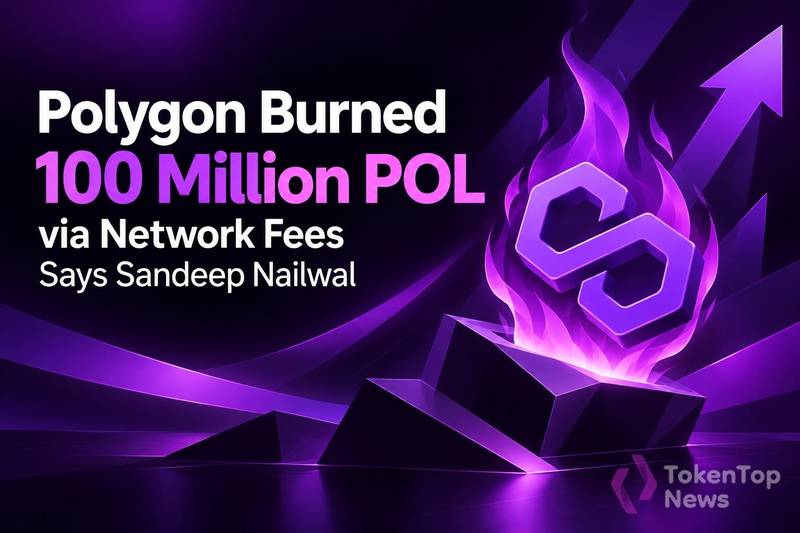
Polygon co-founder Sandeep Nailwal stated on X that the Polygon protocol has burned 100 million POL tokens using network fees, a milestone that, if confirmed on-chain, would represent a meaningful reduction in circulating supply funded entirely by protocol activity rather than treasury allocations.
What Nailwal Reported
Nailwal shared the claim directly on X, attributing the 100 million POL figure to fees generated by the Polygon network. The statement positions the burn as an organic outcome of user activity on the protocol, not a one-time governance decision or team-directed buyback. For related coverage, see Ethereum's deflationary upgrade EIP-1559 is now live on Polygon mainnet.
A token burn permanently removes tokens from circulation by sending them to an unspendable address. Unlike staking, which locks tokens but keeps them in play, a burn reduces the total supply with no reversal mechanism. If the 100 million POL figure is verified on-chain, it would represent a structurally smaller supply base going forward. For related coverage, see Visa Stablecoin Platform Targets 200 Million Merchants: What the Fortune Report Means.
Readers wanting to confirm the claim should check Polygonscan for burn transaction records tied to the network fee mechanism, since on-chain data is the authoritative source for any supply-reduction event of this scale. For related coverage, see Kristin Smith on SEC and CFTC Crypto Policy | Bloomberg.
How Network Fees Can Fund a POL Burn
Polygon's fee-to-burn model draws on the same deflationary logic that underpins Ethereum's EIP-1559 mechanism. Rather than routing all transaction fees to validators or a treasury, a portion is destroyed. Polygon activated EIP-1559 on its mainnet, which established the base-fee burn structure that could account for accumulated burns of this size over time. For related coverage, see This Week in Crypto: Bitcoin, Ethereum & Dogecoin.
The key implication is that the burn figure is directly tied to network usage. More transactions mean higher aggregate fees, which translate into more POL removed from supply. A 100 million POL burn therefore signals sustained throughput on the network over the period in question, though Nailwal did not specify the timeframe that produced this total. For related coverage, see Bitwise CEO: Solana Use Outpaces Dogecoin ETF Demand.
Supply Considerations and What to Verify
A burn of 100 million POL reduces the tokens available to circulate, which can shift supply-demand dynamics if demand remains constant or grows. However, a supply reduction alone does not guarantee any particular price outcome; that depends on concurrent demand, liquidity conditions, and broader market sentiment.
Several details remain unconfirmed at the time of publication. The exact timeframe over which the 100 million POL accumulated, whether the figure counts only base-fee burns or includes other destruction mechanisms, and the precise on-chain transaction records have not been independently verified from a block explorer. Readers should treat Nailwal's statement as a reported claim pending on-chain confirmation rather than an audited protocol metric.
POL holders and developers tracking the protocol's token economics can monitor real-time supply data and ecosystem activity at CoinGecko's POL token page and the Polygon chain overview on DeFiLlama, both of which aggregate on-chain metrics without requiring manual block explorer searches.
Disclaimer: This article is for informational purposes only and does not constitute financial or investment advice. Cryptocurrency and digital asset markets carry significant risk. Always do your own research before making decisions.
Read original article on tokentopnews.com