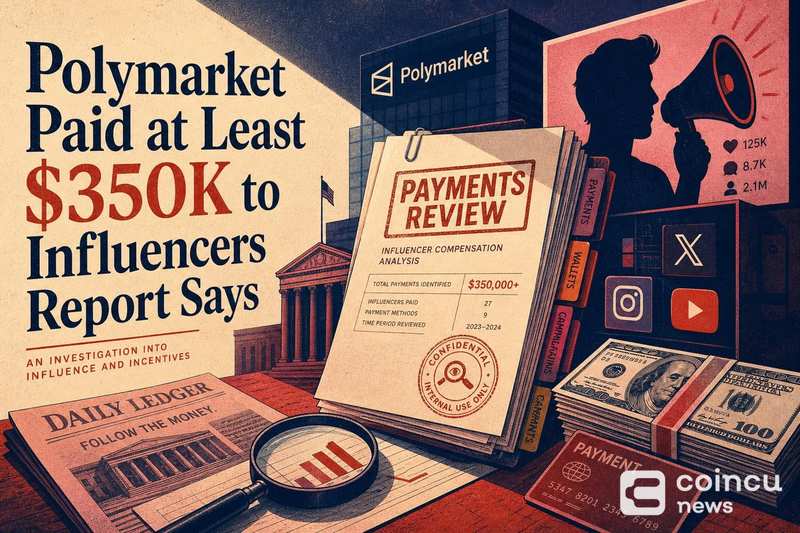
A report has found that Polymarket paid at least $350,000 to influencers to promote its prediction markets platform, with some of those sponsored posts allegedly lacking proper disclosure of
A report has found that Polymarket paid at least $350,000 to influencers to promote its prediction markets platform, with some of those sponsored posts allegedly lacking proper disclosure of the paid relationship.
The findings, highlighted by The Verge's investigation into Polymarket's operations, raise questions about transparency in crypto-adjacent marketing at a time when prediction markets are attracting growing mainstream attention.
What The Report Says About The Payments
The report frames the at least $350,000 figure as a minimum, suggesting the actual total paid to influencers could be higher. The payments were directed at content creators who then posted about Polymarket and its prediction market offerings across social media.
The report is attributed to investigative journalism rather than a company admission or regulatory filing. Polymarket has not publicly confirmed or denied the specific dollar figure. The distinction between a journalistic finding and an official disclosure matters for how readers should weigh the claim.
Prediction markets allow users to place bets on the outcomes of real-world events, from elections to economic indicators. Polymarket has emerged as one of the most prominent platforms in the space, particularly after generating significant attention during recent political cycles, as AP News has reported.
How Influencer Campaigns Drove Prediction Market Visibility
The reported payments appear to have been part of a coordinated campaign to expand Polymarket's reach among retail crypto audiences. Influencer marketing has become a standard user acquisition tool across the crypto industry, where platforms compete aggressively for attention and trading volume.
By paying creators to post about prediction markets, Polymarket would have been able to reach audiences who might not otherwise encounter the platform through organic channels. This kind of distribution strategy is common in crypto, where community-driven growth often outperforms traditional advertising.
The scale of the spending, at minimum $350,000, suggests a deliberate and sustained promotional effort rather than a handful of one-off sponsorships. For context, other crypto platforms have faced similar scrutiny over influencer campaigns, including cases where major exchanges have navigated regulatory and reputational challenges tied to their marketing practices.
Why Missing Disclosure Changes The Story
The most sensitive element of the report is that some influencer posts promoting Polymarket allegedly lacked disclosure that the content was paid. Undisclosed paid promotion blurs the line between organic commentary and advertising, making it difficult for audiences to assess the credibility of what they are reading.
The qualifier "some posts" is important. The report does not claim that every influencer post lacked disclosure, but the presence of any undisclosed paid content raises transparency concerns. In most jurisdictions, advertising standards require clear labeling of sponsored content, though enforcement in the crypto space has been inconsistent.
For retail crypto audiences, the difference between a genuine endorsement and a paid promotion can influence trading decisions. When users see an influencer discussing a platform without knowing the post is sponsored, they may assign it more credibility than it deserves. This dynamic has played out repeatedly across the crypto industry, where market movements can be amplified by social media sentiment.
The issue extends beyond individual posts. Undisclosed influencer campaigns can erode broader trust in crypto commentary, making it harder for users to distinguish between authentic analysis and paid messaging across the entire ecosystem.
What This Could Mean For Polymarket's Reputation
Polymarket has positioned itself as a transparent, market-driven platform where prices reflect collective intelligence about real-world outcomes. A report suggesting that some of its growth was fueled by undisclosed paid promotion could complicate that narrative.
Reputational risk in prediction markets is particularly acute because the platforms depend on user trust in the integrity of both the markets themselves and the information surrounding them. If users believe that promotional activity has been disguised as organic discourse, it may prompt skepticism about other aspects of the platform's operations.
The story may also attract attention from media and industry observers who are already scrutinizing prediction markets as they move from niche crypto products toward broader adoption. Disclosure practices in influencer marketing have drawn increasing regulatory attention globally, and crypto platforms are not exempt from those standards.
Whether this report triggers lasting reputational damage or is absorbed as a routine growing pain will likely depend on how Polymarket responds and whether additional details emerge about the scope and nature of the influencer campaign. Platforms that have faced similar disclosures in the past, including those involved in large-scale financial transactions, have seen varied outcomes depending on the transparency of their response.
FAQ
How much did Polymarket reportedly pay influencers?
The report states that Polymarket paid at least $350,000 to influencers, suggesting this is a minimum figure and the actual total could be higher.
What were the influencers promoting?
The influencers were paid to promote Polymarket's prediction markets, where users can place bets on the outcomes of real-world events.
What is the disclosure concern?
Some of the sponsored influencer posts allegedly did not disclose that they were paid promotions, which raises transparency and trust concerns for audiences who may have interpreted the content as organic commentary.
Disclaimer: This article is for informational purposes only and does not constitute financial or investment advice. Cryptocurrency and digital asset markets carry significant risk. Always do your own research before making decisions.
The post Polymarket Paid at Least $350K to Influencers, Report Says was initially published on Coincu.