Two Polymarket users have filed a lawsuit in New York alleging the prediction market platform improperly settled a market tied to Strategy’s Bitcoin holdings, arguing that traders holding win
Two Polymarket users have filed a lawsuit in New York alleging the prediction market platform improperly settled a market tied to Strategy’s Bitcoin holdings, arguing that traders holding winning positions were denied payouts despite regulatory filings confirming the company sold Bitcoin before the market deadline.
The complaint, filed on July 3 in the New York State Supreme Court, was brought by William Wood and Thomas Bush against Polymarket-related entities, founder Shayne Coplan, Chief Marketing Officer Matthew Modabber, and other unnamed defendants. The plaintiffs are seeking damages, attorneys’ fees, interest, injunctive relief and other remedies, alleging the platform breached its own settlement rules.
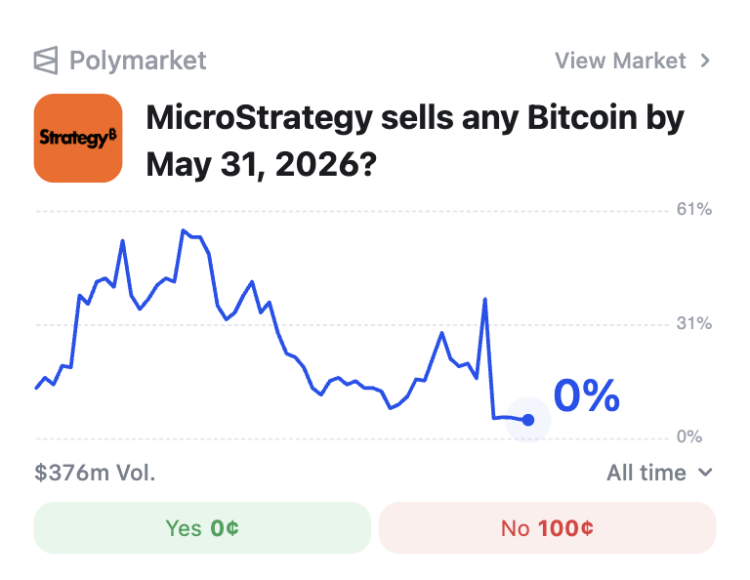
The lawsuit stems from a prediction market asking whether Strategy, formerly known as MicroStrategy, would sell any of its Bitcoin by May 31, 2026. On June 1, Strategy disclosed in a filing with the U.S. Securities and Exchange Commission (SEC) that it had sold 32 BTC between May 26 and May 31, marking the company’s first reported Bitcoin sale after years of accumulating the cryptocurrency.
 Polymarket Chart
Plaintiffs dispute market settlement
According to the complaint, the plaintiffs purchased “Yes” shares because they believed the company’s SEC filing would satisfy the market’s stated resolution criteria. Instead, Polymarket settled the market as “No.” The lawsuit alleges the platform introduced an interpretation requiring the Bitcoin sale to be publicly confirmed before the May 31 deadline, rather than determining whether the sale itself occurred before that date. The plaintiffs argue that the market question concerned the occurrence of the transaction, while the SEC filing merely served as evidence that the transaction had already taken place.
The lawsuit includes several legal claims, including:
- Breach of contract
- Breach of the implied covenant of good faith and fair dealing
- Unjust enrichment
- Money had and received
- Deceptive business practices under New York law
- False advertising
According to the complaint, changing the interpretation after the event undermined the platform’s representation that markets are resolved using predetermined, objective rules.
Role of market rules under scrutiny
The dispute also focuses on how a prediction market platform establishes and interprets settlement criteria. Although Polymarket relies on UMA’s Optimistic Oracle to resolve disputed markets, the plaintiffs argue that the platform itself controls how market questions are drafted, what resolution sources are designated and whether additional clarifications are published before settlement. The complaint contends those responsibilities cannot be shifted entirely to the oracle process.
The Strategy market became one of the most closely watched contract disputes on the platform after traders questioned whether delayed public disclosure should affect the outcome of an event that had already occurred. The disagreement ultimately proceeded through Polymarket’s dispute process before the market was finalized as “No.”
Potential implications for prediction markets
While the case centers on a single Bitcoin-related contract, it could have broader implications for blockchain-based prediction markets that rely on corporate disclosures or regulatory filings to verify outcomes.
The litigation may clarify whether settlement criteria should be based solely on the occurrence of an underlying event or whether the timing of its public confirmation can also determine market outcomes. The decision could influence how future prediction markets define contract language, publish clarifications and handle disputes involving delayed disclosures.
The lawsuit also comes as Polymarket continues to face regulatory attention in the United States. The platform has also drawn international regulatory scrutiny, with recent developments including Polymarket being blocked in India, adding to the legal challenges surrounding the prediction market industry.
As of publication, Polymarket had not publicly responded in court filings to the allegations. The claims remain allegations, and the case will proceed through the New York court system before any findings on the merits are made.