The market is becoming accustomed to the inflation and changes in policies and the unpredictability of the world, and the market is welcoming a large number of investors to cryptocurrencies a
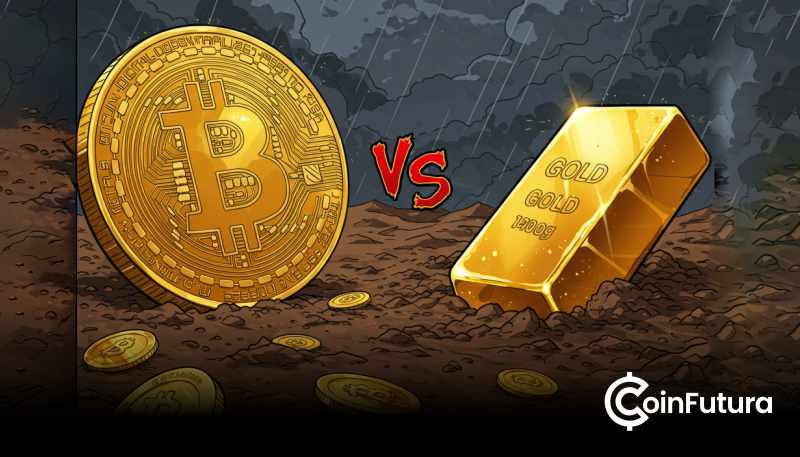
The market is becoming accustomed to the inflation and changes in policies and the unpredictability of the world, and the market is welcoming a large number of investors to cryptocurrencies and precious metals. The gold and silver have been on a rampage, and the Bitcoin has been very erratic, which raises serious questions as to the correlation between the two. Therefore, it has been imperative to modern portfolio strategy to have knowledge of whether these assets are competitors or complements.
The Changing Landscape of Alternative Assets
Cryptocurrencies and precious metals have become a focus due to the uncertainty of the market as investors seek protection and growth. At the beginning of 2026, the price of gold and silver shot up, whereas Bitcoin began to perform worse and fluctuate. As such, investors are currently doubting the presence of these assets competing with each other or playing various functions in contemporary portfolios.
Additionally, the two classes of assets react to the macroeconomic changes but to varying degrees during market cycles. Although metals usually increase in the case of uncertainty, Bitcoin is more likely to track liquidity and risk appetite. Consequently, the interaction of the two is more of a general financial state than competition per se.
Gold and silver have enjoyed high demand owing to central bank and international reserve diversification policies. Moreover, the declining real interest rate expectations have heightened the attractiveness of non-yielding assets such as gold. This has seen investors turn to metals as a sure source of value in unpredictable economic times.
Meanwhile, risks to geopolitical relations and inflation have reinforced the argument in favor of classic safe-haven assets. The industrial demand associated with renewable energy and high-tech industries has also supported silver. Thus, there has been a strong rush in metals that is backed by macroeconomic and structural factors.
Why Bitcoin Has Lagged Behind
Bitcoin has been under pressure in the short term as it is not a pure safe haven but a high-beta risk asset. In times when there is uncertainty, people tend to invest in assets that are stable, and this puts a limit on the immediate upside of Bitcoin. Consequently, Bitcoin has recorded a lagging momentum as metals keep gaining defensive capital.
Also, the crypto market has been deleveraging too much of the leverage accrued in the past rallies. This has caused liquidations and decreased speculative demand, which has burdened the prices. Meanwhile, institutional investors have awaited the redistribution of capital into Bitcoin until some signs of policy become evident.

Competition or Complementarity Between Assets
Despite the fact that a comparison is often made between gold, silver, and Bitcoin, they do not always confront each other in reality. They are rather used in various roles in accordance with the market conditions, the purposes of the investors and the risk of investments. Indicatively, an example is that gold offers stability, Bitcoin offers greater growth prospects, and silver offers cyclical exposure.
Moreover, capital usually switches among these assets instead of settling on one over the other. In case of overbought metals, investors can move to Bitcoin to seek greater returns. Hence, there is a dynamic relationship in them, and this is not permanent competition but a shifting of expectations.
The Role of Market Cycles and Investor Behavior
Market periods are highly significant in defining the asset that is the leader at a particular time. During the initial stages of uncertainty, the safe-haven assets like gold and silver tend to perform better. Nevertheless, risk assets such as Bitcoin tend to recover and draw new attention as confidence starts to build.
These movements are also affected by the psychology of investors whose fear and optimism may lead to sudden changes in demand. These cycles are usually enhanced by social sentiment and market narratives, and lead to periods of high momentum or abrupt adjustments. That is why, these behavioral patterns should be comprehended to interpret market trends.
What This Means for Investors in 2026 and Beyond
Investors are becoming more aware that metals and crypto can be a better way to build their portfolio and enhance longevity. Gold is able to cushion downfalls, and Bitcoin is able to capture the growth when the markets are good. Simultaneously, silver is capable of increasing returns in times of industrial growth and economic revival.
Nonetheless, allocation should also be done carefully, bearing in mind that every asset is characterized by its specific risk and volatility. The balanced strategy can enable an investor to gain the advantage of diversification and, at the same time, handle risk and uncertainty. On one side, the increase in metals can be the precondition of the upcoming rise of Bitcoin, which is why timing and strategy are significant.
The post Precious Metals in 2026: Are They Competing With or Complementing Crypto? appears on Coin Futura. Visit our website to read more interesting articles about cryptocurrency, blockchain technology, and digital assets.