Prediction Market News: Why 2026 Growth Is Drawing SEC Attention Prediction Market News just hit a major milestone. Combined trading volume across leading platforms touched roughly $45 billio
Prediction Market News: Why 2026 Growth Is Drawing SEC Attention
Prediction Market News just hit a major milestone. Combined trading volume across leading platforms touched roughly $45 billion in a single month during 2026, a scale nobody expected just two years ago.
What started as a niche corner of online betting has turned into a fast-growing financial category with real institutional money behind it.
Prediction Market News: Adoption And Value Growth In 2026 Trading
Growth this year has been steep. Prediction-market volume rose sharply through the first half of 2026, with Kalshi and Polymarket becoming the dominant platforms.
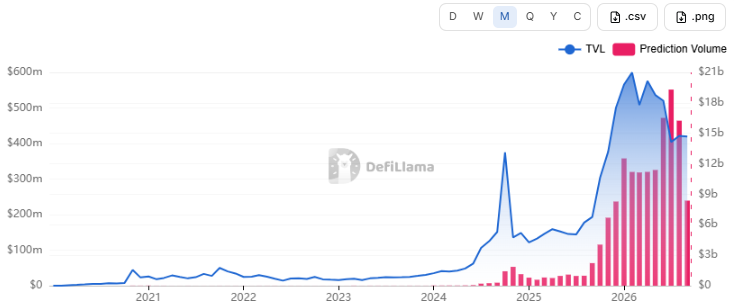
DefiLlama data shows combined monthly volume reached about $18.1 billion in July (total 19.3B), up from roughly $9.8 billion in April.
The market then cooled from its July peak, although trading remained elevated during the summer sporting season.
Dune analytics data shows substantially higher notional trading-volume figures for Kalshi and Polymarket, about $171 billion for Kalshi and $68.94 billion for Polymarket. It reflects a different methodology from DefiLlama's tracked prediction-market volume.
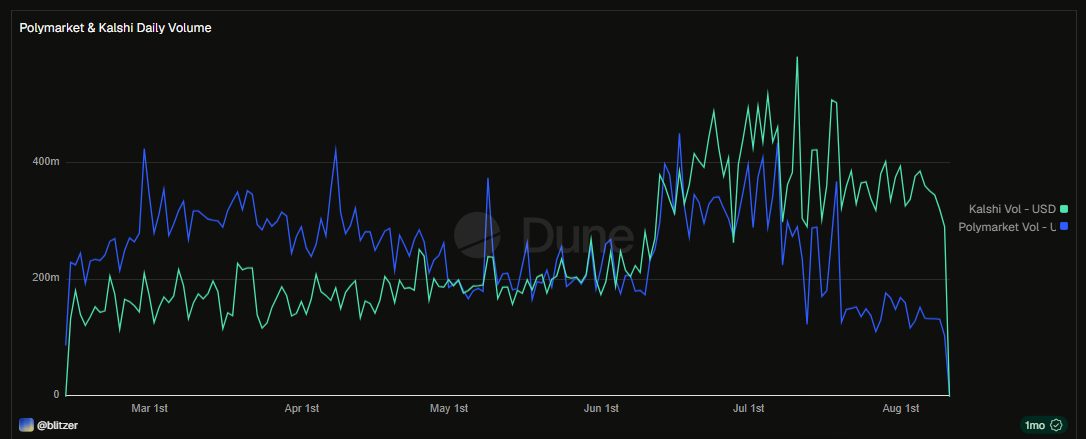
Source: Dune Analytics
Key numbers so far:
Full-year 2025 volume: roughly $51 to $63 billion across major platforms, based on Bernstein's market estimate.
2026 monthly peak: roughly $50.6 billion in July, according to reported prediction-market volume data.
August 2026: about $45.33 billion, down nearly 15% from the peak.
Full-year 2026 projection: around $240 billion, according to Bernstein analyst Gautam Chhugani's estimate.
Note on volume figures: Reported numbers are typically notional (face value of contracts). Because many trade well below $1, some analyses argue face-value totals overstate actual capital at risk compared with risk-adjusted or one-sided measures.
Kalshi holds a clear lead in regulated U.S. volume, often capturing 70% or more of total activity. Polymarket remains strong internationally and in non-sports categories.
Institutional flow is also picking up, with reported growth near 800% over a recent six-month stretch. Brokers and clearing firms are now building direct access, block trading tools, and routing systems for larger clients.
Fast growth brings new problems. Sports contracts still dominate trading, often making up more than half of total volume, which raises questions about how different this really is from traditional betting.
Other risk areas include:
Thin liquidity outside major sporting events or headline political contests.
Heavy concentration in just two dominant platforms.
Settlement and data-source reliability for less common contracts.
Possible manipulation or misuse of nonpublic information on company-linked events.
Unclear consumer protection standards compared to regulated securities markets.
Regulators have already issued advisories reminding platforms that manipulation and fraud rules still apply, even on newer contract types.
Citadel Pushes SEC Oversight In Latest Prediction Market Regulatory
Against this backdrop, a fresh regulatory fight has emerged. Citadel Securities recently urged federal regulators to treat contracts tied to individual company performance as securities, not simple event bets. The firm argues that letting platforms self-certify these products lets them skip stronger investor protection standards.
The core concern is straightforward. Contracts based on a single company's sales, production, or earnings sit close to insider trading territory. Someone with early knowledge of a metric could trade ahead of the public. Citadel believes securities regulators, not commodities regulators alone, have the surveillance tools built for that kind of risk.
What Comes Next For Prediction Market Growth And Regulation
No final ruling exists yet. Regulators are still reviewing comments, and court cases over sports-related contracts continue in several states. But the direction is becoming clearer. Expect tighter listing rules for corporate-linked contracts, closer insider-trading monitoring, and possibly slower rollout of new company-specific products.
The bigger trend remains intact, though. Prediction markets are shifting from a retail curiosity into infrastructure that hedge funds, brokers, and even public companies now watch closely for pricing signals. Whether this becomes a lasting part of financial markets or a heavily restricted niche will likely depend on how quickly regulators settle these jurisdictional questions over the next year.
Disclaimer: This article is for informational purposes only and does not constitute financial or investment advice. Crypto markets carry significant risk. Always do your own research before making any investment decisions.