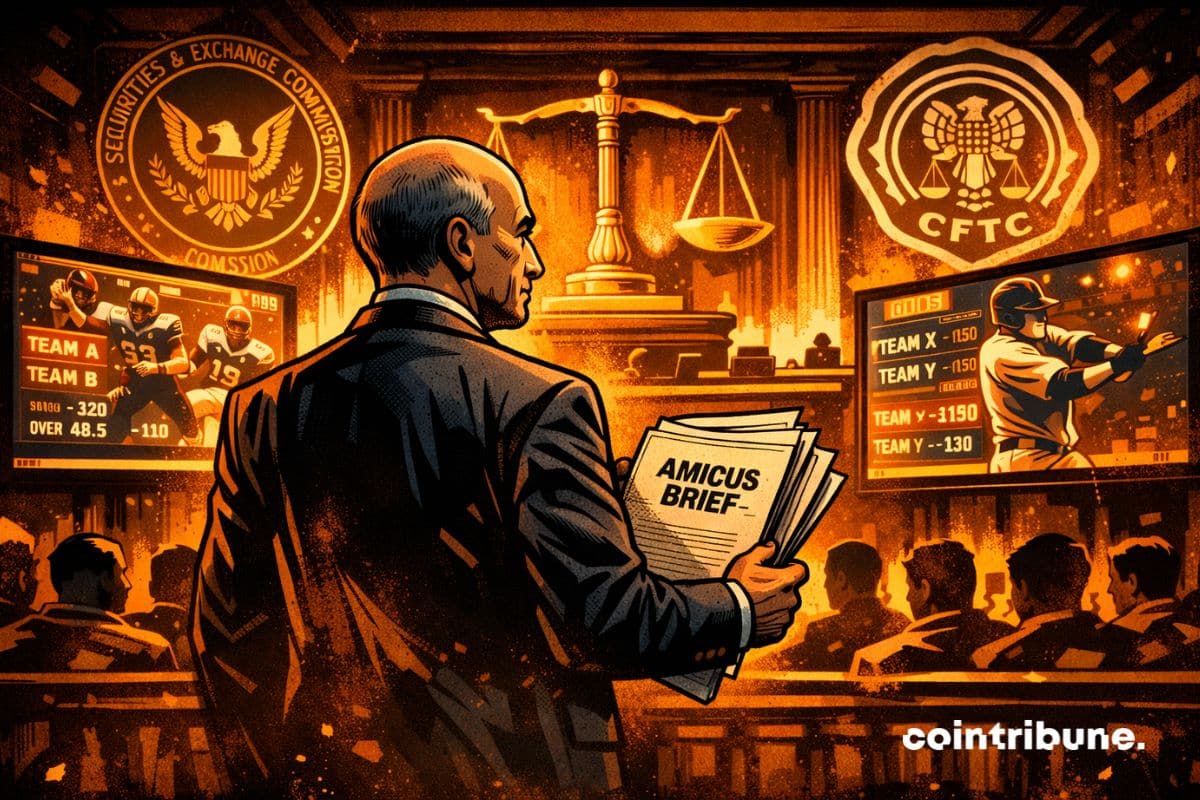
Predictive Markets: Gary Gensler Supports States Against the CFTC
Predictive markets blur the lines between financial innovation and state regulation. Gary Gensler, former head of the SEC and the CFTC, has just taken a stand in a debate that could redefine
A
AnonymousCryptoCompass newsroom
June 12, 2026
2 min read
NEWS
CryptoCompass editorial visual for policy coverage.
Predictive markets blur the lines between financial innovation and state regulation. Gary Gensler, former head of the SEC and the CFTC, has just taken a stand in a debate that could redefine the rules of the game in the United States. A conflict with huge stakes.
In brief
Gary Gensler argues that predictive markets related to sports fall under state regulations, not the CFTC.
Gensler contends that these contracts are not swaps and do not cover economic risks but pertain to sports betting.
States risk losing tax revenue if the CFTC wins, while platforms like Kalshi could operate freely.
Gary Gensler: Predictive Markets Must Not Bypass State Laws
The former chairman of the SEC and the CFTC, Gary Gensler, filed an amicus brief before the Sixth Circuit Court of Appeals to affirm that predictive markets related to sports do not fall under federal jurisdiction. According to him, Congress never included sports betting in the definition of swaps (derivative products regulated by the CFTC) because these contracts are not intended to hedge economic risks but to speculate on sports outcomes.
Moreover, Gary Gensler emphasizes that states must retain their authority over these activities that generate essential tax revenue and fall under their local regulations. Several entities, including the American Gaming Association and Native American tribes, support this stance. They argue that platforms like Kalshi violate their sovereign rights by offering unregulated bets.
What Are the Impacts for the Predictive Markets Ecosystem and Beyond?
If the CFTC wins, platforms like Kalshi could operate freely under federal oversight, depriving states of millions in tax revenues. Conversely, a win for the states would force these actors to register locally, under threat of criminal penalties. This debate goes beyond sports betting as it questions the balance between financial innovation and regulatory sovereignty.
A Supreme Court decision could set a precedent for other sectors, notably cryptocurrencies, where the tension between federal and state regulation is already palpable and influences the price of bitcoin. Investors and entrepreneurs are closely watching this case, aware that its outcome could reshape the landscape of alternative markets.
Between innovation and regulation, Gary Gensler and the showdown over predictive markets illustrates a central question: who should control the future of finance? The answer could influence much more than just sports betting. And you, do you think states should keep control?
TLDR: Bitcoin trades near $79.7K, while the current chart places immediate resistance at the $81,259 level. BTC may see $76,206 as lower-range support and identifies $72K-$74K as the deeper s
Could the next crypto opportunity people regret overlooking be hiding in plain sight right now? Avalanche, Litecoin, TRON, Cardano, Solana, Stellar, and Bitcoin Cash have already built their
Router Protocol is ceasing operations on September 30, 2026. If you hold ROUTE, or if you have moved funds through the Router app, you have just under three and a half weeks to sell or withdr