
Markets1 min read
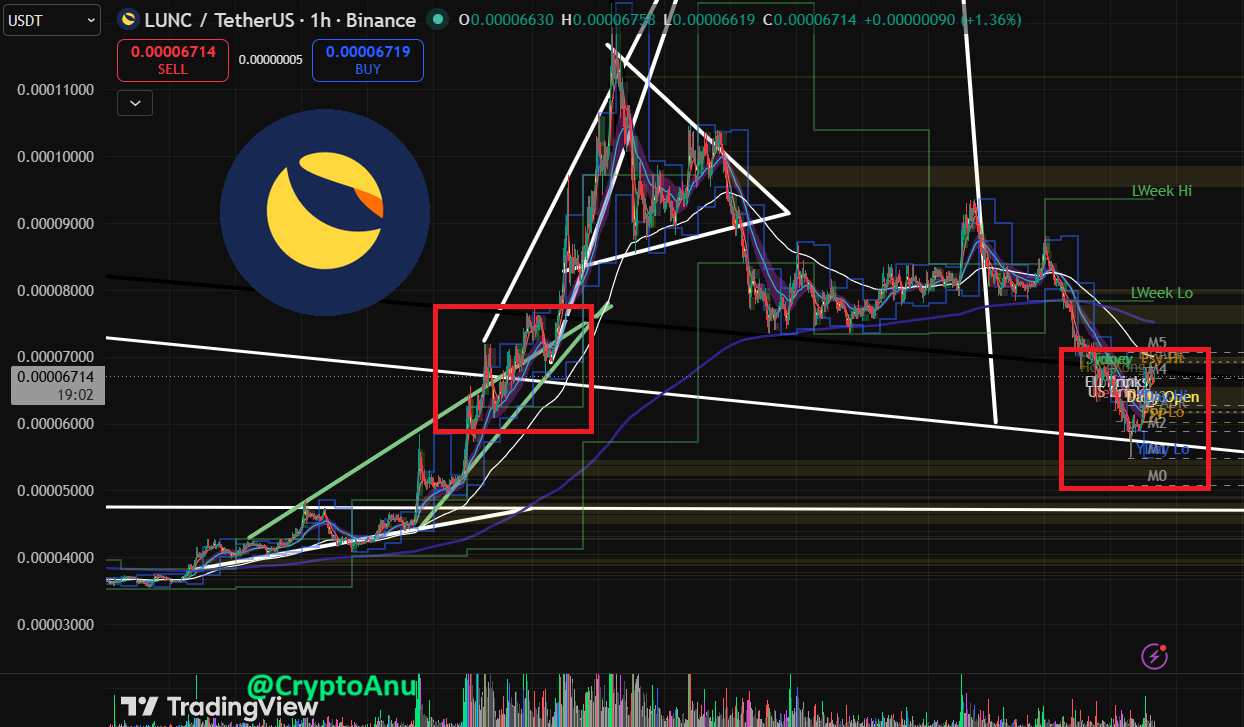
LUNC retest done.
Wow. $LUNC came all the way down for the retest. LWeekHi → LWeekLo. Now watching if support holds. This is where conviction gets tested. $LUNA $USTC #TERRACLASSIC #LUNACLASSI
Key Takeaways The Pudgy Penguins franchise successfully placed Pudgy Toys across 3,100 Walmart locations and Target stores, marking an exceptional retail achievement for any blockchain-based
What began as a simple NFT project has transformed into a multifaceted brand empire. Pudgy Penguins evolved beyond digital collectibles to establish genuine market presence through physical merchandise, mainstream recognition, and an engaged community. This kind of crossover success remains exceptionally rare for blockchain-originated ventures.
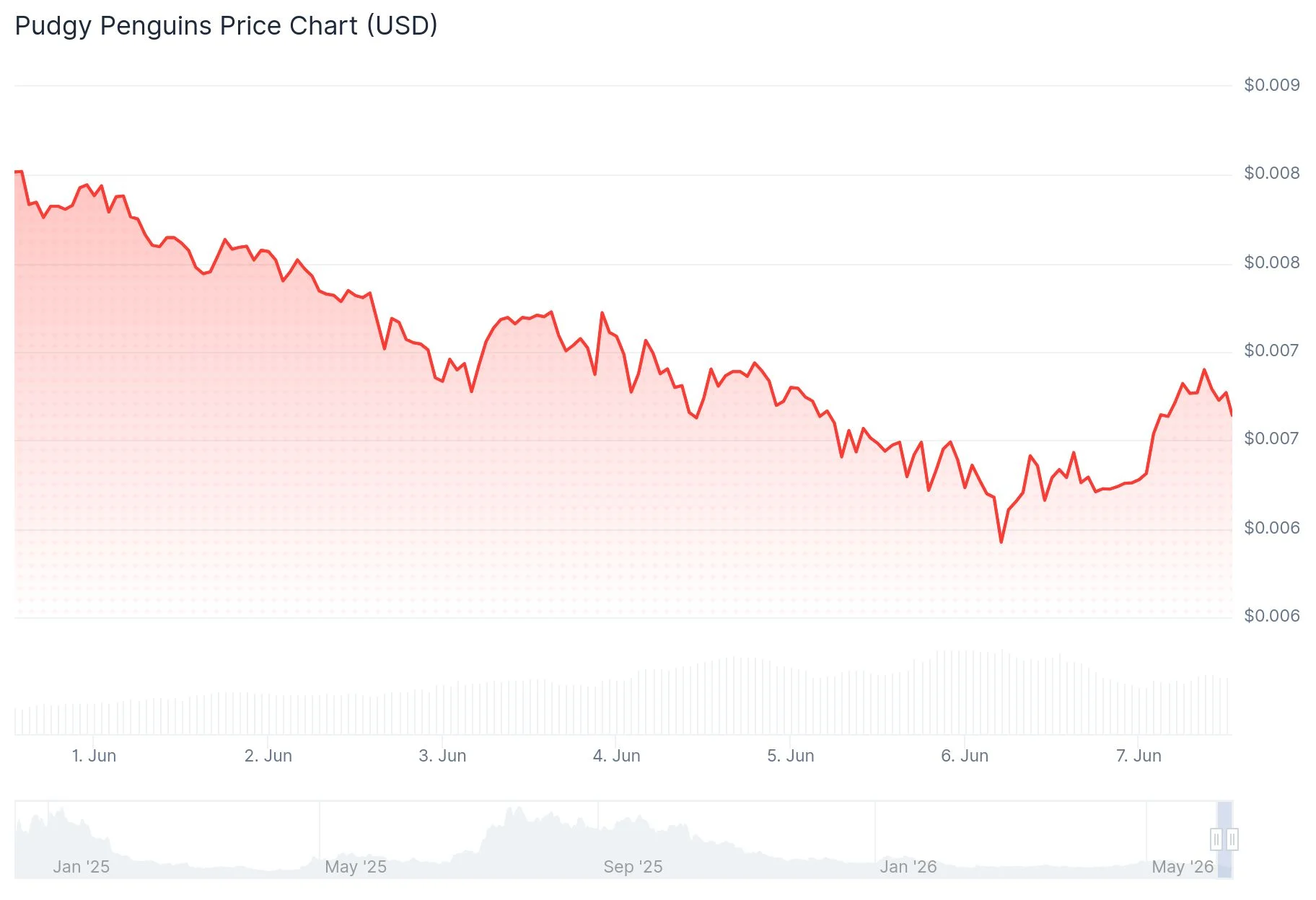 Pudgy Penguins (PENGU) Price
The retail expansion speaks for itself. Securing shelf space in 3,100 Walmart stores while simultaneously entering Target represents a milestone most cryptocurrency projects never approach. These aren’t minor partnerships or limited test runs. This is legitimate mainstream distribution that provides the Pudgy Penguins ecosystem with tangible credibility rarely seen in the digital asset space.
When Igloo closed its $11 million funding round in 2024, the investment landscape took notice. Founders Fund’s leadership role in this raise carries significant weight. This established venture capital player doesn’t typically chase speculative crypto trends, suggesting they identified substantial value in Igloo’s long-term vision and execution capabilities.
This is where the narrative becomes more nuanced. PENGU serves as the ecosystem’s native token, but it doesn’t represent equity ownership or business revenue rights. The official claim documentation uses remarkably clear language, positioning the token as existing “for fun and entertainment only” while explicitly disclaiming “any commercial value.” This transparency deserves careful consideration from potential investors.
Holding PENGU tokens provides no legal claim to merchandise revenue, licensing income, or any financial performance tied to the Pudgy Penguins intellectual property. The allocation structure shows that insiders maintain control of 29.28% of total supply—11.48% designated for corporate purposes and 17.80% reserved for current and future team members.
While these concentration levels align with common cryptocurrency distribution patterns, they still represent substantial centralized holdings within a token that lacks clearly defined economic utility or governance functions.
According to CoinGecko data, approximately 63 billion PENGU tokens currently trade in the market, drawn from Tokenomist’s reported total supply of 88.89 billion units. This indicates that roughly 70.72% of all tokens have already entered circulation.
The remaining distribution follows a cliff vesting model rather than linear release. This mechanism means new supply doesn’t gradually filter into the market. Instead, predetermined quantities unlock simultaneously at specific intervals, potentially creating sudden dilution pressure. The complete tokenomics story continues to unfold.
Trading activity remains consistent with healthy liquidity levels. PENGU maintains sufficient market depth for typical retail position sizing without experiencing major slippage or execution difficulties.
Current valuation metrics place the project between $396 million and $424 million in market capitalization. This positioning establishes PENGU as a mid-tier digital asset—substantial enough to demonstrate serious market interest, yet distant from top-tier cryptocurrency valuations.
What distinguishes PENGU from typical meme tokens is the legitimate brand infrastructure supporting it. The retail distribution network exists. The institutional investment is documented. The cultural momentum is measurable.
Yet the fundamental disconnect between brand success and token economics remains the critical evaluation point for anyone considering PENGU as a financial position.
The post Pudgy Penguins (PENGU) Token Analysis: Retail Success Meets Crypto Reality appeared first on Blockonomi.