The Radiant Capital hack has formally brought down one of the most popular financing mechanisms in the DeFi, or decentralized finance, sector. Radiant Capital has declared plans to cease oper
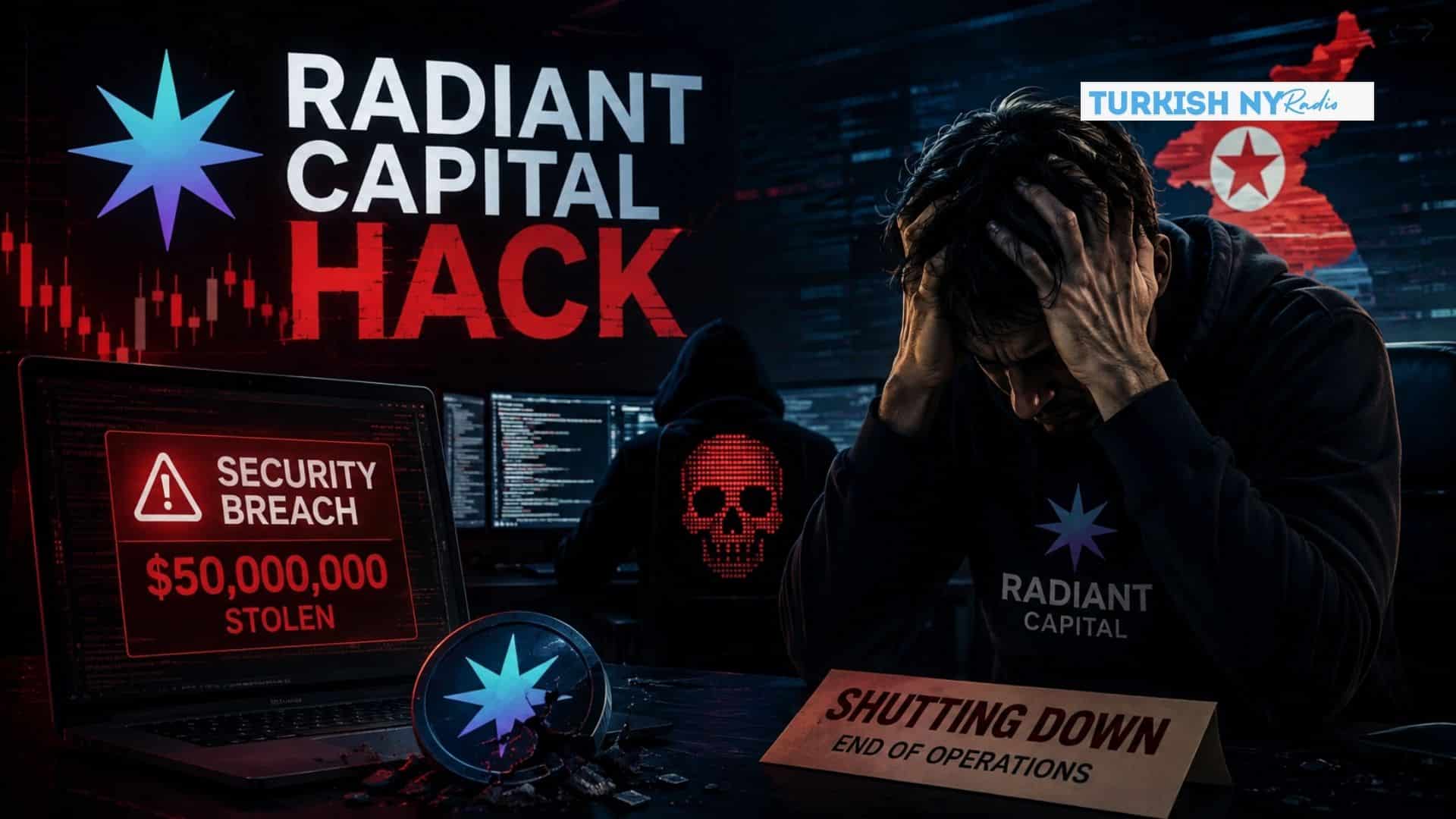
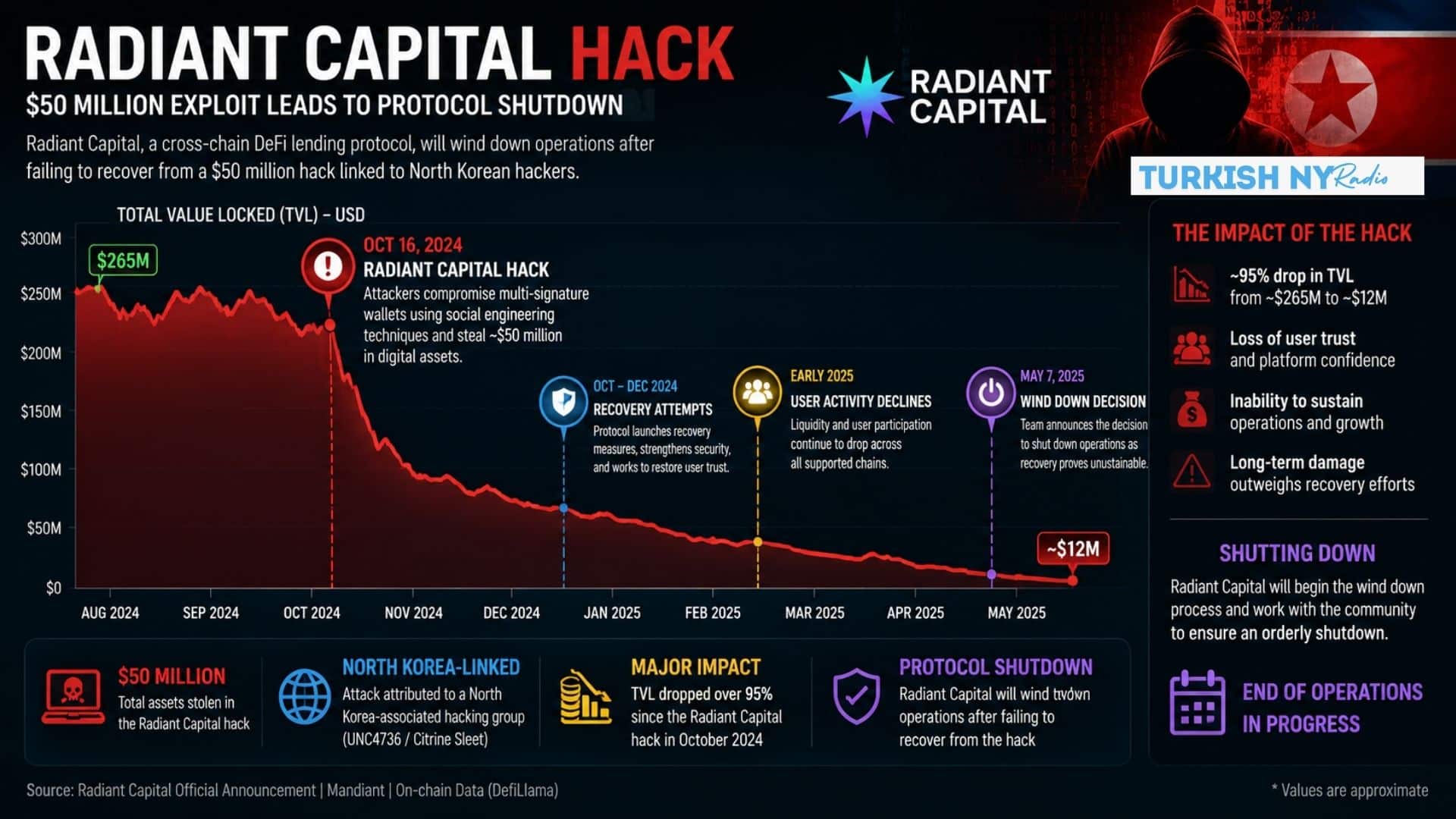
The Radiant Capital hack has formally brought down one of the most popular financing mechanisms in the DeFi, or decentralized finance, sector. Radiant Capital has declared plans to cease operations after months of battling to make amends for a disastrous $50 million attack in October 2024. The incident, which authorities put on North Korean hackers, eroded customer confidence and depleted the website’s financial resources.
The ruling marks a watershed moment for the DeFi industry, highlighting the enduring repercussions of safety concessions on blockchain-connected projects. The Radiant Capital hack is now considered one of the most serious breaches in the protocol’s history.
The Radiant Capital hack took place when hackers acquired unapproved access to the website’s multiple-signature wallet mechanism. In accordance with security examinations, the hackers employed advanced social manipulation tactics to infiltrate key signers who approve payments.
As a consequence, nearly $50 million in digital assets were removed from the network. The Radiant Capital hack immediately generated concerns across owners and users, leading to significant withdrawals and reduced activity on the platform.
Crypto security experts subsequently linked the attack to a North Korean-affiliated cyber group that attacks bitcoin institutions worldwide.
Challenges to Rebuild Following the Breakup
During the Radiant Capital attack, the procedure conducted a number of recovery procedures targeted at rebuilding confidence and maintaining business. These steps included improved security protocols, accountability plans, and efforts to recompense impacted parties.
Considering these efforts, the Radiant Capital hack remained impossible to reverse. User involvement remained low, while volatility across authorized networks declined significantly. The protocol’s founders recognized that sustaining environmentally friendly operations had grown more difficult.
In a neighborhood announcement, the team stated:
“After evaluating all available options, we have concluded that winding down operations is the most responsible path forward for the protocol and its stakeholders.”
The announcement effectively confirms that the Radiant Capital hack had a lasting impact that extended far beyond the initial financial loss.
Economic Implications and Safety Issues
The aftermath from the Radiant Capital attack has rekindled debates over cybersecurity requirements in finance that is decentralized. Although DeFi systems provide novel monetary services, they are nonetheless appealing targets for smart cybercriminals.
Security professionals believe the Radiant Capital hack highlights the rising threat presented by social manipulative attacks. Rather than targeting security holes in smart contracts directly, attackers are increasingly focusing on human flaws in operations.
According to analysts from the industry, procedures must increase wallet security, enhance signing authentication methods, and undertake more regular security inspections to avoid future danger.
The Radiant Capital breach also serves as a warning that even well-established projects with large assets under control are vulnerable to targeted assaults.
Representatives of the bitcoin industry were disappointed with the closure news. A lot of people see Radiant Capital as a viable cross-chain loan system with huge development possibilities.
A few financiers pointed out that the Radiant Capital attack demonstrates how only one security attack may irreversibly change a project’s direction. Others advocated for greater coordination among protocols, security businesses, and criminal justice authorities to confront more complicated cyber attacks.
Analysts in the market believe the occurrence will drive DeFi intends to invest more funds into operational security and personnel training.
Conclusion
The Radiant Capital hack marks an important milestone in the history of financial decentralized. That began as a $50 million scam quickly escalated into a situation that the rules and regulations could not resolve. As Radiant Capital begins to wind down business activities, the sector learns vital lessons about safety, oversight, and endurance.
Although invention is at the center of DeFi, the Radiant Capital attack demonstrates the significance of robust safety precautions in protecting user assets and fostering trust over time.
Summary
Radiant Capital has declared plans to cease operations due to its inability to make amends from a $50 million hack that happened in October 2024. Investigators attributed the intrusion to a North Korean hacker organization that reportedly used social engineering to infiltrate key wallet signers. With the implementation of recovery procedures and increased security protocols, the protocol’s user usage and volatility declined. The seminar underscores the persistent cybersecurity concerns in decentralized banking and emphasizes the necessity for tighter operations security procedures.
Glossary of Key Terms
DeFi (Decentralized Finance): Refers to monetary services that are created on blockchain systems without conventional middlemen.
Multi-Signature Wallet: A digital currency wallet that demands numerous permissions before activities can be carried out.
Social Engineering: Hackers utilize persuasive ways to persuade people into disclosing confidential data or allowing access.
Liquidity: The abundance of commodities that can be easily exchanged or withdrawn on a financial market.
Blockchain Security: Refers to the procedures used to secure blockchain platforms, intelligent contracts, and digital resources against cyberattacks.
FAQs for Radiant Capital Hack
1. What exactly was Radiant Capital hack?
The Radiant Capital breach was a cyberattack that caused the theft of around $50 million in digital assets from the DeFi financing system.
2. Whom was supposedly behind the attack?
Security experts traced the hack back to a North Korean-affiliated cybercriminal gang notorious for attacking bitcoin exchanges.
3. What reason is Radiant Capital closing down?
The protocol indicated that it was impossible to completely recuperate from the economic and administrative consequences of the attack.
4. How did the perpetrators get access?
Research indicate that the hackers utilized advanced social manipulation techniques to infiltrate wallet members.
5. What insights can DeFi companies learn from this occurrence?
The event emphasizes the significance of robust operational security, personnel awareness education, and strengthened wallet security procedures.
Sources