Circle has reportedly received final approval from the Office of the Comptroller of the Currency to establish a national trust bank, marking a significant regulatory milestone for the stablec
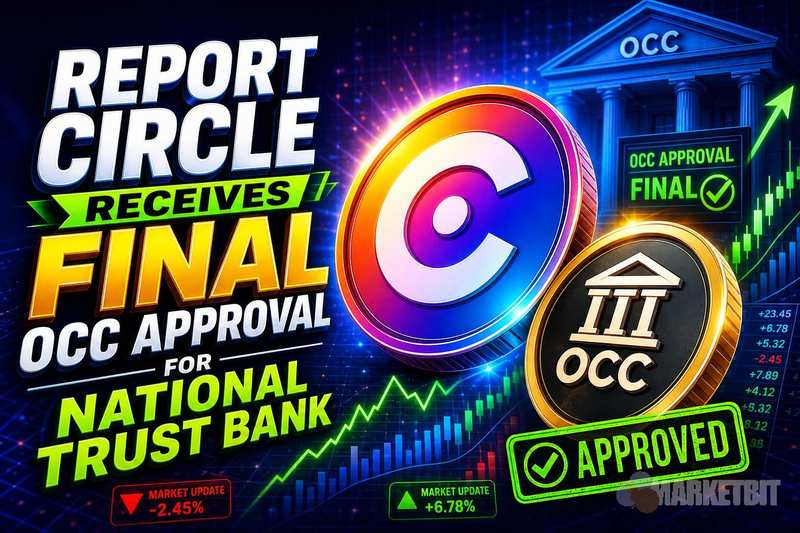
Circle has reportedly received final approval from the Office of the Comptroller of the Currency to establish a national trust bank, marking a significant regulatory milestone for the stablecoin issuer behind USDC.
The approval, announced by Circle, grants the company authority to operate under a national trust bank charter. The OCC, which supervises all national banks in the United States, issued the decision as part of its oversight of banking institutions seeking federal charters.
What to Know
- Circle has reportedly secured final OCC approval for a national trust bank charter.
- A national trust bank operates under federal supervision and can provide fiduciary and custody services.
- The decision positions Circle under one of the most recognized regulatory frameworks in U.S. banking.
A national trust bank is a federally chartered institution authorized to provide trust and fiduciary services, including asset custody. Unlike a full-service commercial bank, a trust bank does not typically accept deposits or make loans, but it operates under direct OCC supervision. For related coverage, see Report Says Hyperscale Data Bought 116 Bitcoin.
For Circle, the charter represents a shift from state-level money transmitter licenses to a single federal regulatory framework. This structure could streamline compliance obligations across multiple jurisdictions and provide a clearer legal foundation for its operations. For related coverage, see New Hampshire's $100 Million Bitcoin Bond Proposal Fails Final Vote.
How the charter fits Circle's regulatory strategy
Circle issues USDC, one of the largest dollar-denominated stablecoins in circulation. Operating under a national trust bank charter could allow the company to expand custody and reserve management services under a unified federal regulator.
The OCC charter carries weight with institutional counterparties that require banking partners to meet specific regulatory thresholds. For Circle, this could open doors to deeper relationships with traditional financial institutions, similar to how PayPal has expanded its own stablecoin infrastructure through regulated channels.
It is important to note that while the approval has been reported by Circle and covered by The Wall Street Journal, the full scope of permitted activities under the charter has not been detailed publicly. What services Circle will offer through the bank entity, beyond what it already provides, remains to be specified.
What the OCC decision could signal for crypto firms
A final OCC approval for a crypto-native company is rare. The agency has historically been cautious in granting national bank charters to digital asset firms, and several earlier applicants withdrew or faced extended review periods.
Other stablecoin issuers and crypto financial services companies are likely watching the decision closely. The approval suggests the OCC is willing to bring certain crypto operations into the federal banking perimeter, rather than leaving them exclusively under state-level oversight.
The development arrives as stablecoin activity has been expanding across multiple jurisdictions. In the U.S., stablecoin-specific legislation has been under discussion in Congress, and the existence of a federally chartered stablecoin-linked bank could influence how lawmakers approach the regulatory framework.
For the broader intersection of crypto and traditional finance, Circle's charter could serve as a reference point. Companies exploring crypto-banking integrations may look to this approval as a signal of what federal regulators are willing to permit.
Whether the charter leads to meaningfully new products or services from Circle, or primarily formalizes its existing compliance posture, will depend on how the company deploys the bank entity in the months ahead.
Disclaimer: This article is for informational purposes only and does not constitute financial or investment advice. Cryptocurrency and digital asset markets carry significant risk. Always do your own research before making decisions.
Read original article on marketbit.net