Ripple moved to deepen its footprint in Latin America's largest economy on March 17, 2026, announcing an expanded institutional digital-asset offering in Brazil alongside plans to apply for a
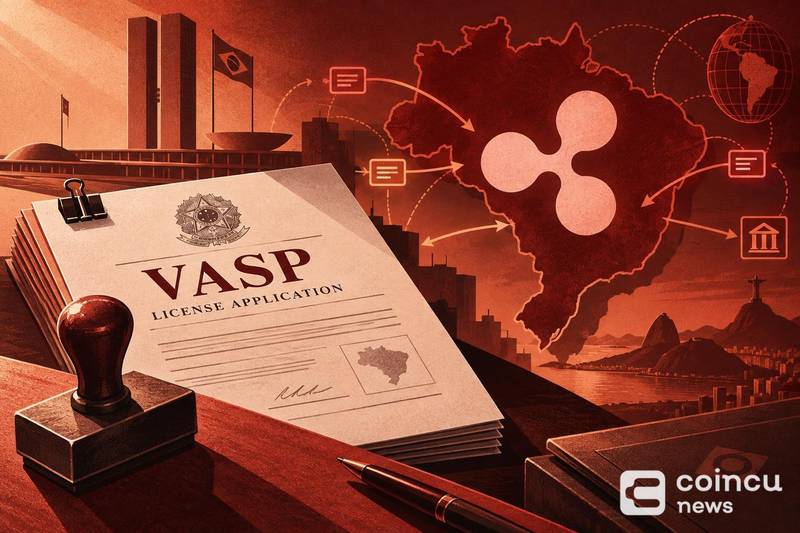
Ripple moved to deepen its footprint in Latin America's largest economy on March 17, 2026, announcing an expanded institutional digital-asset offering in Brazil alongside plans to apply for a Virtual Asset Service Provider (VASP) license with the country's central bank, a dual push that ties the company's growing Ripple Brazil payments business to a still-pending regulatory approval rather than an authorization already in hand.
The announcement, made in a company press release, frames Brazil as a strategic node in Ripple's regulated-markets strategy, even as the licensing outcome remains conditional and unconfirmed as of this writing on September 12, 2026. What follows separates what Ripple has confirmed from what is still forward-looking, with attention to the operational workflows that distinguish this expansion from a simple product relaunch. For related coverage, see World’s First Spot XRP ETF Now Approved in Brazil.
Ripple expands its payments offering in Brazil
Ripple said its expanded Brazil offering spans cross-border payments, digital-asset custody, stablecoins, prime brokerage and treasury management, according to the March 17, 2026 release. That product breadth positions the company beyond remittance rails and into the institutional custody and liquidity stack that Brazilian banks and brokers increasingly demand. For related coverage, see Ripple Adds AI Agents to Treasury Platform Acquired for $1B.
What is changing in the payments offering
The expansion is anchored by named customer workflows rather than abstract capability claims. Ripple said Banco Genial uses its service for same-day USD disbursements and is extending to include RLUSD, Ripple's dollar-pegged stablecoin whose circulating supply has climbed past $2.4 billion, in its crypto flows.
Nomad, which Ripple says serves more than 3 million users, runs treasury flows between Brazil and the United States on Ripple Payments and the company's liquidity network, settling in part through stablecoins such as RLUSD. Frente Corretora, meanwhile, is consolidating cross-border operations and stablecoin collections, funding USD and EUR payouts using both fiat and USDT, per the release.
That Frente detail matters: the offering routes value through multiple settlement assets, including USDT, so the expanded Ripple Brazil payments service does not require XRP or RLUSD for every transaction. The reach of the underlying rails is global, with Ripple reporting more than $100 billion in processed Ripple Payments volume worldwide.
Ripple Payments: global processed volume
More than $100 billion
Ripple reported more than $100 billion in processed Ripple Payments volume globally in its March 17, 2026 announcement. This is a company-reported global figure, not Brazil-specific volume; the release does not specify a measurement period.
Ripple also cited coverage across 60+ markets, a global footprint the company presents as evidence of operational maturity ahead of the Brazil push. The figure describes worldwide reach, not Brazil-specific throughput or any regulatory clearance in the country.
Ripple Payments: global market coverage
60+ markets
Ripple reported Ripple Payments coverage across 60+ markets in its March 17, 2026 announcement. This company-reported global footprint does not establish licensing approval in Brazil.
Custody sits alongside payments in the expanded stack. Ripple said CRX uses the XRP Ledger and Ripple Custody for tokenized assets, with nearly $100M settled on-chain, a company-reported activity figure that has not been independently confirmed against explorer data. The broader Ripple Payments platform has itself been widened for global money transfers as the company courts bank and fintech integrations.
Ripple seeks a VASP license in Brazil
The licensing element is the more consequential, and more conditional, half of the story. Ripple said it plans to apply for a VASP license with the Central Bank of Brazil (BCB) under the country's emerging virtual-asset regulatory framework, language that describes intent, not a filed application or an approval.
What is known about the licensing status
The release's own headline references a "VASP License Application," but the body text states only that Ripple plans to apply, and that distinction is decisive for anyone assessing regulatory risk. No filing identifier, applicant legal entity, or BCB decision has been disclosed or independently verified, and the current status as of September 12, 2026 is not established in the available evidence.
Monica Long, President of Ripple, tied the licensing ambition to the company's track record in regulated jurisdictions.
"We've spent more than a decade building the trust, licensing, and technology required to operate in regulated markets," said Monica Long, President of Ripple, in the expansion announcement corroborated by PYMNTS reporting.
That statement is a company executive's framing, not independent regulatory validation, and it should be read as positioning ahead of a review process rather than proof of its outcome. Ripple has pursued a similar regulated-entry playbook elsewhere, including through moves such as AMINA Bank's launch of Ripple Payments in Europe.
What remains unclear about Ripple's Brazil plans
Several implementation details that matter to prospective institutional customers are absent from the announcement itself, not merely undisclosed by Ripple. The release provides no rollout schedule, no eligibility terms for new customers, and no explanation of how the licensing timeline relates to the availability of the expanded offering.
Rollout timing and service availability
Because Ripple describes existing customers such as Banco Genial and Nomad as already live on parts of the service, the expansion appears to build on active workflows rather than launch from zero, though the pace and terms of onboarding for additional clients are not specified. Whether any expanded capability is contingent on the prospective VASP approval is not addressed in the release, and that dependency, or the lack of one, is the key open question for builders and treasury teams evaluating the platform.
PYMNTS reported additional customer detail, noting that Braza Bank selected Ripple Payments for USD payments and issued the BRL-pegged BBRL stablecoin on the XRP Ledger, according to its March 17 coverage. That reporting relies on the company announcement and does not constitute independent regulatory verification.
What VASP licensing means for the Brazil payments story
A Virtual Asset Service Provider (VASP) license is the authorization category Brazil is building out for firms that custody, transfer, or exchange crypto assets under BCB supervision. Ripple's stated plan to apply signals intent to operate as a supervised entity, but a license bid is not an operating permission, and the announcement should not be read as clearance to conduct regulated activity in the country.
Critically, the payments expansion and the license bid are presented together but not established as interdependent; the release does not state that the expanded offering requires the prospective license to function. That nuance separates the marketing of momentum from the mechanics of compliance, and it is where careful readers should hold judgment until BCB documentation emerges. Brazil has already proven receptive to XRP-linked products, having approved the world's first spot XRP ETF.
For market context, XRP traded at $1.37 on September 12, 2026, roughly flat over 24 hours, against a market capitalization near $85.9 billion; those figures are a current research snapshot and are not a reaction to the March announcement. Broad crypto sentiment sat at 63, or "Greed," on the Fear & Greed Index the same day, a market-wide gauge rather than any measure of response to Ripple's Brazil plans.
FAQ: Ripple's Brazil payments expansion
What is Ripple expanding in Brazil?
Ripple announced an expanded institutional offering spanning cross-border payments, digital-asset custody, stablecoins, prime brokerage and treasury management, with named customers including Banco Genial, Nomad and Frente Corretora. The precise scope and onboarding terms for new clients are not fully specified in the release.
Has Ripple received a VASP license in Brazil?
No. Ripple said it plans to apply for a VASP license with the Central Bank of Brazil; the announcement establishes intent to apply, not a filed application or an approval, and no current licensing status is confirmed.
Will the expanded offering use XRP?
Not necessarily for every transaction. Named workflows settle through assets including RLUSD, USDT and fiat, and Ripple Custody activity referenced the XRP Ledger, but the release does not indicate that XRP is required across the payments offering.
What should readers watch next?
The concrete next milestone is any BCB filing record or decision that converts Ripple's stated intent into a submitted application or a granted license; until such documentation appears, the licensing outcome and its bearing on service availability in Brazil remain the central unknowns to track.
Disclaimer: This article is for informational purposes only and does not constitute financial or investment advice. Cryptocurrency and digital asset markets carry significant risk. Always do your own research before making decisions.
The post Ripple Expands Brazil Payments, Seeks VASP License was initially published on Coincu.